
Best Mattress for Hot Sleepers in Hong Kong: Which Features Actually Matter?
30 Oct 2026
Quick Answer
The best mattress for a hot sleeper is not necessarily the one that feels coldest under your hand. Look for a comfortable construction that allows heat and moisture to move through the complete bed, then assess it with the protector, sheets and duvet you actually use. A cooling cover, gel additive or spring core can be worth investigating, but none alone guarantees a cool night in a warm, humid room.
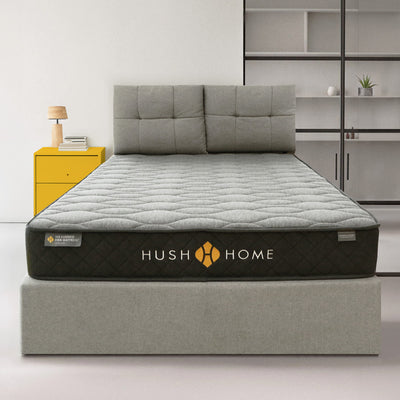
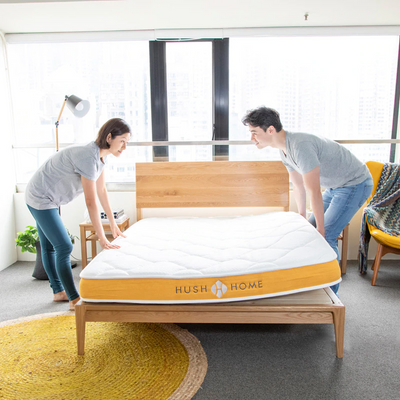
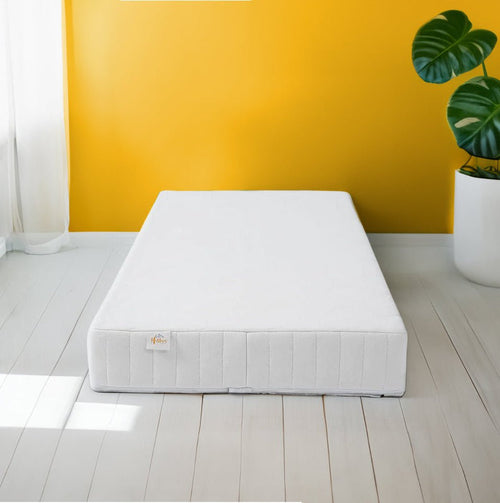
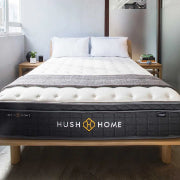
Within Hush Home, compare Hush Mattress™ for a foam-and-coil hybrid, Organic Mattress™ when you prefer a latex-and-coil construction, and Hush Duo Mattress™ when you also need different firmness on each side. These are different comfort choices—not a proven first, second and third place for cooling.
The Hong Kong Observatory describes May to August as hot and humid. That context makes it sensible to consider both temperature and moisture, rather than asking a mattress to compensate for heavy bedding or an uncomfortable room. Outdoor climate also does not tell you the actual conditions in an air-conditioned bedroom.
Separate three experiences: the first cool sensation on contact, how warm you become after settling into bed, and whether you wake feeling damp. They may have different causes. Note when the discomfort appears and what you are wearing or sleeping under before deciding that the mattress must be replaced.
| 特色 | Useful Question | What It Does Not Prove |
|---|---|---|
| Cool-Touch Cover | Fabric or whole mattress? Tested for how long? | All-night cooling |
| Open-Cell Foam / Ventilation | What layer thickness and relevant test? | A whole-bed overnight result |
| Spring Core | What layers sit above the springs? | Cooler than every all-foam mattress |
| 乳膠床褥 | Whole core or one comfort layer? | A universal best material for heat |
| Gel or Graphite | Was the complete mattress compared? | An ingredient alone guarantees comfort |
| Phase-Change Materials | What capacity and test conditions? | Room cooling or unlimited heat absorption |
A cool-touch surface describes how heat moves when you first contact it. It does not establish how the complete mattress behaves after prolonged contact, under your bedding, in your room. Ask whether a cooling claim refers to the cover fabric, one component or the assembled mattress, and over what period it was measured.
A short showroom test is useful for judging texture and comfort, but it cannot establish overnight thermal performance. Likewise, a surface-temperature image taken immediately after a test is not automatically evidence of better sleep. Look for test conditions and meaningful comparisons rather than relying on a frosty-looking graphic.
For foam, ask about the comfort-layer thickness, how deeply you settle into it and any described open-cell or ventilation design. “Memory foam” covers different formulations and constructions, so avoid treating every foam mattress as equally warm. Also check what sits above the foam: the cover, quilting and protector are part of the experience.
Latex may be worth trying when you prefer its responsive feel, but a latex label is not an overnight cooling result. Check whether latex is the whole core or only one comfort layer. A perforated latex layer under substantial padding is a different product from a more exposed latex construction.
A spring core creates spaces within the construction, but the layers above it still matter. A thickly padded hybrid should not automatically be assumed cooler than every all-foam mattress. “Breathable” is most useful when the retailer explains the feature and provides relevant test information, rather than using it as a substitute for detail.
An added material is not a performance result. For gel, graphite or similar ingredients, ask what quantity is used, where it sits and whether the finished mattress has been tested against a meaningful alternative. A claim about the ingredient's thermal properties cannot automatically be applied to the whole bed.
Phase-change materials act as thermal buffers: they absorb and store heat during a change of state, then release it as conditions change. They are not air conditioners, and their heat-storage capacity is finite. Outlast's explanation of this mechanism is useful background, not proof that any mattress using a cooling label will deliver the same result.
How Phase-Change Temperature Regulation Works
Specialised temperature-managing bedding can have measurable effects, but results do not transfer automatically to retail categories. A controlled study in 32 middle-aged men found temperature and deep-sleep changes with a particular high-heat-capacity mattress. A separate endurance-runner study found no sleep-variable benefit from its high-heat-capacity topper compared with the control. Neither establishes which Hush model is coolest.
High-Heat-Capacity Mattress Study
High-Heat-Capacity Topper Study in Runners
For a buying decision, ask whether the evidence measures comfort, surface temperature or actual sleep, and whether the bedding and room conditions resemble yours. An electrically powered cooling system is also a different purchase from passive fabric: consider its noise, maintenance, power use and the manufacturer's safety instructions separately.
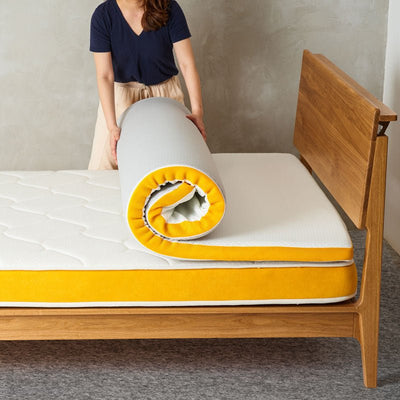
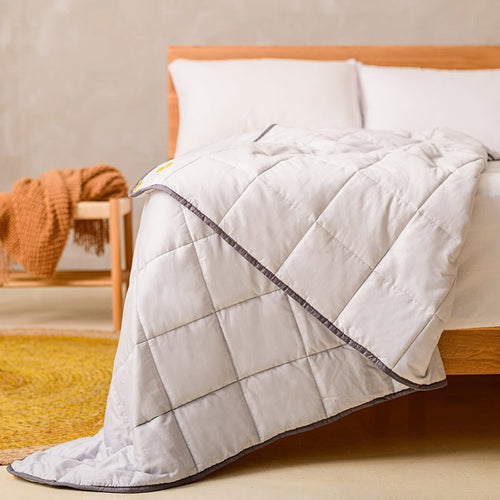
Before spending on a new mattress, review unnecessary layers and whether the duvet is heavier than you need. Compare the care and moisture-handling information on the protector rather than assuming all waterproof protectors behave alike. Keep any protection required by the mattress care or trial terms; simply removing it is not a universal solution.
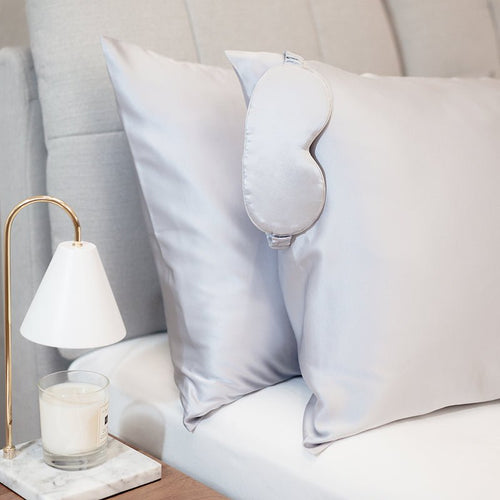
Choose sheets and sleepwear that feel comfortable to you and can be washed and dried conveniently. Fibre names and thread count alone do not rank overnight cooling. Keep the room comfortable with suitable ventilation, temperature and humidity management, and follow the mattress maker's base requirements. Do not remove structural covers or safety layers to increase airflow.
The comparison below identifies published features and the comfort need each model addresses. These features are reasons to ask questions and try the product, not proof of comparative cooling. In particular, choose Duo for useful firmness customisation—not solely because its cover has a cooling name.
| Model | Published Construction | Why Compare It? |
|---|---|---|
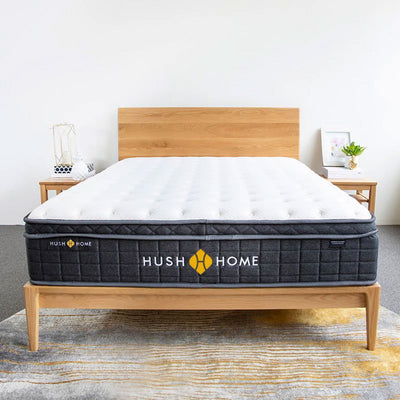
| Hush Mattress™ | Open-cell foam comfort layers and pocket coils | Compare a foam-hybrid feel / No verified cooling rank |
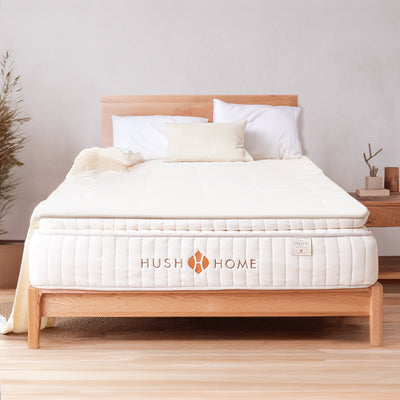
| Organic Mattress™ | Natural latex and pocket coils | Compare the latex feel / Not automatically the coolest |
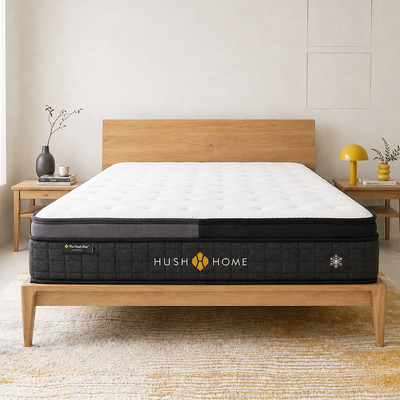
| Hush Duo 床褥™ | ArcticFlow fabric, open-cell foam and ventilated sides | Independent firmness adjustment / Not a refund-based cooling trial |


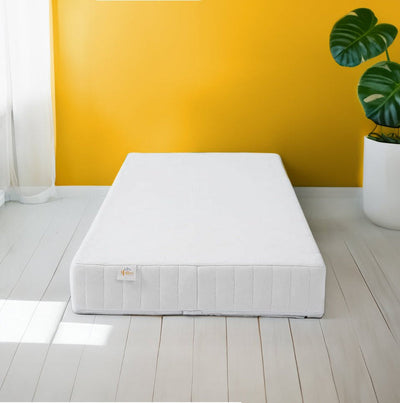
Check the actual size and purchase protection too. Organic is not a standard 3-foot Single option, and Duo begins at Full in the reviewed catalogue. Eligible Hush and Organic mattresses have a 100-night trial under the current terms. Duo's 365-night insert-adjustment guarantee is not a return-for-refund trial, so do not choose it expecting a year-long cooling test with a refund option.
Mattress Trial vs Warranty vs Guarantee
First note whether the problem is room heat, a warm contact surface or damp bedding. Change one controllable part of the setup at a time where practical. If the mattress still needs replacing, compare comfortable models with clear layer specifications, check what the cooling evidence actually measures and read the home-trial conditions. Test with your intended bedding, not only a bare showroom surface.
Feeling warm under a heavy duvet is different from repeatedly soaking night clothes and bedding despite a cool room. The NHS advises medical assessment for regular night sweats that wake or worry you, particularly with fever, cough, diarrhoea or unexplained weight loss. A cooling mattress should not be used to explain away those symptoms.
No. A spring core is only one part of the construction. Comfort layers, cover, protector and room conditions still matter. Compare complete products rather than assuming the core determines the result.
No. It may suit your preferred feel, but the whole mattress and bedding need to work together. Check the specific latex layer and complete construction rather than paying for the material name alone.
No. Ask for finished-product evidence, the test duration and the comparison used. An ingredient claim or initial cool sensation is not a guarantee of overnight comfort.
Do not expect passive mattress materials to cool the room. They manage heat differently from powered cooling equipment. Start with a comfortable room and sensible bedding rather than relying on a mattress alone.
Not automatically. Review the particular protector's construction and care information, and preserve any protection required by the mattress terms. A different suitable protector may be more practical than leaving the mattress unprotected.
This guide does not have an independent head-to-head test establishing that ranking. Compare the published constructions and your comfort needs, and do not convert a cooling-cover name into an unsupported temperature claim.
It may improve an overly warm setup, but recurring drenching sweats in a cool room need medical assessment. Bedding changes are not a diagnosis or a treatment for the underlying cause.
Prioritise comfortable support, clear construction details, realistic cooling evidence and a suitable complete bed setup. Compare Hush's mattress range by those criteria, rather than choosing the coldest-feeling sample or the longest list of cooling ingredients.