












Duvet TOG vs GSM Explained: How to Choose the Right Warmth for Hong Kong
04 Nov 2026

TOG is a rating of thermal resistance: how much a duvet resists the transfer of heat. A higher TOG normally means more insulation. GSM stands for grams per square metre, a measure of fabric or filling mass per area. For duvets, a GSM figure often refers to the fill weight. A 250 GSM duvet is not automatically 2.5 TOG, 4 TOG or any other TOG rating—there is no valid universal conversion because filling type, loft and construction change how much warmth that mass provides.
For Hong Kong, choose based on the temperature you actually maintain overnight, how warm you tend to feel, whether you use air conditioning, and your duvet cover. A thin duvet in a warm room can feel appropriate; the same duvet might feel too light under strong air conditioning.
TOG measures thermal resistance rather than duvet weight. A higher-rated duvet makes it harder for body heat to pass through the bedding under the relevant testing conditions. UK bedding ranges often use lower TOG for warm months and higher TOG for cold months, but these seasonal labels are tied to climate and room conditions—not to a universal month-by-month Hong Kong rule.
The consumer organisation Which? describes roughly 1–4 TOG as a lower-insulation summer-style range, with around 10.5–15 TOG used for colder conditions in UK buying guidance. These are illustrative UK retail bands, not evidence that every Hong Kong home needs a duvet in one particular range. A Hong Kong bedroom cooled to 22°C can feel different from one kept at 26°C.
Which? — How to Choose a Duvet and TOG
GSM describes how many grams of a stated material occupy one square metre. A duvet labelled '250 GSM fill' contains approximately 250 grams of filling per square metre of duvet area, before product-specific quilting and manufacturing tolerances. The total fill weight also depends on the duvet's dimensions; a larger duvet can contain more total filling while using the same GSM.
Always ask what the GSM refers to. In a fitted sheet, GSM may describe fabric mass; in a duvet, it may describe the fill; in a complete textile article, a different figure could describe total fabric weight. These numbers are not interchangeable without knowing the label's scope.
Imagine two duvets, each with 250 GSM fill. One uses loftier fibres that trap a larger layer of still air; the other uses denser fibres in a thinner structure. Their weights per area match, but their insulation can differ. Shell fabric, quilting, fibre clustering and compression also change thermal behaviour. A conversion chart that says every 250 GSM duvet equals a particular TOG should be treated cautiously unless it is based on measured products with equivalent constructions.
This is especially important when comparing down, synthetic microfibre, wool and silk-filled products. A high-quality light fill can provide different warmth from a denser lower-loft fill. Compare tested TOG where available; otherwise treat GSM as a useful construction detail rather than a standalone warmth score.
| Measurement | TOG | GSM |
|---|---|---|
| Meaning | Thermal resistance / insulation | Grams per square metre |
| High value means | Usually greater measured insulation | More material mass per area |
| Affected by | Fill, loft, shell, construction | Type of material being weighed |
| Can compare directly? | Only with valid test and like-for-like use | Only if both labels specify same type of component |
| Hush example | No TOG value confirmed in cited PDP | 250 GSM microfibre fill |
If the bedroom stays hot, you may prefer a very light covering, a low-insulation duvet or sometimes a duvet cover on its own. Consider air movement, humidity and whether a lightweight cotton sheet feels sufficient. The aim is comfort without overheating; a heavy 'winter' duvet is unlikely to suit everyone on a warm, humid night.
A commonly cooled Hong Kong bedroom may call for a moderate all-season duvet, but the appropriate warmth depends on the real room temperature, fan airflow and the sleepers. If you set the air conditioner much cooler than usual, the same duvet can feel inadequate. Try adjusting room temperature and covering thickness together, rather than choosing TOG in isolation.
For cooler rooms, choose more insulation or combine suitable layers. A higher TOG may be appropriate where test-rated duvets are available, but be careful when borrowing British winter recommendations for Hong Kong flats. Someone who runs warm may prefer a lighter setup in the same room.
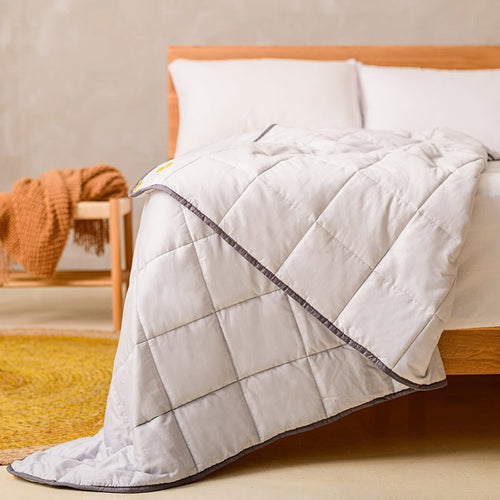
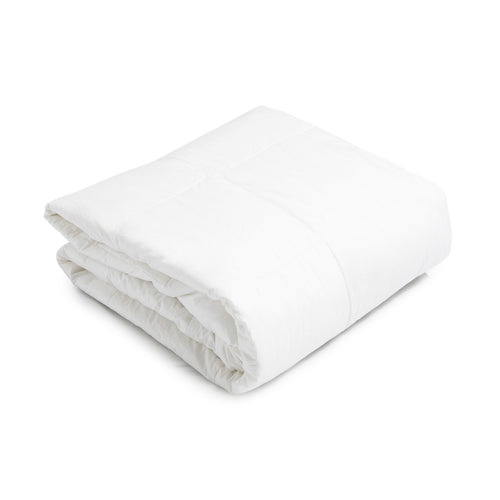
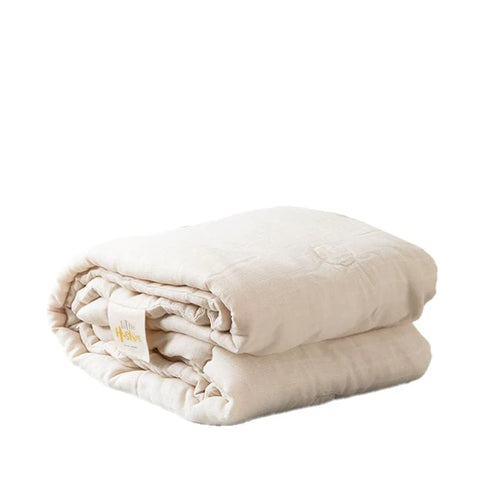
Hush Home's All-Season Duvet™ currently lists 250 GSM microfibre filling with a long-staple cotton shell. That is a fill-weight specification, not a stated, laboratory-confirmed TOG value. The product's Hong Kong Chinese name is 四季絲棉被™, but its listed fill is synthetic microfibre rather than natural silk. Do not describe it as a silk-filled duvet or convert its 250 GSM directly into a TOG rating.
The duvet is designed as an all-season option, particularly worth assessing in air-conditioned rooms. Whether you find it warm enough in winter or too warm during humid nights will depend on temperature, your metabolism, duvet cover and personal preference. A 'year-round' product description does not promise identical comfort for every sleeper every month.
Hush Home All-Season Duvet™ — Product Specifications

Before buying, note the bedroom's actual overnight temperature, whether you use air conditioning, your personal tendency to feel hot or cold, the duvet's tested TOG if available, and whether a GSM figure refers to filling or shell fabric. Then consider duvet size, cover thickness, washing instructions and any allergies or sensitivities. Compare complete products, not a single number.
If the duvet is too warm, first consider whether the room, cover or additional blanket is causing the problem. If it is too cool, a warmer insert or added layer may help. Comfort is a system involving room temperature, bedding and the person under it.
No. TOG describes thermal resistance; GSM means grams per square metre of a specified material.
No universal conversion exists. You need product-specific thermal testing or a verified manufacturer rating.
Not across different fillings and constructions. More mass within the same construction may affect warmth, but loft and fibre type also matter.
There is no single required rating. A low-insulation covering may suit a warm room; strong air conditioning may call for more warmth.
It can be, but warmth depends on filling, loft, room temperature and personal preference. GSM alone cannot confirm suitability.
No. Its currently published fill is microfibre, despite the product's Chinese name.
Yes, if the light fabric alone feels comfortable. It provides much less insulation than a filled duvet.
Bedroom temperature, fill type, construction, cover fabric, size, care and your own warmth preference.
Use TOG to compare thermal insulation when reliable ratings exist, and GSM to understand the mass of a specified duvet material. Do not convert one into the other with a made-up formula. For Hong Kong, the more useful question is how a duvet feels in the room temperature you actually maintain—not whether it carries a British 'summer' or 'winter' label.