






Organic Mattress Certifications Explained: GOTS, GOLS, OEKO-TEX & More
04 Nov 2026
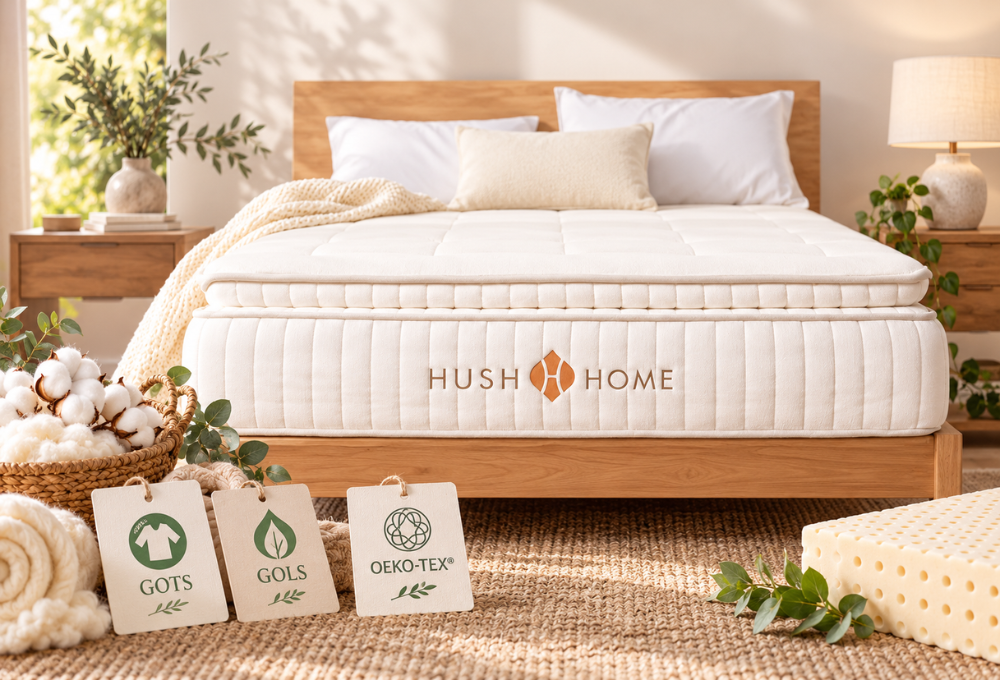
GOTS concerns certified organic textile products and their processing. GOLS applies to organic latex and its chain of custody. OEKO-TEX® STANDARD 100 tests certified textiles and components for specified harmful substances. Global Recycled Standard (GRS) verifies recycled inputs and relevant processing requirements, while CertiPUR-US® concerns qualifying flexible polyurethane foam. These programmes assess different materials or claims: none automatically proves that an entire mattress is organic, non-allergenic, medically effective or the right firmness for you.
The most important shopping question is not simply 'Does this mattress have a certification logo?' It is 'Which exact product or component is certified, under what standard and certificate number, and is the claim still valid?' A label on cotton fabric is not proof that the foam, springs, glue and finished mattress share the same certification.
GOTS covers the production and processing of certified organic textiles, with environmental and social criteria alongside traceability. Under current GOTS guidance, the 'organic' label grade requires at least 95% certified organic fibre content, while 'made with organic' requires at least 70%, calculated according to the standard. These percentages relate to the relevant textile fibre content—not the weight of a complete mattress containing springs or latex.
For a mattress, cotton ticking or a cover fabric may be described as GOTS-certified. But an advertisement saying 'made with GOTS-certified organic cotton' is not interchangeable with a claim that the entire finished mattress is GOTS-certified. GOTS requires specific labelling and certification conditions for a final product claim. Ask whether the final product, textile fabric or supplier is the actual certified item.
Official GOTS Standard and Label Guidance
GOLS is a certification scheme associated with organic latex processing and chain-of-custody controls. It is relevant when a manufacturer claims the latex component of a mattress is organically produced. Natural latex and organic latex are not synonyms: a rubber-tree origin describes a feedstock, whereas a GOLS claim is about compliance with a documented certification framework.
Ask the manufacturer to identify the certified latex processor or component, the certification body and the certificate scope. A GOLS latex layer is one part of a hybrid mattress; it does not convert its pocket springs, cover, adhesives or every layer into certified organic material. Likewise, latex suitability for a person with a known latex allergy requires individual medical advice, not a certification logo.
OEKO-TEX® STANDARD 100 is a textile product-safety testing label. Its published criteria cover a large list of regulated and additional substances, with product classes tied to intended skin contact. Bed linen is normally associated with direct-skin-contact requirements. The programme tests materials in the scope of the certificate; it does not certify organic farming or claim that a product is free of every possible chemical.
The practical advantage is that you can request the full certification label or number and use OEKO-TEX's official Label Check. Verify whether the certificate belongs to the mattress cover, cotton fabric, a foam-related textile component or the complete item. An outdated badge without a valid number should not be treated as independently verified.
OEKO-TEX® STANDARD 100 and Label Check
The Global Recycled Standard, administered by Textile Exchange, tracks eligible recycled inputs through certified supply-chain steps and includes additional processing criteria. It is not an organic farming or latex certificate. Recycled felt around a coil, for example, may use verified recycled fibres without the metal spring itself being organic.
CertiPUR-US® tests qualifying flexible polyurethane foams against defined content, emissions and durability criteria. It is a foam certification—not a certification that an entire mattress is organic, allergen-free or manufactured without any synthetic material. Confirm the foam supplier and certification status rather than relying only on a mattress's marketing graphic.
Factory management certifications such as ISO 9001 or ISO 14001 refer to quality or environmental management systems within a defined scope. They are not direct proof of a specific mattress's comfort or toxin-free status. A fire-ignitability test such as EN 597-1 also addresses a different question: performance under a defined ignition test, not organic content or overnight comfort.
| Standard | What it primarily covers | What it does NOT establish |
|---|---|---|
| GOTS | Organic textile fibres, processing and product claims | All mattress layers automatically organic |
| GOLS | Organic latex and chain of custody | Springs or cover also organic |
| OEKO-TEX® STANDARD 100 | Specified harmful substances in certified textiles | Organic agriculture or zero allergy risk |
| GRS | Recycled materials and processing chain | Virgin organic cotton or natural latex |
| CertiPUR-US® | Flexible polyurethane-foam content/emissions/durability | Whole mattress organic or medical treatment |
| ISO 9001 / ISO 14001 | Defined factory quality/environmental management | Specific mattress comfort or full chemical testing |
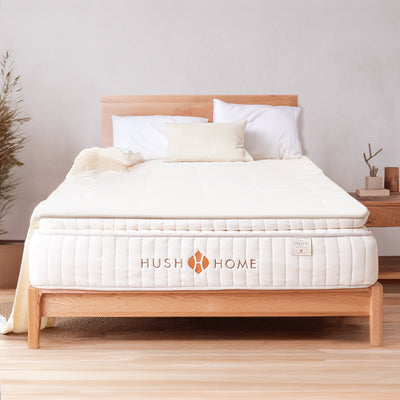
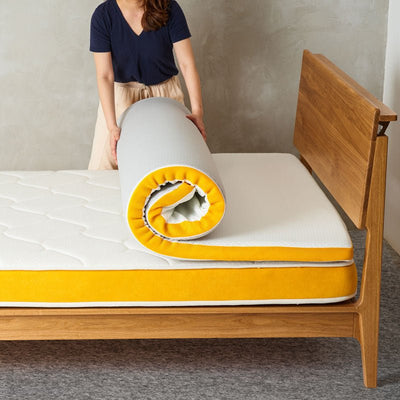
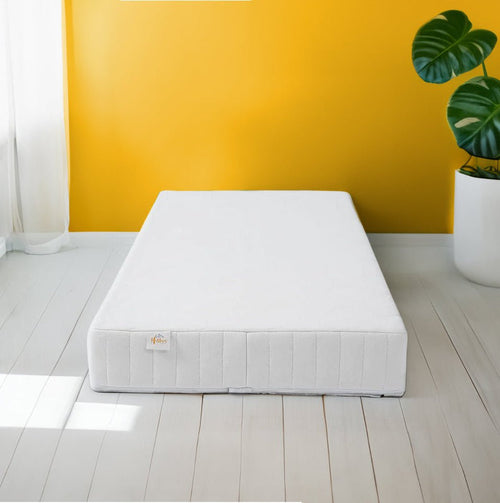
Hush Home's Organic Mattress™ product materials identify GOTS-certified organic cotton, GOLS organic latex and recycled felt associated with GRS claims. Its current product information also lists OEKO-TEX® and other testing claims. These statements refer to distinct layers and programmes; they should not be paraphrased as 'every gram of the entire mattress is GOTS, GOLS and GRS certified.' The construction also includes pocket coils, mini-coils, bamboo-derived fibre and coconut fibre.
Those material details are useful for shoppers comparing ingredient priorities. However, Hush's public website alone is not equivalent to checking all current certification numbers directly in independent registries. Before using a broad 'fully certified organic mattress' statement, confirm the exact certified entity, the final-product scope and any valid transaction documentation with the team.
Organic Mattress™ — Materials and Certifications

First identify the exact product and component; ask for the standard's full name, certification or licence number, certifier and validity. Next, check the official database where available. Confirm whether the certificate belongs to a factory, input material, fabric or finished product. Finally, compare the certificate's scope to the words used in the advertisement. A logo alone, a historical certificate or a supplier's unrelated product is not enough.
Also check what the certification does not cover. A certified fabric does not tell you whether the mattress will be comfortable for a side sleeper, fit your bed frame, avoid dampness in a Hong Kong flat or provide an appropriate return policy. Those decisions still require size, feel, ventilation, care and purchase-term checks.
Natural is not automatically certified organic. A chemical-screening label is not proof of pesticide-free farming. A recycled-content label is not evidence that a product's cotton is organic. A certified latex layer does not mean springs or covers share that certification. And none of these labels means 'zero allergy risk' for a person with a known sensitivity.
Consider certificates as evidence about a narrow attribute, not a substitute for a complete buying decision. A useful mattress must also meet your sleeping position, firmness preference, bed dimensions, budget and realistic care conditions.
Not automatically. Confirm whether the certified article is a final product or just a textile component, and read the approved label and scope.
No. GOTS concerns organic textiles, while GOLS is relevant to organic latex. Their standards and scopes differ.
No. It tests certified textiles or relevant components for specified harmful substances; it does not verify organic agriculture.
No. It concerns qualifying flexible polyurethane foam within its defined testing programme.
No. GRS concerns recycled materials, chain of custody and relevant processing criteria.
No. Natural origin and audited organic-latex certification are separate claims. Ask for certificate scope and evidence.
Certification does not eliminate all allergy risks or prove medical suitability. People with known material allergies should seek appropriate advice.
Request the issuer, certificate or licence number, certified company and product scope, then check the relevant scheme's official directory or verification service.
No single certification covers every question a mattress buyer has. Use GOTS for eligible textile claims, GOLS for organic latex, OEKO-TEX® STANDARD 100 for defined harmful-substance testing, GRS for recycled content and CertiPUR-US® for qualifying foam. Then verify the precise certified scope and choose the mattress for its actual comfort, support and fit—not for a pile of logos.