










Caffeine’s Half-Life: Why Your Afternoon Coffee Stays Late
17 Mar 2026
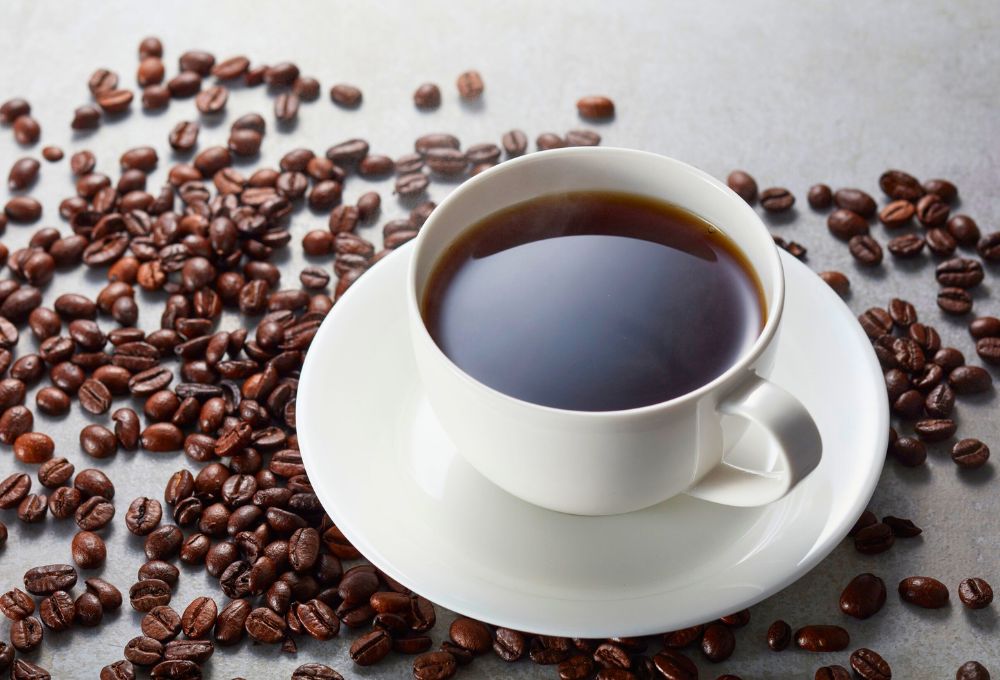
In the high-octane environment of Hong Kong, caffeine is often treated like a food group. Whether it’s a morning espresso to kickstart the day or a 3PM Yuen Yeung to survive the afternoon slump, we rely on it to keep our focus sharp.
However, there is a biological "price tag" to that afternoon cup that many of us don't realize we’re paying until we’re staring at the ceiling at midnight. To understand why, we have to look at the invisible math of the Caffeine Half-Life.
In pharmacology, a "half-life" is the time it takes for your body to eliminate 50% of a substance from your system.
For the average healthy adult, the half-life of caffeine is approximately 5 to 6 hours.
For example, if you drink a large latte (approx. 100mg of caffeine) at 3:00 PM:
9:00PM: 6 hours later, 50mg of that caffeine is still circulating in your brain.
3:00AM: 12 hours later, 25mg is still active in your system.
Having a coffee at 3PM is biologically equivalent to drinking a quarter-cup of coffee right before you go to bed.
To understand the disruption, you have to understand Adenosine. From the moment you wake up, Adenosine builds up in your brain. This is known as "sleep pressure." The more Adenosine you have, the sleepier you feel. By 11PM, your Adenosine levels should be at their peak.
When you consume caffeine, it rushes to your brain and plugs into the Adenosine receptors, effectively "muting" the sleep signal.
Q: Does caffeine actually "give" you energy?
A: No. Caffeine doesn't provide energy; it simply prevents your brain from realizing it is tired by blocking the receptors that track sleep pressure.
Many people claim a "high tolerance" allows them to fall asleep immediately after a late-night espresso. While you may fall asleep quickly, the quality of that sleep is significantly compromised.
The Deep Sleep Tax: Research shows that caffeine significantly reduces Stage 3 and 4 Deep Sleep (slow-wave sleep). You may be unconscious for 8 hours, but your brain cannot perform its vital nightly "cleaning" and repair.
The "Caffeine Crash" Loop: When the caffeine finally unplugs from your receptors, all the built-up Adenosine rushes in at once. This causes the massive "morning-after" crash, leading you to reach for more caffeine to survive the day.
The Genetics Factor: Some people possess a specific variant of the CYP1A2 gene. "Fast metabolizers" break down caffeine quickly, while "slow metabolizers" may still have caffeine from a morning cup circulating in their system at dinner time.
You don't have to give up your favorite brew; you just have to time it strategically:
The 10AM Window: Cortisol (your natural wake-up hormone) peaks right after you wake up. Wait until 10 AM for your first cup to get the most "bang for your buck."
The "Hard Stop" at 2 PM: To ensure at least 75% of the caffeine is out of your system by 11 PM, make 2 PM your daily caffeine cutoff.
Switch to Decaf After Lunch: You get the ritual and the flavor with only trace amounts of the stimulant.
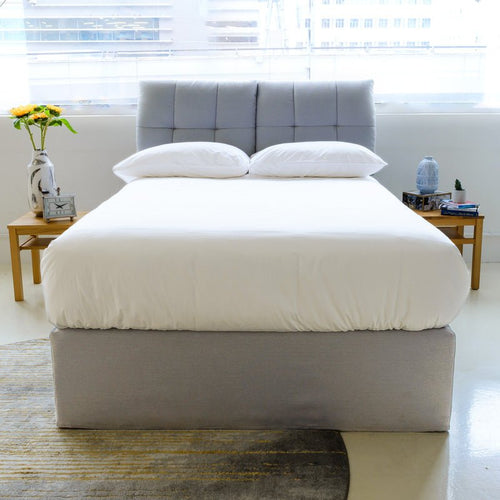
If you are currently trapped in the "tired but wired" loop, your sleep environment is your best tool for recovery.
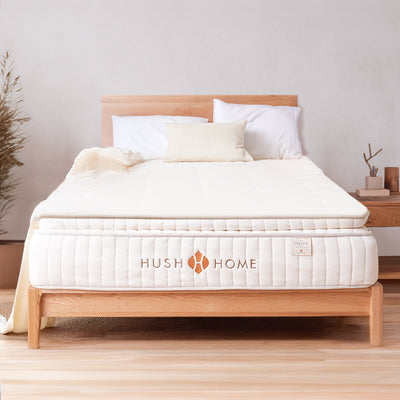
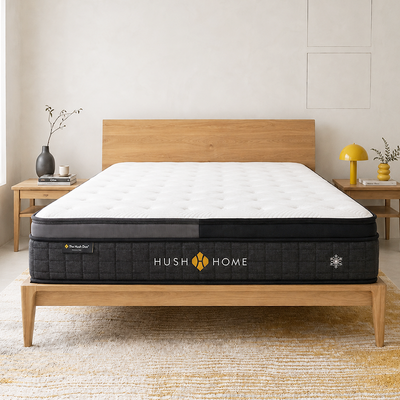
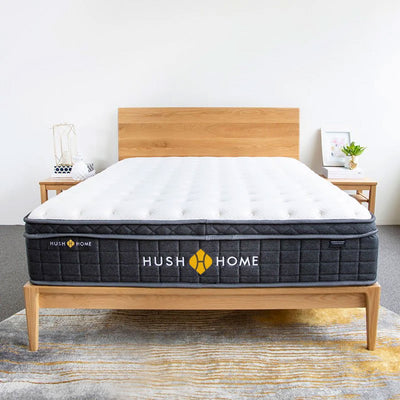
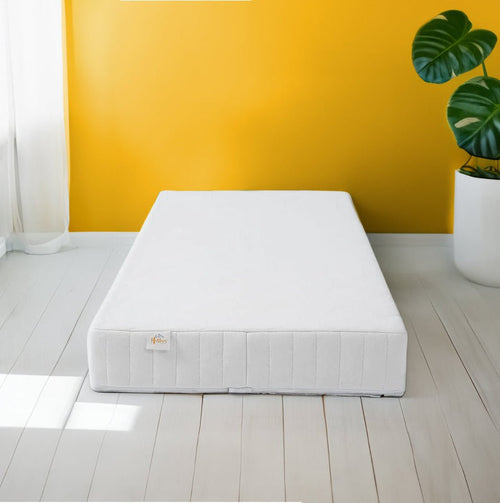
When your sleep is "fragile" due to caffeine, every interruption matters. Sleeping on a Hush Mattress™ with motion isolation ensures that even if you are in a lighter sleep state, you won't be easily awoken by a partner’s movements.
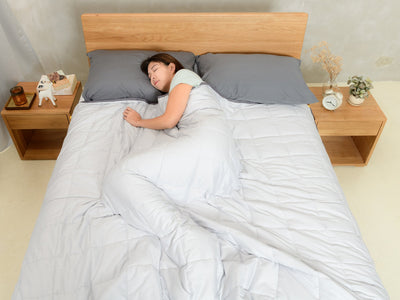
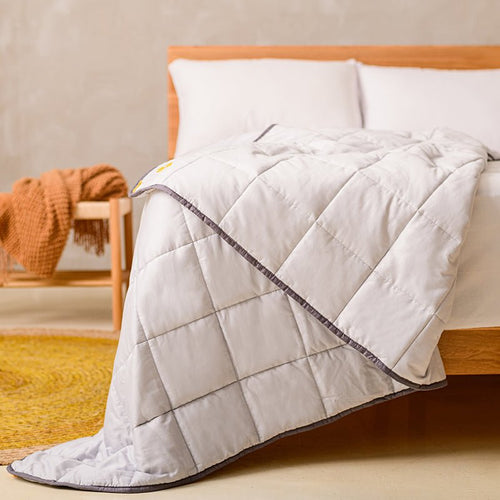
Pairing a caffeine-free evening with a Weighted Blanket can also help lower your heart rate and counteract lingering jitters, helping your nervous system transition into "Rest and Digest" mode.