


Do Pajamas Help You Sleep? The Best Sleepwear Materials for Hong Kong Weather
30 Sep 2026
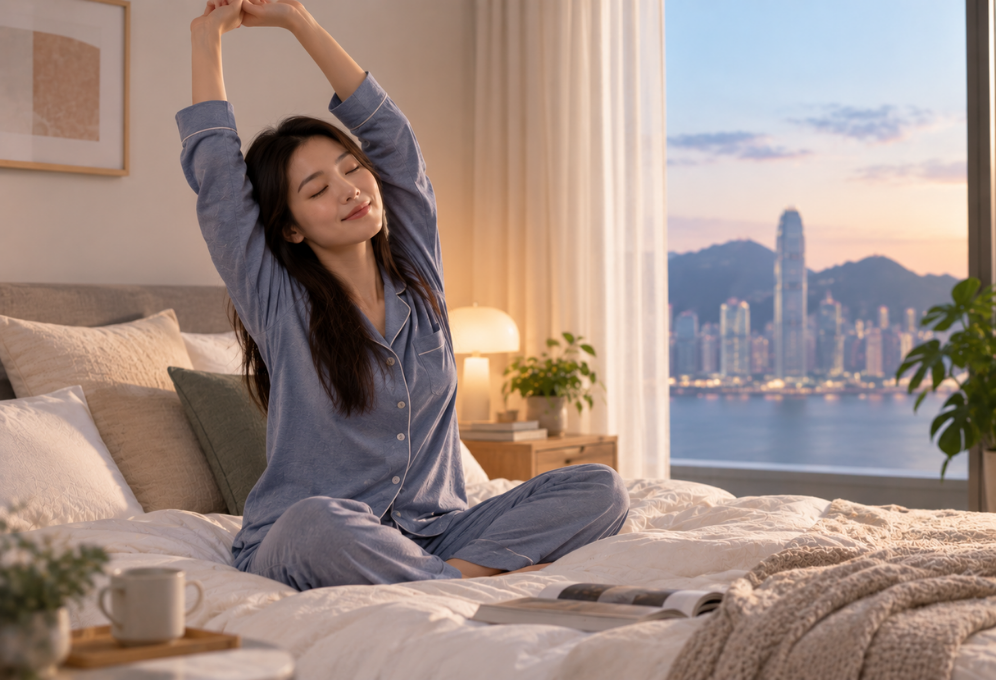
What you wear to bed can feel like a minor decision, but sleep takes place inside a carefully balanced thermal environment. Your bedroom temperature, humidity, duvet, sheets, mattress, body heat and sleepwear all influence how warm, cool, dry or clammy you feel overnight.
That means pajamas can matter—but mostly because they are one layer in the whole sleep system. A breathable lightweight set can help someone stay comfortable in a humid Hong Kong bedroom, while thick or poorly ventilated sleepwear can contribute to overheating. On the other hand, a person sleeping under strong air-conditioning may be more comfortable in lightweight long sleeves and trousers than in shorts, even during summer.
Quick Answer: Do Pajamas Actually Help You Sleep?
Potentially, yes—but not because pajamas have a direct sedative effect. Their main role is helping your body maintain a comfortable skin microclimate while it moves through its normal overnight temperature changes.
Sleep is closely linked to thermoregulation. Core body temperature normally begins to decline around the sleep period, while changes in skin blood flow help transfer heat away from the body. Clothing and bedding modify this process by changing insulation, airflow and moisture movement around the skin.
A 2024 systematic review of sleepwear and bedding fibre studies found that material can affect sleep outcomes in some situations, but results varied by ambient temperature, age, fibre type and study design. The evidence therefore supports choosing sleepwear for thermal comfort rather than believing one fibre is universally “best for sleep”.
Your body does not simply switch off its temperature control system when you fall asleep. Sleep and thermoregulation are closely connected, and uncomfortable heat or cold can increase wakefulness and disturb normal sleep architecture.
Research on thermal environments shows that heat becomes particularly disruptive when humidity is also high because evaporation becomes less effective. This is relevant to Hong Kong, where warm weather and high humidity often occur together.
Sleepwear therefore needs to do two things reasonably well: provide enough insulation that you do not become uncomfortably cold, while allowing enough heat and moisture movement that you do not feel hot and clammy.
Hong Kong Observatory climate normals for 1991–2020 show an annual mean temperature of 23.5°C and annual mean relative humidity of 78%. Average relative humidity reaches 82% in March, 83% in April and May, 82% in June and 81% in July and August.
These are outdoor Observatory climate normals, not measurements of every Hong Kong bedroom. Air-conditioning, building design, window exposure, fans and dehumidifiers can create a very different indoor environment.
Still, the climate explains why Hong Kong sleepwear should be judged not only by warmth, but also by how the garment handles moisture and whether it remains comfortable when the air feels humid.
The label “summer pajamas” does not automatically tell you whether they are right for your bedroom. Someone sleeping without air-conditioning on a humid night may need minimal coverage and maximum airflow. Someone sleeping in a strongly air-conditioned room may need more skin coverage even when it is 30°C outdoors.
Think about the temperature you actually experience at 3 a.m., not just the weather when you go to bed. Air-conditioners may cool the room gradually, and some sleepers become cold later in the night after initially feeling warm.
This is why lightweight long pajamas can sometimes work better than thick shorts-and-T-shirt sets: coverage and fabric weight are separate variables.
When people compare sleepwear, they often focus only on whether the label says cotton, linen, silk, bamboo, wool or polyester. But two garments made from the same fibre can feel completely different.
Important variables include fabric weight, thickness, knit or weave structure, yarn size, finishing treatments, stretch content, garment fit, sleeve and leg coverage, seams and how easily air and water vapour move through the finished fabric.
A lightweight loose polyester performance fabric may handle sweat better than a dense heavy cotton fabric. A very thin cotton jersey may feel cooler than a tightly woven silk set. The finished garment matters more than a simple natural-versus-synthetic label.
Cotton is a practical sleepwear material because it is soft, widely available and able to absorb moisture. Lightweight cotton jersey or loosely woven cotton can work well in air-conditioned Hong Kong bedrooms and for sleepers who prefer a familiar, non-slippery feel.
However, absorption is not the same as rapid drying. Cotton can hold moisture within the fibres, so a thick cotton garment may feel damp if you sweat heavily in a humid room. Hot sleepers should therefore pay attention to fabric weight and airflow rather than assuming “100% cotton” automatically means cool.
Direct sleep studies do not show that cotton always produces better sleep than other fibres. Its main strength is versatility and predictable comfort rather than proven universal superiority.
Linen is often a sensible option for warm climates because lightweight linen fabrics can be airy, absorb moisture and dry relatively quickly. The naturally crisp structure of linen can also keep parts of the fabric slightly away from the skin instead of clinging tightly when damp.
A recent systematic review found some evidence that linen bed sheets improved sleep outcomes under warm conditions in young adults. That does not prove linen pajamas have the same effect, because bedding and clothing are different applications. It does, however, support linen as a reasonable material to consider for warm sleep environments.
The downside is feel. Some people love linen's dry, textured handle, while others find it too coarse until it has softened through washing and use.
Lyocell is a regenerated cellulose fibre, and TENCEL™ is a well-known branded form of lyocell. Textile research shows that lyocell has meaningful moisture absorption and can perform well in fabrics designed for moisture and thermal comfort.
But the fibre name does not guarantee that every lyocell garment will feel cool. Air permeability and water-vapour movement can fall when a fabric is made thicker, denser or with more elastane. A thin loose lyocell pajama set may therefore suit Hong Kong well, while a heavy tight knit may feel much warmer.
There is also much less direct sleep-outcome research on lyocell pajamas than on cotton, polyester and wool. Treat “cooling TENCEL pajamas” as a construction claim to evaluate, not a guaranteed sleep benefit.
Many products marketed casually as “bamboo pajamas” are actually viscose or rayon made from bamboo-derived cellulose rather than mechanically processed bamboo fibre. The distinction matters because the finished regenerated fibre does not automatically retain the biological properties of the original bamboo plant.
Textile research comparing regenerated bamboo, cotton and viscose has not established that regenerated bamboo fibres are inherently superior for thermal and moisture management. The fabric may still be soft and comfortable—but “bamboo” on its own is not evidence that a pajama will be cooler, more breathable or better for sleep.
For Hong Kong, judge these garments the same way you would judge other regenerated-cellulose sleepwear: check weight, fit, weave or knit, stretch content and how the fabric feels after becoming slightly damp.
Silk is lightweight, smooth and pleasant against the skin, which is why many people enjoy it as luxury sleepwear. It can absorb some moisture and offers useful warmth for its low weight.
Those properties do not mean silk is necessarily the coolest choice in a humid bedroom. A tightly woven silk set can limit airflow more than a loose linen or lightweight jersey garment. Silk also requires more careful washing and can be less practical for people who sweat heavily every night.
There is limited direct clinical evidence comparing silk sleepwear with other common pajama materials, so choose it primarily for feel, weight and personal comfort rather than a claim that silk itself improves sleep quality.
Wool sounds like the last material you would choose for Hong Kong, but sleep research makes the picture more nuanced. In one controlled study of adults aged 50–70 sleeping at 30°C and 50% relative humidity, fine Merino wool sleepwear produced small but statistically significant benefits on several sleep measures compared with cotton or polyester, especially in older participants and poorer sleepers.
Another study in younger adults found shorter sleep-onset latency with wool compared with cotton under cooler conditions. A 2024 systematic review concluded that wool showed potential benefits in certain populations and temperatures, while also emphasising that the overall evidence base is small and heterogeneous.
This does not mean Hong Kong sleepers should wear thick wool pajamas in July. The studies used specific fine wool garments. Lightweight fine Merino may be worth considering for a cool air-conditioned room or Hong Kong winter, but fabric weight remains critical.
Standard polyester absorbs relatively little moisture into the fibre, which can leave some people feeling sweaty or clammy in poorly ventilated garments. But that is not the whole story.
Engineered polyester can be constructed to move liquid moisture across the fabric surface and dry quickly. Textile studies show that fibre cross-section, yarn design and fabric structure can significantly change wicking, evaporation and perceived coolness. A lightweight performance knit may therefore behave very differently from cheap dense polyester satin.
In sleep studies, polyester has not consistently performed worse than cotton across every outcome. So rather than avoiding polyester automatically, judge whether the finished sleepwear is lightweight, breathable, soft and effective at managing your sweat.
A fibre blend is not automatically lower quality. Blending can be used to combine softness, stretch, moisture absorption, drying speed and durability.
For example, cotton-polyester blends can dry faster than pure cotton depending on construction, while lyocell blends can add softness and moisture absorption. A small amount of elastane can improve movement, although increasing elastane and fabric tightness can reduce air and water-vapour permeability.
The useful question is therefore not “Is a blend bad?” but “What properties was this blend designed to create?”
For most people in warm or humid conditions, slightly loose sleepwear is the safer starting point. Extra space can reduce cling and allow more air to move between the garment and skin.
But extremely oversized clothing can twist, bunch or pull as you turn in bed. Tight sleepwear can also be comfortable if it is very lightweight, stretchy and moisture-managing. Fit should allow unrestricted sleeping positions without tight waistbands, rough seams or pressure points.
Choose coverage according to the bedroom, not the calendar.
For a warm room without strong air-conditioning, shorts and short sleeves—or even minimal sleepwear—reduce insulation and expose more skin for heat exchange. For a cool air-conditioned bedroom, lightweight long sleeves and trousers can reduce uncomfortable cold without requiring a thick fabric.
People who wake with cold shoulders, knees or feet should experiment with adding coverage before increasing fabric thickness. Conversely, if you wake sweaty around the torso or thighs, reducing coverage may help more than simply changing fibre type.
Start with a lightweight, loose garment that does not cling when damp. Cotton, linen, lyocell and well-designed moisture-wicking synthetics can all work; the best option is the one that keeps you dry enough without creating excessive insulation.
Also examine the rest of the bed. Heavy bedding, a warm mattress surface or poor bedroom airflow can overwhelm any advantage from changing pajamas. Sleepwear is only one thermal layer.
If sweating is new, severe, persistent or drenching, do not assume clothing is the only cause. Night sweats can have medical causes and should be discussed with a healthcare professional when appropriate.
Do not automatically reach for the thickest flannel set. Try increasing coverage first while keeping the fabric light. Lightweight cotton, fine Merino wool or a soft breathable blend can provide a more even layer around the skin without creating the heavy insulated feeling of winter pajamas.
Cold feet can be particularly distracting. If your feet regularly feel cold at bedtime, light socks may be more targeted than making the entire outfit heavier.
There is no strong evidence that sleeping naked is universally better, and there is no strong evidence that everyone should wear pajamas either.
In a hot room, removing clothing reduces one layer of insulation and may feel more comfortable. In a cool room, however, clothing can help create a stable warm skin microclimate while still allowing the body's core temperature to fall. Bedding choice also changes the answer considerably.
Choose the option that leaves you thermally comfortable and dry through most of the night. Personal comfort is more useful than treating naked sleep or pajamas as a universal sleep hack.
Changing into sleepwear can function as a behavioural cue that the active part of the day is ending. For some people, repeating the same sequence—shower, pajamas, dim lights, reading and bed—may make a bedtime routine easier to maintain.
However, this should not be confused with proof that pajamas themselves cause sleep. A consistent routine may be useful, but the strongest physiological argument for sleepwear remains thermal and moisture comfort.
Hot, humid bedroom with little air-conditioning: prioritise very lightweight fabric, loose fit, minimal coverage and good moisture movement. Linen, thin cotton, lightweight lyocell or an effective moisture-wicking technical fabric can all be reasonable.
Typical summer air-conditioned bedroom: lightweight cotton, lyocell, soft blends or other thin sleepwear often work well. Choose short or long coverage according to how cold the room becomes overnight.
Strong air-conditioning or cooler months: lightweight long pajamas may work better than thick short garments. Cotton and fine Merino are worth considering, depending on personal warmth preference.
Very sweaty sleepers: prioritise quick moisture transport, fast drying and fabrics that do not become heavy or clingy when wet. Test the finished garment rather than relying on a fibre marketing claim.
Do not judge a pajama set only while standing in an air-conditioned shop. Wear it for several normal nights in your usual bedroom and notice what happens at three points: when you first get into bed, around the middle of the night, and when you wake.
Ask: Did I wake because I felt hot or cold? Was the fabric damp? Did it stick to my back or legs? Did the waistband, seams or sleeves twist when I changed position? Did I need to keep removing and replacing the duvet?
Change one variable at a time. If you simultaneously change pajamas, duvet, air-conditioning and sheets, you will not know which change actually helped.
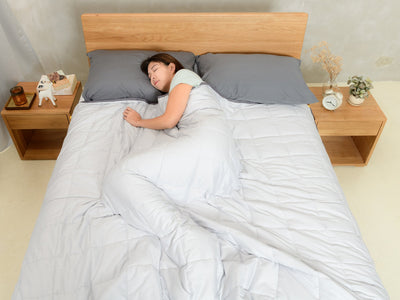
The fabric touching your body does not work in isolation. Sheets, duvet, mattress protector, mattress surface and room airflow all affect the same thermal system.
For example, switching to thin pajamas may make little difference if you remain under an overly warm duvet. Likewise, changing to a lighter duvet may not solve discomfort if your sleepwear stays damp against the skin.
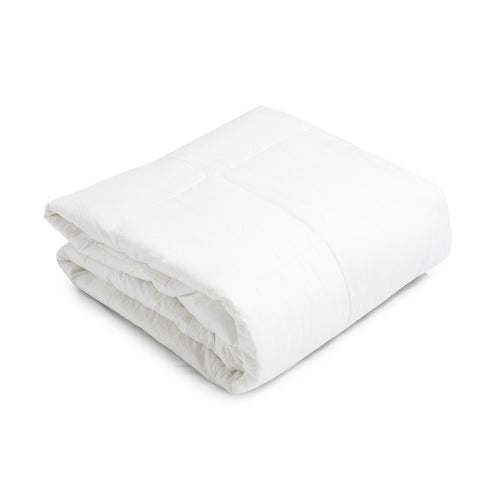
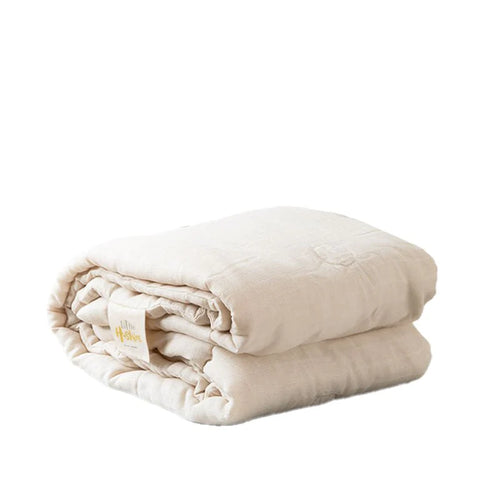
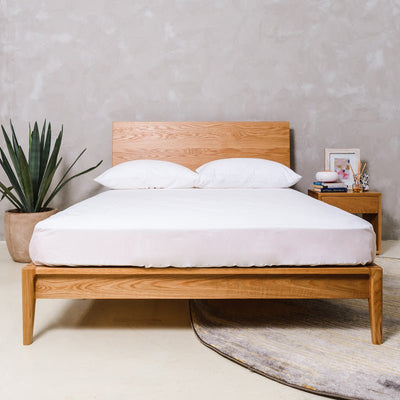
Hush Home's Egyptian Cotton Hotel Sheets™ use 100% Egyptian long-staple cotton in a 400-thread-count, 1-ply sateen weave, while the All-Season Duvet™ uses a 250 gsm microfibre fill with a cotton shell. These are separate layers from sleepwear, so the most comfortable setup comes from balancing the whole bed rather than expecting one garment or one bedding product to control temperature by itself.
Before buying, check these factors:
False. Cotton can be very comfortable, but fabric weight, weave, fit and moisture retention matter. Heavy dense cotton can feel warmer and stay damp longer than some lighter alternatives.
False. Poorly ventilated polyester can feel clammy, but engineered wicking polyester can move and dry moisture effectively. Construction matters.
Not necessarily. Many products called bamboo are actually viscose or rayon made from bamboo-derived cellulose, and regenerated fibre does not automatically retain the original bamboo plant's properties.
Too simple. Fine Merino can manage moisture and has shown sleep benefits in specific warm and cool laboratory conditions. But heavy wool would still be impractical for many Hong Kong summer bedrooms.
Not automatically. Silk can be light and smooth, but weave density and garment design still determine airflow and warmth.
There is no universal rule. The best choice depends on thermal comfort, bedding, bedroom temperature, humidity and personal preference.
False. Your duvet, mattress, room temperature, humidity and body heat still contribute to the total thermal load.
They can improve comfort and may influence sleep through thermal and moisture regulation, but there is no evidence that simply wearing pajamas guarantees better sleep. Research suggests that fibre type can affect some sleep outcomes under specific conditions.
There is no single winner. Lightweight cotton, linen, lyocell and effective moisture-wicking technical fabrics are all reasonable. Fabric weight, airflow, fit and your air-conditioning level matter more than the fibre name alone.
Cotton is generally easier to wash and versatile across many bedroom conditions. Silk is lighter and smoother but usually requires more careful care. Neither has been proven universally better for sleep.
Lightweight lyocell/TENCEL sleepwear can provide good moisture comfort, but fabric construction is critical. Dense or stretch-heavy fabrics may have lower air and water-vapour permeability than lighter structures.
Not necessarily. Many so-called bamboo fabrics are regenerated viscose or rayon, and textile research has not established that regenerated bamboo fibre is inherently superior to cotton or ordinary viscose for thermal and moisture management.
Fine Merino wool can behave very differently from thick winter wool. Controlled sleep studies have found benefits from fine wool sleepwear in certain warm and cool conditions. This does not mean thick wool is appropriate for Hong Kong summer.
Often, but not always. Less coverage can reduce insulation in a warm room. In strong air-conditioning, lightweight long trousers may be more comfortable while still avoiding heavy fabric.
Only if it makes your sleep environment more comfortable. There is no universal evidence that nude sleep is better. In cool environments, clothing can help maintain a comfortable skin microclimate.
There is no single schedule for everyone. Wash more frequently if you sweat heavily, wear sleepwear directly against the skin, have been ill or the garment becomes damp or odorous. Always follow the care label and dry the garment fully before wearing it again.
No. Better moisture management may make night sweats feel less uncomfortable, but persistent or severe night sweats can have medical causes. Sleepwear should not be treated as a medical solution.
Pajamas can help you sleep more comfortably when they help your body maintain an appropriate thermal and moisture environment. They are not a guaranteed sleep aid, and the fibre label alone cannot tell you whether a garment will work.
For Hong Kong, start with lightweight construction and choose coverage according to your actual bedroom temperature. Cotton is a versatile default; linen and lightweight lyocell can suit humid heat; fine Merino can be surprisingly effective in some cooler or controlled conditions; silk is smooth and light but not automatically coolest; and well-designed synthetic fabrics should not be dismissed simply because they are polyester.
Most importantly, judge pajamas together with the rest of your sleep setup. The best sleepwear cannot fully compensate for an overly warm duvet, a humid bedroom or poor airflow—and the perfect material for a July night without air-conditioning may be completely different from the best choice under strong air-conditioning.