




Best Pillow for Back Sleepers: Height, Firmness & Material Guide
09 Oct 2026

Choosing a pillow for back sleeping looks simple until you realise that “medium height” can feel completely different on a soft mattress, a firm mattress, a broad-shouldered sleeper and a lighter sleeper.
The goal is not to find the thickest or firmest pillow. It is to fill the space behind the head and neck without forcing the chin toward the chest or letting the head drop too far backward.
Quick Answer: What Kind of Pillow Is Best for Back Sleepers?
For many back sleepers, a medium-loft pillow around 3 to 5 inches thick and a medium to medium-firm feel is a sensible starting point. This range is not a rule: softer mattresses often require less pillow height because the torso sinks farther into the bed, while firmer mattresses can require slightly more loft.
Memory foam, latex, microfiber, down alternative and other materials can all work. Material matters mainly because it changes how much the pillow compresses, how closely it contours, how quickly it rebounds and how warm it feels.
If you do not know your ideal height yet, an adjustable pillow is usually the safest way to avoid guessing.
When you sleep on your side, the pillow must fill the larger gap between the outside of the shoulder and the head. When you lie on your back, the shoulders and upper back rest directly on the mattress, so the vertical gap behind the head is usually smaller.
That is why a pillow that feels excellent for side sleeping can feel too tall on your back. The same high loft may push the head forward and make the neck feel flexed rather than neutral.
Sleep Foundation’s current back-sleeper guidance defines medium loft as roughly 3 to 5 inches, or approximately 7.6 to 12.7 cm, and notes that many back sleepers prefer this range.
Treat that as a starting range, not a shopping rule. The number printed on the product page is normally the uncompressed height. A soft fibre pillow labelled 12 cm may compress much more than a solid 12 cm foam pillow. For more on how loft affects fit, see the Pillow Height Guide.
While lying naturally on your back, a pillow that visibly pushes your chin downward toward your chest or makes you feel as though your head is being propped forward may have too much effective loft for your setup.
If your head drops backward, the neck feels unsupported, or you instinctively place a hand underneath the pillow to raise it, you may need more effective loft or firmer support.
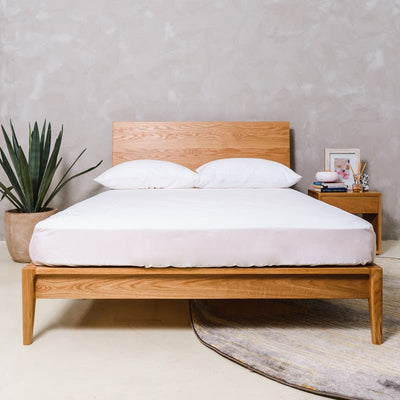
On a soft mattress, the shoulders and upper torso sink farther into the bed. That moves the body closer to the level of the pillow, reducing the amount of height needed behind the head.
A firm mattress lets the upper body stay closer to the surface instead of sinking deeply. Some back sleepers therefore need a little more pillow height to fill the space behind the neck and head.
This is why changing your mattress can make a previously comfortable pillow suddenly feel wrong, even if the pillow itself has not changed.
There is no single back-sleeper height that works for every body. A larger-framed sleeper may compress both the mattress and pillow differently from a lighter sleeper. Upper-back curvature and head shape also change the space that needs to be supported.
For that reason, your final choice should be based on how the pillow performs while you are lying on your own mattress—not on height alone while the pillow sits unused on a shelf.
Most back sleepers tend to prefer medium to medium-firm support because the pillow needs to hold the head up without feeling rigid or allowing it to sink all the way through. The Soft vs Medium vs Firm Pillows guide explains why firmness and support are not the same thing.
Firmness is not the same as support. A very soft pillow can still support well if it has enough resilient fill and the correct height. A very firm pillow can still be a poor fit if it is too tall.
A softer pillow can work well for back sleepers who enjoy a plush hotel feel, especially when the pillow starts with enough loft and compresses into the correct position rather than collapsing completely.
A firmer pillow can suit sleepers who prefer a more stable head position or a solid foam feel. It should still have the correct loft; extra firmness does not compensate for a pillow that is too high.
There is no single best material for every back sleeper. Choose material based on the type of support, compression, temperature feel and adjustability you prefer.
Memory foam conforms closely around the head and neck and tends to hold its shape more consistently than loose fibre. Solid memory foam is especially predictable for sleepers who want stable support.
The trade-off is that dense memory foam can retain more warmth. Ventilation holes, gel infusions, breathable covers and other design features can change how warm a specific pillow feels.
Latex is more buoyant and springy than memory foam. It tends to keep its shape, responds quickly when you move and is often more breathable than dense memory foam.
A solid latex pillow can feel too tall or springy for some back sleepers, so loft still matters. Shredded latex designs are often more adjustable.
Down and down-alternative pillows feel soft, fluffy and mouldable. They compress more than most solid foams, which can be useful for back sleepers who prefer a lower, cushioned feel.
The main issue is support consistency. Very soft fibre can flatten overnight, so back sleepers should make sure the pillow retains enough effective loft rather than choosing only by how fluffy it feels when new.
Adjustable fill is useful when you are unsure of your ideal loft. Removing or adding fill lets you tune the pillow after sleeping on it instead of committing to one fixed height.
Buckwheat hulls create a firm, mouldable surface and can usually be added or removed to change loft. They also allow airflow well, but some sleepers dislike the firm feel, weight or rustling sound.
A fixed-height pillow works well when you already know your preferred loft and firmness. It is simple: there is nothing to configure, redistribute or remember.
An adjustable pillow is more forgiving when you are changing mattresses, switching between back and side sleeping, or simply do not know whether you need 10, 12 or 14 cm after compression.
This is particularly useful because pillow labels are not standardised. One brand’s “medium” can feel like another brand’s “firm,” and two pillows with the same nominal height can compress very differently.
Hush Home’s four current adult pillows cover different back-sleeper preferences rather than one universal “best” model.
The Miracle Pillow™ can be configured to nominal heights of 12, 14, 16 and 18 cm and can be flipped between a softer microfiber side and a firmer memory-foam side.
For a back sleeper, the value is not that one of those numbers is guaranteed to be correct. The value is that you can start lower, test the pillow on your own mattress, then add height if your head or neck feels under-supported.
This is the most flexible Hush option for someone who changes mattresses, alternates between back and side sleeping, or has not yet learned their preferred pillow profile.

The OnePillow™ uses fluffy microfiber outer chambers around an adjustable middle layer of interlocking memory foam. Fill can be removed or redistributed to change the loft below approximately 20 cm.
This makes it useful for back sleepers who dislike a solid foam block but still want to fine-tune how high the pillow sits after compression.

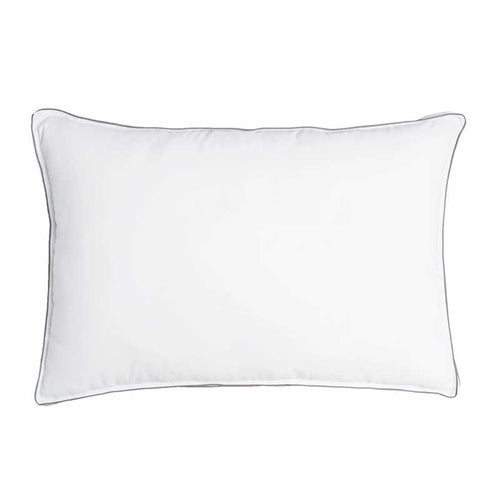
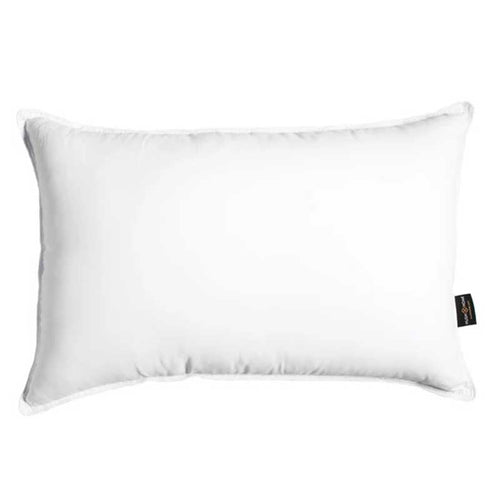
The Loft Pillow™ is made from down-like microfiber and is offered in two nominal heights. Hush specifically labels the 12 cm version for back sleeping and the 15 cm version for side sleeping.
Because microfiber compresses more than solid foam, the 12 cm nominal height should not be compared directly with a 12 cm solid memory-foam pillow.
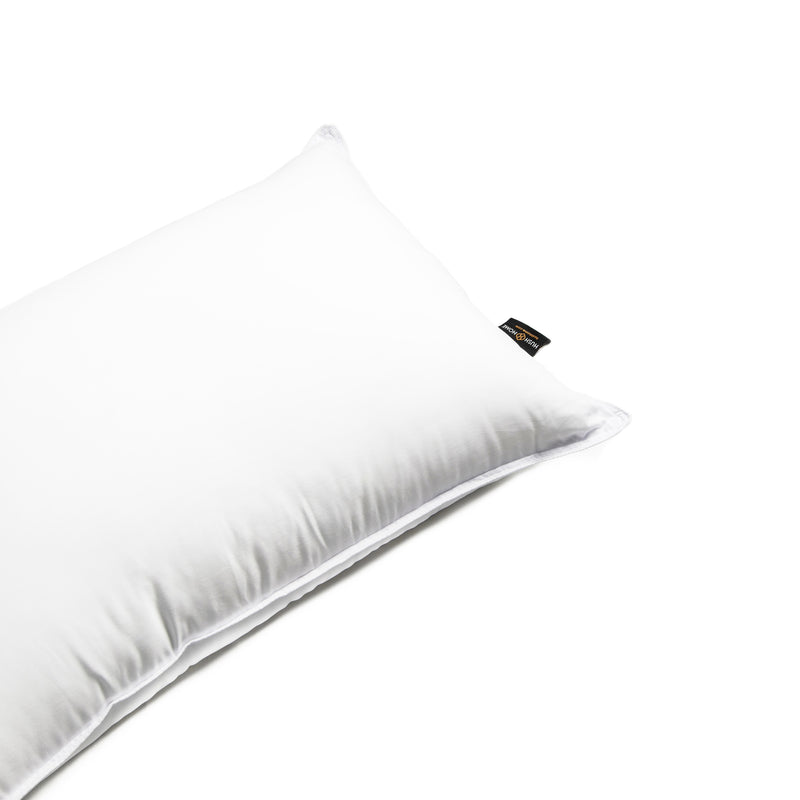
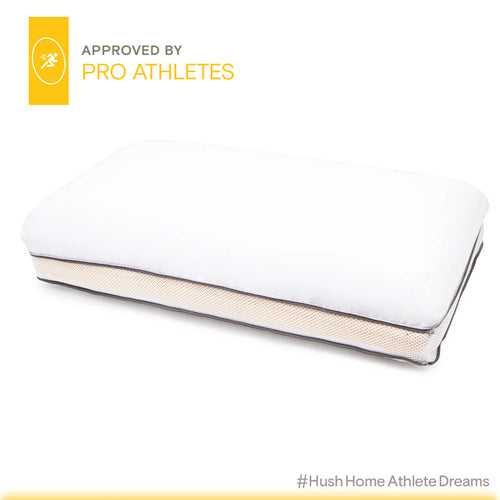
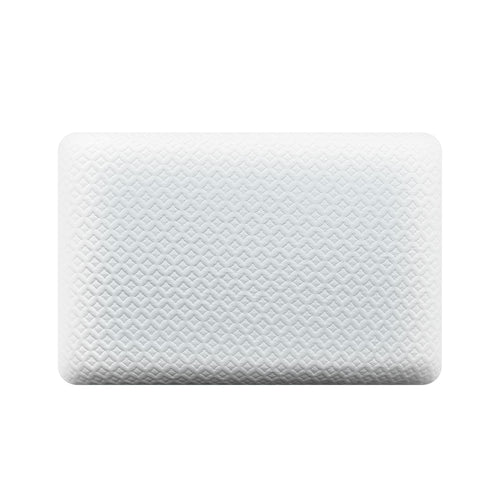
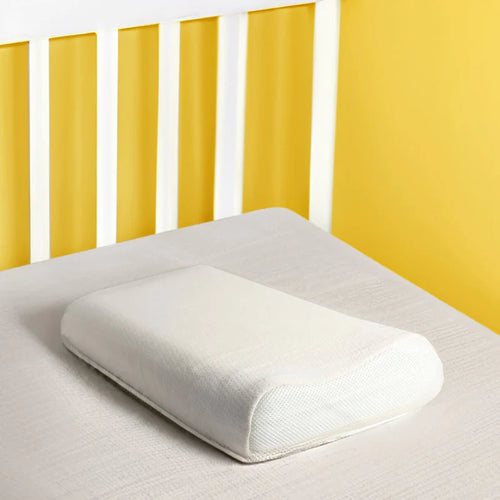
The Essence Memory Foam Pillow™ uses a single 12 cm memory-foam core with a medium-hard feel. There are no removable layers.
It is the simplest Hush choice for a back sleeper who already knows that a stable, fixed-height memory-foam pillow suits their mattress and body.

Because your torso sinks farther into a soft mattress, begin toward the lower end of your pillow’s available range. A highly adjustable pillow makes this easier.
Do not assume that a tall, firm pillow is necessary just because the mattress itself feels soft. Mattress sinkage and pillow support interact.
A firm mattress holds the upper body higher, so some sleepers need slightly more effective loft behind the head and neck. That does not necessarily mean choosing the highest setting; add height gradually and assess the chin and neck position.
Combination sleepers have a difficult compromise: side sleeping usually needs more loft than back sleeping. A fixed pillow that is perfect on your side may be too tall when you roll onto your back.
Adjustable fill, removable layers, dual-height contours or a pillow that compresses predictably can make this compromise easier. See the Best Pillow for Combination Sleepers guide for more detail.
If back sleeping is your primary position, tune the pillow primarily for your back and make sure it remains acceptable when you move to your side—not the other way around.
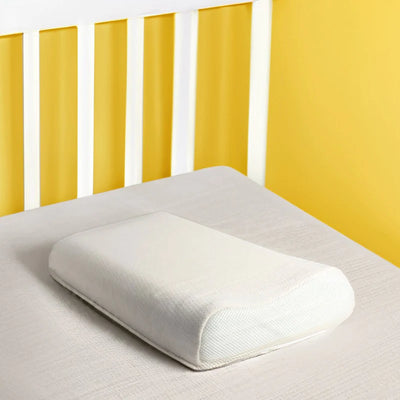
No. A contour or cervical pillow can create a defined neck-support zone, and some back sleepers like that structure, but the shape is not automatically superior to a conventional rectangular pillow.
The contour still has to match your neck length, head position and mattress. A contour that is too high can be just as uncomfortable as a rectangular pillow that is too high.
Sleeping position does not determine temperature by itself, but material and construction matter. Dense solid memory foam tends to contour closely and can retain more heat, while latex, fibre and more open constructions often allow more airflow.
If you prefer memory foam, look for ventilation channels, perforations, breathable covers or other heat-management features rather than assuming all foam pillows feel equally warm.
Back sleepers usually need less loft because the shoulder does not create the same vertical gap. A side-sleeper pillow may therefore push the head too far forward.
A 12 cm microfiber pillow and a 12 cm solid foam pillow may behave very differently once your head rests on them.
Support is the combined result of height, firmness, resilience and shape. A very firm pillow at the wrong height is still the wrong pillow.
Pillow and mattress work as one system. A pillow that fits on a firm mattress can become too high after you move to a softer mattress.
A sculpted contour is a fit preference, not proof of medical superiority. The contour still needs to match your anatomy and sleep setup.
Pillow fit can influence comfort and sleeping posture, but persistent or severe neck pain has many possible causes. A pillow guide should not replace medical assessment.
Medium loft is the most common starting point. Sleep Foundation currently defines this as roughly 3 to 5 inches, or about 7.6 to 12.7 cm. The right effective height can still fall outside that range depending on mattress firmness, body size and pillow compression.
Many back sleepers prefer medium to medium-firm support, but softer pillows can work if they retain enough effective loft. The goal is stable support without excessive forward head tilt.
Yes, it can be. Memory foam conforms around the head and neck and can provide stable support. Choose the correct loft and consider ventilation features if you tend to sleep hot.
It can be if it starts with enough loft and does not flatten too far under the head. Soft down-alternative or microfiber pillows compress more than solid foam, so judge their compressed height rather than only their new, fluffy appearance.
For many people, 12 cm sits within the commonly recommended medium-loft range. But 12 cm of soft fibre and 12 cm of solid foam are not equivalent. Your mattress and how much the pillow compresses determine whether the effective height is right.
Only if the contour suits them. A shaped neck zone can feel supportive, but a conventional rectangular pillow at the right loft can work equally well. Shape alone does not make a pillow better.
There is no single best model for everyone. The Miracle Pillow™ offers the most height and firmness adjustment; The OnePillow™ combines adjustable height with a softer hotel feel; the 12 cm Loft Pillow™ is specifically offered for back sleeping; and The Essence Memory Foam Pillow™ is the simple fixed-height medium-hard memory-foam option.
Not automatically, but reassess it. A new mattress can change how far your shoulders and torso sink, which changes the effective pillow loft you need.
For back sleepers, the best pillow is usually neither very high nor completely flat. Start with medium loft and medium support, then adjust for your mattress, body and material compression.
If you already know the height and feel you like, a fixed pillow can be simple and reliable. If you are unsure, an adjustable pillow removes much of the guesswork.
Most importantly, judge the pillow while it is compressed under your head on your own mattress. The number on the size guide is useful—but the sleeping position it creates is what actually matters.