





















How Long Does It Take to Break In a New Mattress?
09 Oct 2026

A useful general rule is to give a new mattress around 2–4 weeks of normal sleep before making a final comfort judgement, provided the mattress is not causing severe or worsening discomfort. Sleep Foundation notes that many mattress trial policies use a required break-in period of roughly two weeks to one month because it can take time to become accustomed to a new sleep surface.
That does not mean every mattress physically “finishes breaking in” on day 30. Some materials may settle slightly, but much of the early change can also come from your body becoming accustomed to a different firmness, pressure distribution and sleeping posture.
Quick Answer: 2–4 Weeks Is a Sensible Starting Point
For many people, the first few nights feel unfamiliar, the second week feels more natural, and by around weeks three to four they have a much clearer idea of whether the mattress suits them. Some sleepers adjust sooner; others may need longer if they have changed from a very soft mattress to a firm one, from foam to a hybrid, or from an old sagging mattress to a newer, more supportive surface.
A small study that followed people for 28 days after changing to new medium-firm bedding found that comfort and sleep-quality improvements became more prominent over the four-week observation period. This does not establish a universal break-in timetable, but it supports the practical idea that judging a new bed after only one or two nights can be premature.
There are usually two different processes happening at the same time: the mattress may settle slightly, and the sleeper is adapting to the mattress.
If your previous mattress was very soft, sagging or worn, a new mattress can initially feel unusually firm even when its actual firmness is appropriate for you. Your shoulders, hips and back are being supported in a different way, so the pressure pattern you feel at night changes.
This adaptation is one reason a mattress can feel different after several weeks even if the materials have changed only slightly.
Foams, fibres and quilted comfort layers can become a little more flexible with repeated normal use. Memory foam can also feel different depending on temperature because it responds to body heat and room conditions.
However, normal break-in should be modest. A new mattress is not supposed to transform from very firm to very soft, collapse dramatically or develop deep permanent impressions during the first few weeks.
A tightly finished new mattress can feel slightly taut at first. Repeated sleeping, normal movement and bedding use may allow the surface fabric and quilting to sit more naturally around the comfort layers underneath.
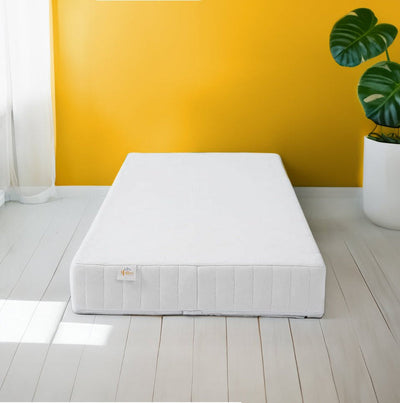
Some compressed mattresses need time after unpacking to reach their intended dimensions. That is an expansion period, not the same thing as the weeks-long comfort adjustment period. Always follow the manufacturer's setup instructions before judging the mattress or sleeping on it.
Yes, but exact “break-in days” by material are usually oversimplified. Construction, foam density, layer thickness, firmness, body weight and the mattress you were previously using can matter as much as the material category itself.
Foam mattresses may feel a little firmer when brand new. Repeated use and warmth can make upper foam layers feel more responsive, but there is no universal rule that every memory-foam mattress needs a specific number of days before it becomes comfortable.
Hybrid mattresses combine foam or other comfort materials with a coil support core. Early adjustment can therefore involve both the upper comfort layers settling slightly and the sleeper adapting to a more buoyant or supportive feel than their previous bed.
Latex is naturally resilient and usually changes less dramatically in feel than slow-response memory foam. The sleeper may therefore notice more personal adjustment than major material softening.
Traditional spring mattresses may have less upper foam to settle, although quilting and padding can still relax somewhat. Again, the body adapting to a different level of support can be a large part of what people describe as the break-in period.
It can be normal for a new mattress to feel firmer, flatter or simply “different” from what you expected. You may notice different pressure around your shoulders or hips, need to change sleeping position more often, or take several nights to find the pillow height and bedding setup that works best with the new mattress.
Mild temporary stiffness can also happen when changing from a very old or unsupportive sleep surface. What matters is the direction of change: the experience should generally become more familiar, not progressively worse.
A break-in period is not a reason to ignore a clear product problem or significant physical discomfort.
Contact the retailer or manufacturer sooner if the mattress has a visible defect, major unevenness, obvious sagging, damaged components, the wrong size, or a setup problem that prevents the mattress from being properly supported.
Likewise, severe pain, worsening pain, persistent numbness or tingling should not be dismissed as a normal mattress break-in symptom. If symptoms are significant or persistent, seek appropriate medical advice rather than relying on a mattress adjustment period to solve them.
If the firmness is tolerable, give your body several nights and ideally a few weeks before deciding. Check that the mattress is on the correct base and that there is no unusually tight protector, board or other layer changing the feel.
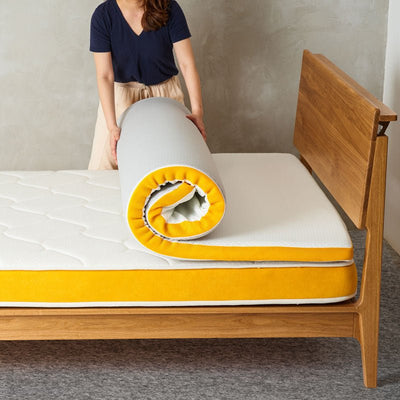
A mattress topper can soften the surface, but adding one immediately may make it harder to judge the mattress itself. If you are still within a sleep trial, it can be useful to evaluate the original mattress first unless the discomfort is significant.
First check the foundation. A flexible or unsupported base can make a mattress feel softer or allow excessive sinking. If the setup is correct and the mattress already feels clearly too soft from the beginning, do not expect normal break-in to make it firmer; most break-in changes, if anything, move slightly toward a more relaxed or softer surface feel.
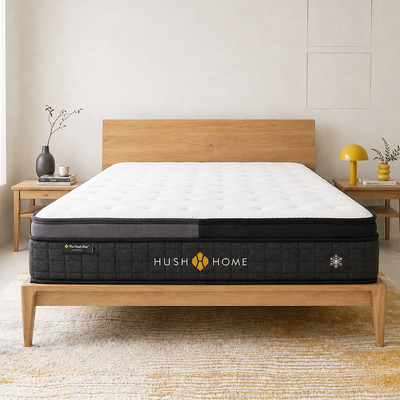
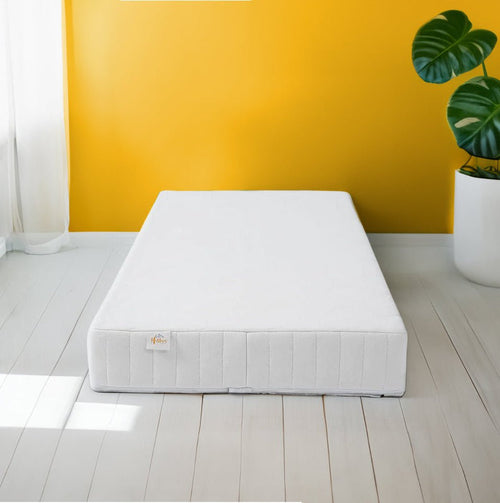
Hush Home's current 100-Night Home Trial applies to the Organic Mattress™, Hush Mattress™, Essence Firm Mattress™ and Loft Mattress™. Hush asks customers to try an eligible mattress for at least 30 nights before requesting a return because it can take time for the body to adjust to a new sleeping surface.
The Hush Duo Mattress™ is different. It does not use the 100-Night return trial. Instead, it has a separate 365-Night Comfort Guarantee that allows the sleeper to fine-tune firmness with up to two complimentary additional Comfort or Support Inserts during the first year.
That distinction is useful for this topic. If a Hush Duo side feels too soft or too firm, the solution is not necessarily to wait for the mattress to “break in.” Because its upper firmness system is configurable, adjusting the insert arrangement may be more appropriate than hoping normal use will substantially change the feel.

If the mattress is structurally sound and discomfort is mild, around 30 nights is a reasonable checkpoint. By then, you have experienced multiple weeks of normal sleep rather than a few isolated nights.
Ask yourself:
If the answer is still clearly negative after a fair adjustment period, use the retailer's trial, exchange or comfort-adjustment policy while it is still available.
False. Thirty days is a useful trial checkpoint used by many brands, but individual adjustment varies and different mattress constructions change differently.
Not necessarily. Some upper layers may relax slightly, but major softening, collapse or deep early impressions should not be treated as normal break-in.
No. Mild unfamiliarity can be normal, but severe or worsening pain, persistent numbness, visible defects or setup problems deserve earlier attention.
This is unnecessary and can damage the mattress. Normal nightly use is the safest way to allow both the sleeper and mattress surface to settle naturally.
If discomfort is mild and there is no defect, around 2–4 weeks is a reasonable minimum adjustment window. Always check the actual trial policy because some brands require a specific minimum period before accepting a return.
A showroom model may have been used by many shoppers and therefore feel more relaxed than a brand-new mattress. Temperature, the bed base, bedding and the short amount of time you spend lying in a shop can also change your perception of firmness.
It can feel a little more responsive after repeated use, and temperature also affects how memory foam feels. But it should not suddenly become dramatically softer, and there is no universal number of days that applies to all memory-foam mattresses.
They can. The upper foam or fibre layers may settle slightly, while the sleeper also adapts to the coil support underneath. The adjustment period varies by construction and by the sleeper.
Yes, but a topper changes the sleep surface, so it can make it harder to judge the mattress itself. If the mattress is merely unfamiliar rather than significantly uncomfortable, consider testing the original surface first.
Hush's eligible mattresses come with a 100-Night Home Trial and currently require at least 30 nights of use before a return request, specifically because the body can take time to adjust to a new sleep surface. Hush Duo uses a different 365-Night firmness-adjustment guarantee rather than the 100-Night return trial.
For most sleepers, 2–4 weeks is a useful period for a new mattress to start feeling familiar. The process is partly the comfort materials settling slightly and partly your body learning a different support pattern.
Do not expect a completely different mattress after 30 days. Normal break-in is subtle. If the mattress remains clearly unsuitable after a fair trial—or if you notice a defect, severe discomfort or worsening symptoms earlier—use the manufacturer's support or trial process rather than assuming more time will fix everything.