






How to Stop a Mattress Topper From Sliding
07 Oct 2026
A mattress topper should stay centred on the mattress. If you are pulling it back into position every morning, the problem is usually not the foam itself—it is the way the topper, mattress, sheets and bed frame interact.
Fortunately, most sliding problems can be solved without replacing the topper.
Quick Answer: What Is the Best Way to Stop a Topper Sliding?
Use a topper that matches the mattress dimensions, secure any built-in corner straps, and pull a correctly sized fitted sheet snugly over the sleep surface. If the topper still moves, place a thin non-slip mat between the mattress and topper.
Before adding more accessories, check that the mattress itself is not sliding on the bed frame. Otherwise, you may be trying to secure the topper while the whole sleep surface is moving underneath it.
The most common causes are simple: the topper is slightly too large or small for the mattress, both surfaces are very smooth, the fitted sheet is loose, the sleeper moves frequently, or the mattress and bed frame are not stable enough. A smooth mattress protector placed between the mattress and topper can sometimes reduce friction too.
A topper should sit evenly inside the mattress perimeter without hanging over the sides or leaving large gaps. Even a small mismatch can make shifting easier because body movement repeatedly pushes the topper toward the nearest free space.
Check the actual centimetre measurements, not just the label “Single”, “Queen” or “King”, because mattress dimensions can vary between brands.
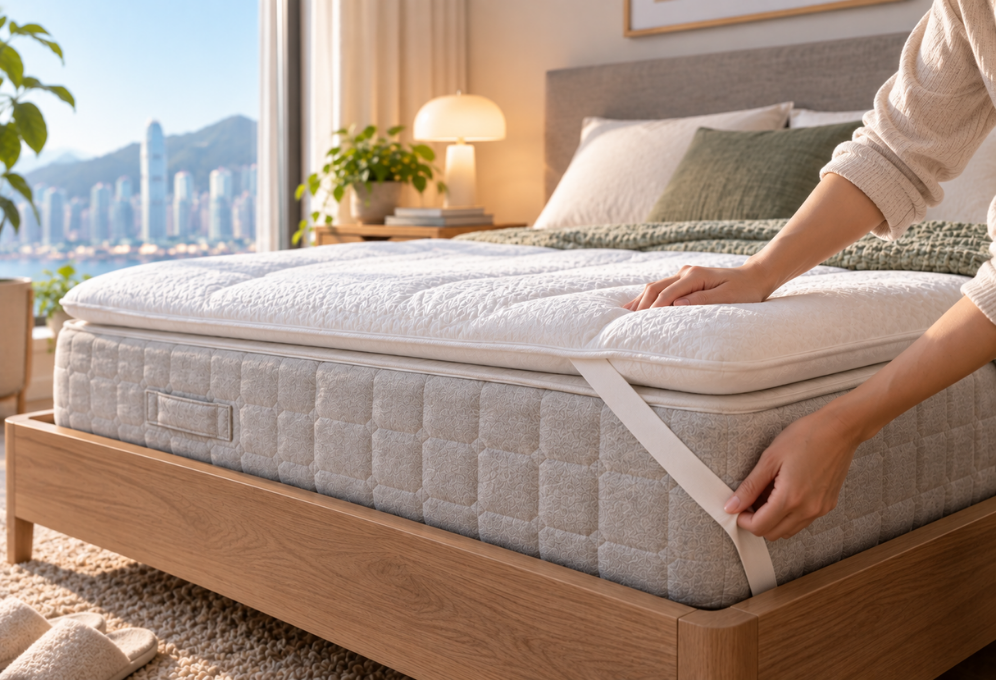
If your topper has elastic corner straps, use them before buying another anti-slip accessory. The straps should be secure enough to resist movement but not pulled so tightly that they permanently overstretch or distort the topper.
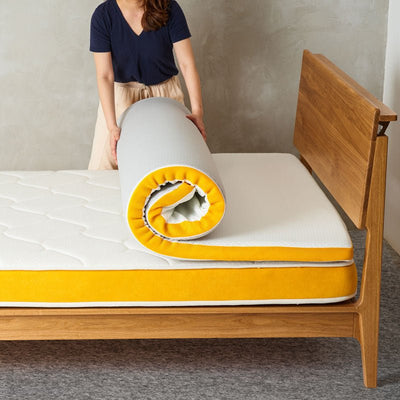
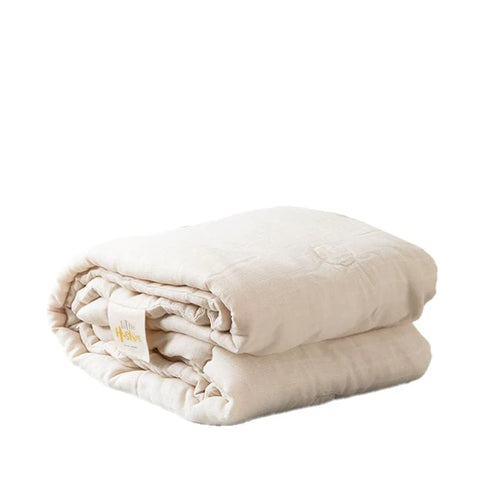
The Dual Mattress Topper™ from Hush Home includes adjustable elastic corner straps. Hush's current setup instructions recommend aligning the topper on the mattress, adjusting the straps to the mattress thickness and securing them around the corners.

A fitted sheet can help hold the topper and mattress together as one sleep surface. It should be deep enough to cover the combined height comfortably but tight enough that excess fabric does not bunch or move.
If the sheet constantly pops off the corners, do not simply pull it harder. Check whether the pocket depth is sufficient for the mattress plus topper.
If smooth surfaces are the main problem, a thin non-slip mat between the mattress and topper can add friction without materially changing the feel of the bed. Choose one that lies flat, does not bunch and is large enough to support most of the topper surface.
Check the care and warranty instructions for both products before adding rubberised mats, adhesives or other materials that remain in prolonged contact with foam or fabric.
If the topper suddenly started sliding after you added a mattress protector, cooling pad or another layer, that new surface may be reducing grip. Try simplifying the setup and see whether the movement stops.
Where possible, a protector that is designed to fit over the combined sleep surface may also help hold the layers together—but only if its stated pocket depth can safely accommodate the mattress and topper together.
Sometimes the topper is blamed when the mattress itself is moving. Push the mattress gently from the side. If it shifts easily across the platform or slats, stabilise that interface first and check that the bed frame is assembled correctly.
A topper will always be harder to keep aligned if the surface underneath it moves every time you get in, turn over or get out of bed.
If a topper is badly warped, permanently curled, significantly smaller than the mattress, or has stretched-out straps that no longer hold tension, anti-slip accessories may only hide the underlying problem. Replacement or repair may be more sensible.
Also distinguish sliding from a mattress problem. A topper cannot compensate for a mattress that is structurally unstable or deeply sagging underneath it.
Try the fixes in this order:
A thin, clean, flat non-slip mat can help add grip, but check that its material is suitable for prolonged contact with your mattress and topper. Avoid anything that transfers colour, leaves residue or traps obvious moisture.
Often, yes. A snug fitted sheet can hold the topper and mattress together. If it is too loose—or too shallow for the combined height—it may not work well.
Repeated body movement plus a smooth mattress surface can gradually push a topper in one direction. Check sizing, straps and fitted-sheet tension first, then add a non-slip layer if necessary.
It is better to start with non-destructive methods. Tape can leave adhesive residue, while pins can puncture covers or place concentrated stress on fabric and foam. Use the manufacturer's securing system, a fitted sheet or an appropriate non-slip mat first.
The current Dual Mattress Topper™ uses adjustable elastic straps around the mattress corners. According to Hush's setup instructions, the straps can be adjusted to match mattress thickness before being secured in place.
If a mattress topper keeps sliding, start with the simplest causes before buying more accessories. Make sure the topper actually matches the mattress, use its straps correctly and keep the fitted sheet snug. If those do not solve the problem, add friction with a thin non-slip mat and check whether another bedding layer—or the mattress itself—is moving.
For Hush Home's Dual Mattress Topper™, use the adjustable corner straps as the first line of defence rather than relying on improvised tape or pins.