















How Long Does a Duvet Last? Signs It's Time to Replace Your Duvet
07 Oct 2026

A duvet usually lasts longer than sheets or pillowcases because it does not sit directly against your skin in the same way, especially when protected by a washable duvet cover. But the filling is still compressed every night, exposed to body moisture and affected by cleaning, drying and storage over time.
That means a duvet should not be replaced simply because it reaches a certain birthday. Some duvets fail early because the filling permanently flattens or clumps; others remain comfortable and structurally sound for much longer.
Quick Answer: How Often Should You Replace a Duvet?
There is no single replacement schedule. As a broad reference, many quality duvet inserts can remain usable for roughly 5–10 years or more, while well-made down duvets may last beyond a decade with appropriate care. Synthetic fillings often lose loft and insulation sooner than resilient high-quality natural fills, but construction, nightly use and care matter just as much as fibre type.
Use age as a reminder to inspect the duvet—not as an automatic disposal date.
The main factors are fill material, construction quality, how often the duvet is used, whether it is protected by a duvet cover, how it is cleaned and dried, and how it is stored.
A duvet in a guest room may experience far less compression and moisture than one used every night. A duvet that is repeatedly washed against its care instructions may deteriorate faster than one that is protected with a cover and cleaned only as required.
Loft is the thickness and springiness created by the filling. If your duvet now looks noticeably flatter than it used to and no longer recovers after appropriate airing, fluffing or cleaning, the filling may have lost resilience.
A flatter duvet is not automatically unusable, but permanent loss of loft can reduce its ability to trap air and provide even warmth.
Temporary clumping after cleaning does not always mean the duvet is finished. Some fillings need to be dried thoroughly and redistributed before they recover.
However, if the duvet develops permanent lumps, thin empty zones or filling that repeatedly slides away from certain areas, its warmth and comfort may become uneven.
A healthy duvet should distribute insulation reasonably evenly across its surface. If the room conditions and your normal sleep setup have not changed but you increasingly notice cold areas, inspect the filling.
Cold spots can indicate flattened filling, empty compartments or failed internal stitching. If redistributing the filling does not correct the problem, replacement may be more practical than repeatedly compensating with extra blankets.
Small isolated damage may sometimes be repairable. But widespread thinning fabric, multiple split seams, broken baffles or repeated filling leakage are stronger signs that the duvet is reaching the end of its useful life.
Once the construction can no longer keep the filling where it belongs, even a warm filling may stop performing evenly.
A duvet should not be replaced merely because it smells stale after storage. First follow the care label, clean it appropriately if permitted and make sure the filling is completely dry.
If a musty odour quickly returns despite correct cleaning and complete drying, investigate the storage environment and the duvet itself. Persistent dampness, mould-like staining or contamination that cannot be safely removed may justify replacement.
Cosmetic discolouration alone does not automatically mean a duvet has failed. What matters is whether the item can still be kept hygienically clean using the manufacturer's approved care method.
If the care label does not allow the treatment required to remove serious contamination, or if a professional cleaner says the item cannot be safely restored, replacement may be the more sensible option.
Duvets are functional bedding. If yours is still intact but consistently feels too thin, uneven or ineffective compared with when it was new, that loss of performance matters.
Before replacing it, make sure the difference is not simply caused by a colder room, stronger air-conditioning, different sleepwear or changing personal preferences. If the environment is similar and the duvet itself has clearly lost performance, replacement becomes more reasonable.
Yes. Different fillings age in different ways, although no material comes with a guaranteed household lifespan.
Synthetic fillings are often light, washable or easy-care depending on the product, but repeated compression and cleaning can gradually reduce loft. Current bedding guidance generally expects synthetic fills to lose insulation resilience sooner than high-quality down, although better construction can still provide many years of use.
High-quality down can be especially long-lived because the clusters can retain and recover loft when cared for correctly. Current consumer guidance often places well-made down duvets beyond 10 years, with some lasting considerably longer. Poor drying, damaged casing or broken internal chambers can still shorten that lifespan.
Wool and silk require material-specific care. Their useful life depends heavily on fibre quality, construction and whether the care label is followed. Do not apply synthetic- or down-duvet washing advice automatically to these materials.
A duvet cover usually experiences more direct contact, friction and frequent washing than the duvet insert inside it. For that reason, the cover may show fading, thinning, broken buttons or zip wear while the insert itself is still in good condition.
Do not assume you need to replace both at the same time. Inspect them separately.
Sometimes. A small seam opening, loose corner loop or isolated stitching problem may be repairable before it becomes larger.
Repair becomes less practical when the shell is brittle across a large area, multiple chambers have failed, filling is escaping from many places, or the filling itself has permanently lost loft.
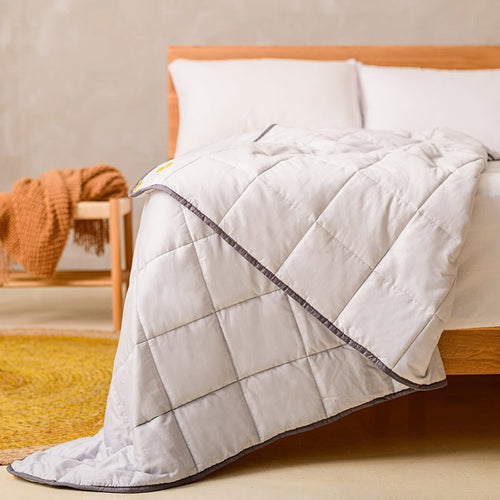
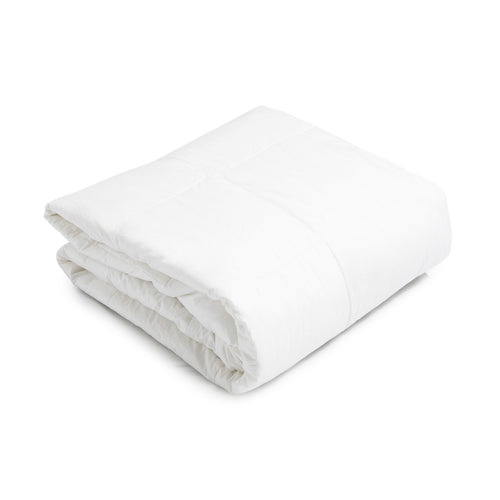
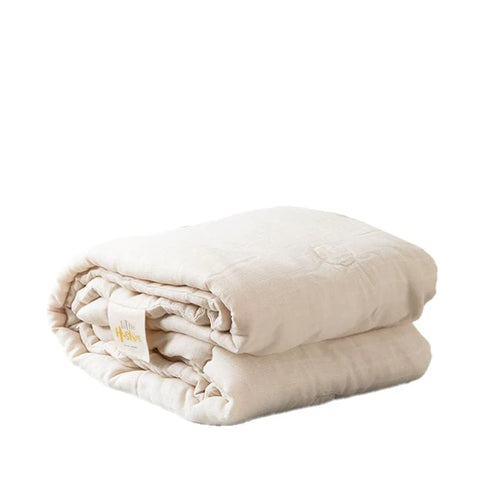
Hush Home's current All-Season Duvet™ is published with 100% microfibre filling at 250 gsm, a long-staple cotton shell and double-stitched piping seams. Despite the Chinese product name, the current published filling specification is microfibre—not silk.
Hush does not currently publish a fixed replacement age for the duvet. That is appropriate: owners should judge it by loft, evenness, warmth, casing integrity and whether it remains hygienically cleanable.
The current Hush Care Guide recommends protecting the duvet with a duvet cover and dry cleaning only as needed. It lists tumble drying below 60°C and ironing below 110°C, and says not to wash the duvet in water or use bleach. Always check the latest care guide before cleaning because product instructions can change.
The duvet currently carries a 1-year HushCare warranty. Warranty length is not the same as expected useful life: a one-year warranty does not mean the duvet should automatically be replaced after one year.

In Hong Kong, a musty duvet should trigger a moisture check before a shopping decision. Inspect the wardrobe, storage bag and surrounding walls for dampness or condensation, and follow the duvet's approved cleaning method.
If the duvet can be cleaned safely and the odour disappears after complete drying, it may still be usable. If the odour repeatedly returns or there is mould-like contamination in porous filling that cannot be safely restored, replacement may be necessary.
Before replacing your duvet, ask:
If most answers are yes, age alone is not a strong reason to replace it.
False. Five years can be a useful inspection point for some products, but quality, filling, usage and care can make actual lifespan much shorter or much longer.
Not necessarily. The problem may be failed internal construction, degraded fibres or filling that no longer recovers. Adding material is not a simple home repair for most modern duvets.
False. Warranty duration and useful life are different concepts. Warranty terms describe what defects or failures the brand agrees to cover during a specified period; they are not an expiry date.
False. Persistent mustiness should trigger a moisture and cleaning check. Masking the smell does not remove trapped dampness or contamination.
There is no fixed number. Current consumer guidance varies widely, but synthetic duvets are generally expected to lose loft sooner than high-quality down. A useful approach is to begin inspecting more carefully after several years and replace based on permanent flattening, clumping, cold spots, damage or hygiene problems rather than age alone.
A well-made, well-maintained down duvet can often last 10 years or more, and some consumer guidance suggests substantially longer service life is possible. Its actual condition still matters more than the number of years.
Sometimes. If clumping happens after cleaning, the filling may simply be incompletely dried or poorly redistributed. Follow the care instructions and make sure it is fully dry. If lumps remain permanently after correct care, the filling may have degraded.
Usually, yes. A cover reduces direct exposure to body oils, sweat and spills and can be washed more frequently than the insert. This can reduce how often the duvet itself needs intensive cleaning.
No. They experience different kinds of wear. Replace each item according to its own condition.
It can. If the fill permanently loses loft, clumps or shifts away from certain areas, the duvet may trap less air or create cold spots. But changes in room temperature, air-conditioning and personal warmth preference can also affect how warm a duvet feels.
A duvet does not need to be replaced simply because it reaches a specific age. Quality duvet inserts often last many years, and some can remain serviceable well beyond a decade.
The strongest replacement signs are permanent loss of loft, unrecoverable clumping, repeated cold spots, failing seams or casing, filling leakage, persistent musty odour or contamination that cannot be safely cleaned.
Good care can extend useful life: use a duvet cover, follow the exact care label, dry the filling completely and store it in a suitable dry environment. In Hong Kong, moisture control is especially important.