





Should You Sleep With One Pillow or Two?
17 Sep 2026
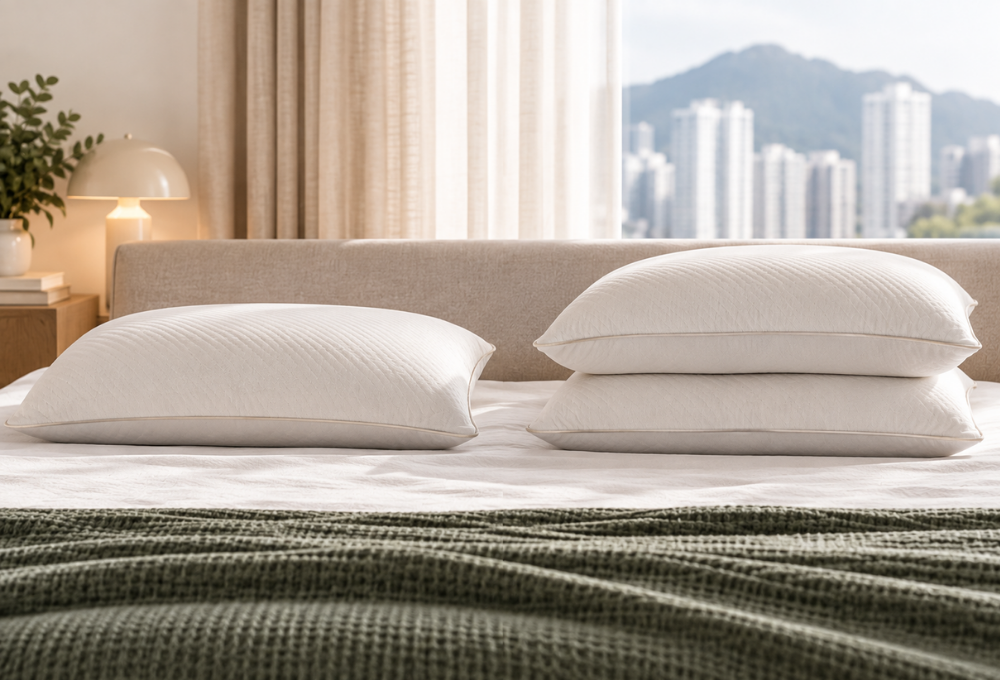
For most people, one well-chosen pillow under the head is enough. The important question is not how many pillows you use, but whether the total height and support keep your head and neck in a comfortable, natural position while you sleep.
Two pillows are not automatically better. If stacking two pillows pushes your head too far upward or forward, the extra height may feel uncomfortable. On the other hand, two thinner pillows can sometimes work well if their combined height suits your body and sleeping position.
KEY TAKEAWAY
Choose the pillow setup that fills the space between your head and mattress without forcing your neck into an awkward angle. Total pillow height matters more than whether you use one pillow or two.
Pillow height, sometimes called pillow loft, is the thickness of the pillow before and while it is supporting your head. The right height depends on your sleeping position, shoulder width, body shape, mattress firmness and how much the pillow compresses under your weight.
This is why asking “one pillow or two?” can sometimes be the wrong question. One thick pillow may be higher than two soft, compressible pillows, while two very thin pillows may still create only a moderate total height.
If you are unsure about your ideal height, our Pillow Height Guide explains how sleeping position, body size and mattress feel affect the amount of loft you may need.
| 睡眠姿勢 | Useful Starting Point | When Two Pillows May Work |
|---|---|---|
| Side sleeper | One supportive medium- or high-profile pillow | Two thinner pillows can work if their combined compressed height keeps the head comfortably aligned. |
| Back sleeper | One medium-height pillow | Two thin pillows may work, but two standard pillows can easily become too high. |
| Stomach sleeper | One very thin, soft pillow—or sometimes no pillow under the head | Two pillows directly under the head are less likely to suit because of the added height. |
These are practical starting points rather than universal rules. Shoulder width, body shape, pillow compression and mattress firmness can all change the height that feels comfortable.
Side sleepers generally need more pillow height than back or stomach sleepers because the pillow has to fill the space between the side of the head and the mattress created by the shoulder.
For many side sleepers, one supportive medium- or high-profile pillow is simpler than stacking two pillows. A single pillow that holds its shape can provide a more consistent surface through the night.
However, if you already own two thin pillows and their combined height keeps your head comfortably in line with your body, there is no rule saying you must replace them with one pillow.
A second pillow can also be useful somewhere other than under your head. Some side sleepers like placing a pillow between the knees for comfort and to help keep the hips and legs in a more neutral position.
You can also browse Hush Home’s pillows for side sleepers if you want to compare profiles designed with this position in mind.
Back sleepers usually need less height than side sleepers. A medium-height pillow is often enough to support the natural curve of the neck without pushing the chin excessively toward the chest.
Stacking two standard pillows directly under the head can easily become too high for some back sleepers, particularly if both pillows are firm or do not compress much.
If you enjoy using a second pillow, it may be more useful under the knees rather than under the head. Some back sleepers find that a thin pillow beneath the knees makes the position feel more relaxed.
For fixed and adjustable options aimed at this position, see Hush Home’s pillows for back sleepers.
Stomach sleepers usually need the least head elevation. A thick pillow can lift the head too far away from the mattress while the neck is already turned to one side.
For this reason, many stomach sleepers prefer one very thin, soft pillow, while some are comfortable sleeping without a pillow under the head at all.
Using two pillows directly under the head is generally less likely to suit a stomach sleeper because the combined height can increase the angle of the neck.
If each pillow is relatively thin or soft, stacking two may give you the same overall support as one thicker pillow.
The second pillow does not need to sit under your head. It can be placed between the knees, under the knees, hugged in front of the body or used to support another comfortable sleeping position.
Some people stack pillows when they want to sit up in bed, read or watch television. That is different from choosing the best height for several hours of actual sleep.
If a healthcare professional has advised a particular elevated sleeping position for a medical reason, follow that specific advice rather than simply adding pillows yourself.
The most common problem with stacking pillows is excessive height.
Your setup may be too tall if you regularly notice that:
Rather than removing a pillow solely because you use two, look at the total compressed height once your head is actually resting on them.
Yes, mattress firmness can affect the pillow height that feels right.
On a softer mattress, your shoulders and body may sink farther into the sleep surface, reducing the gap between your head and mattress. You may therefore need less pillow height.
On a firmer mattress, your body generally remains higher on the surface, which can leave more space for the pillow to fill—particularly when side sleeping.
This is another reason there is no universal answer such as “everyone should use one pillow.” Pillow height has to work together with your mattress and body.
If you are also unsure whether your mattress itself is too soft or too firm, our Mattress Firmness Guide can help you separate mattress feel from pillow-height issues.
For many sleepers, an adjustable pillow is a simpler way to fine-tune height than repeatedly stacking and rearranging multiple pillows.
An adjustable design lets you change the pillow itself until the height feels appropriate. This can be especially useful for combination sleepers, couples who prefer different heights, or people whose current pillow feels slightly too high or too low.
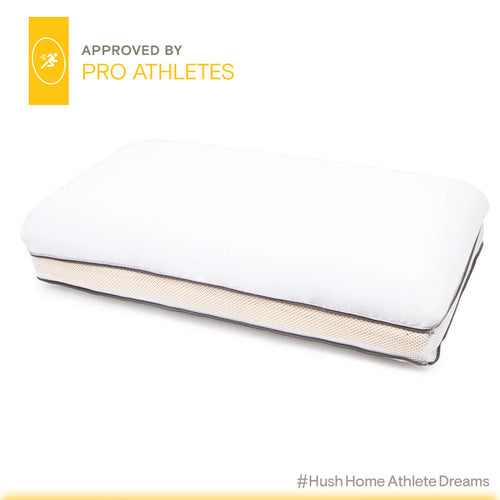
The Miracle Pillow™ uses removable memory-foam layers and can be configured to approximately 12, 14, 16 or 18 cm.
The OnePillow™ uses an adjustable middle layer of interlocking memory-foam fill and can be adjusted to different heights below approximately 20 cm.
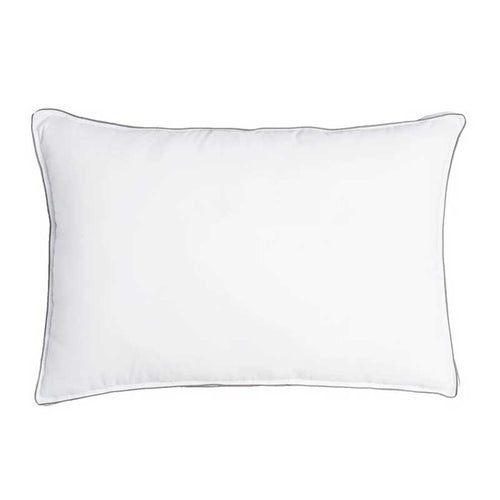
If you prefer a fixed-height pillow, the Loft Pillow™ is currently available in 12 cm and 15 cm profiles, while the Essence Memory Foam Pillow™ has a fixed height of approximately 12 cm.
If you want to compare these alongside other Hong Kong options, see our Best Pillow Brands in Hong Kong comparison guide.
You do not need to measure your neck to the millimetre. A practical check is to lie in your normal sleeping position and notice whether your head feels comfortably supported without being pushed noticeably upward, downward or forward.
There is no universal healthier number. The better setup is the one that provides an appropriate total height and comfortable support for your sleeping position, body and mattress.
It can if the combined height is too great for you. The issue is usually excessive elevation rather than the fact that there are specifically two pillows.
Not necessarily. What matters is the total height after the pillow or pillows compress under your head, together with how stable and comfortable the setup feels.
Side sleepers generally need more height than back or stomach sleepers, but one appropriately high and supportive pillow is often enough. Two thinner pillows can also work if their combined height suits you.
Many back sleepers are comfortable with one medium-height pillow. Two standard pillows stacked under the head may be too high for some people, although the correct height depends on the pillows, mattress and sleeper.
Some stomach sleepers are comfortable without a pillow under the head because it reduces elevation. Side and back sleepers generally need more support to fill the space between the head, neck and mattress.
Your two pillows may simply create a height, firmness or feel that suits you better than either pillow alone. If you wake comfortable and the setup does not force your head into an awkward angle, there is no need to change purely because you use two.
For most sleepers, one appropriately sized pillow under the head is enough—but there is no rule that everyone must sleep with exactly one pillow.
The real goal is to get the total pillow height right for your sleeping position, body shape and mattress. Two thin pillows can be perfectly comfortable; two thick pillows may be far too high; and some stomach sleepers may prefer almost no elevation at all.
If you find yourself constantly adding, removing or folding pillows to get comfortable, an adjustable-height pillow can make the process much easier.