
Best Pillow for Stomach Sleepers: How Thin Should Your Pillow Be?
12 Oct 2026
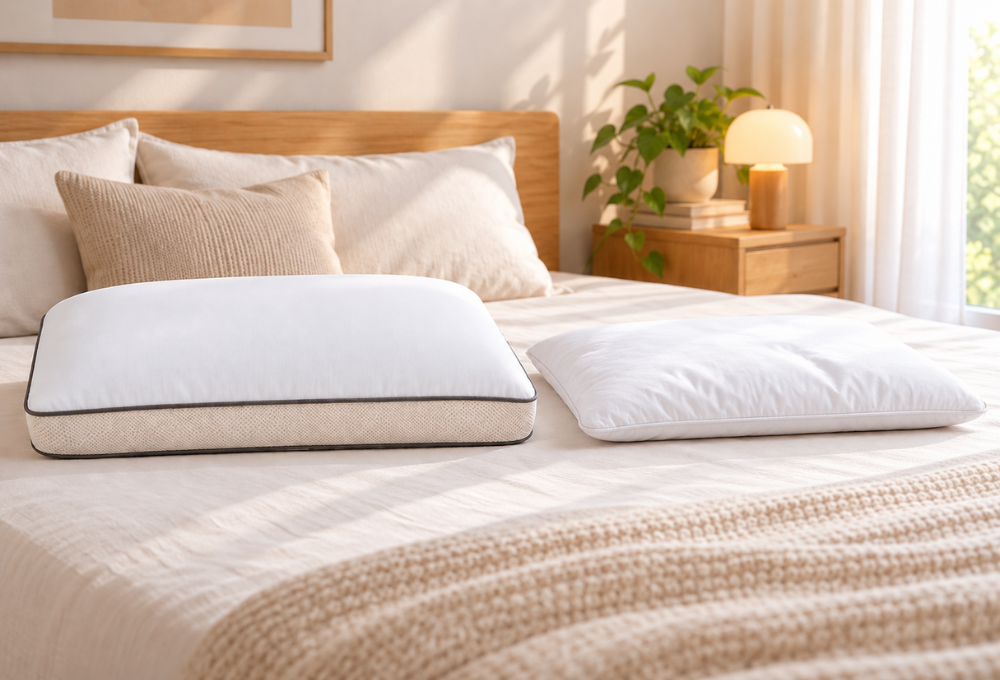
For many dedicated stomach sleepers, the best starting point is a genuinely low-loft pillow—generally under about 3 inches / 7.6 cm—or sometimes no pillow under the head at all. The reason is simple: stomach sleeping already requires the head to turn to one side, so adding a tall pillow can lift the head farther away from the mattress and increase the angle through the neck. Soft, moldable or adjustable pillows are often easier to flatten to the required height.
Quick Answer: How Thin Should a Stomach-Sleeper Pillow Be?
A useful starting target is under 3 inches / about 7.6 cm of uncompressed loft for a dedicated stomach sleeper. Some people prefer no head pillow, while others can tolerate a little more height if the pillow is very soft and compresses substantially.
Do not treat 7.6 cm as a hard cutoff. Sleep Foundation notes that some stomach sleepers can also use medium loft depending on head size, body weight, mattress firmness and personal preference. What matters most is the final effective height after your head and body settle into the pillow and mattress.
Hush Home's existing Pillow Height Guide uses a broader 5–10 cm / 2–4 inch stomach-sleeper range, including the option of no pillow. That broader range can still make sense because a soft 9 cm pillow may compress lower than a dense 7 cm foam pillow. Think in terms of compressed height, not the label alone.
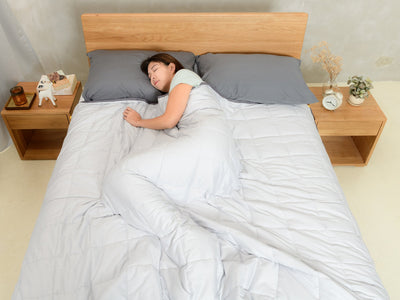
Stomach sleeping is mechanically different from side or back sleeping because the face cannot remain pointed straight into the mattress. Most stomach sleepers rotate the head to one side for long periods.
A high pillow adds another movement: it also lifts the head upward away from the mattress. Cleveland Clinic notes that stomach sleeping can place the neck in a twisted and extended position, while Sleep Foundation advises that too much pillow loft can add neck pressure.
This does not mean every stomach sleeper will wake with pain or that stomach sleeping is automatically harmful for every adult. It means pillow height becomes especially important because you generally want to avoid adding unnecessary head elevation to an already rotated position.
Sleep Foundation classifies low-loft pillows as less than 3 inches, medium loft as 3 to 5 inches and high loft as more than 5 inches. Stomach sleepers are the position most commonly associated with low loft.
However, pillow loft is normally measured before the pillow is compressed. A 10 cm microfiber pillow may flatten dramatically under the head, while a 7 cm dense foam or latex pillow may retain much more of its original height.
That is why stomach sleepers should think about effective loft: how high the head actually sits after several minutes of normal sleeping pressure.
Yes. Some stomach sleepers are more comfortable with no pillow under the head because removing the pillow eliminates extra head elevation. Both Sleep Foundation and Mayo Clinic acknowledge that no head pillow can be a reasonable stomach-sleeping setup for some adults.
No pillow is not automatically better, either. A very firm mattress, a smaller head, or an individual preference for some cushioning can make a thin pillow more comfortable than sleeping directly on the mattress.
The practical test is whether the head feels unnecessarily lifted and whether the neck feels more comfortable with a very thin pillow, a compressed soft pillow or no pillow at all.
Soft to medium is the usual starting point. Sleep Foundation's stomach-sleeper guidance notes that soft, thin and moldable pillows are often easier to tolerate because the head can settle closer to the mattress.
A firm pillow is not automatically more supportive. If it holds the head 10 cm above the mattress with very little compression, it may create more elevation than a 12 cm soft pillow that compresses to half its height.
The goal is enough cushioning for comfort without enough resistance to hold the head unnecessarily high.
Soft microfiber and down-alternative pillows can work well because they compress easily and can often be reshaped or flattened. The main risk is starting with too much fill: a very full hotel pillow can still be much too tall for stomach sleeping.
Adjustable shredded foam is useful because fill can be removed until the pillow reaches a genuinely low profile. This is one of the easiest ways to fine-tune a pillow when fixed models are all too tall.
Solid memory foam can work if it is genuinely thin and allows enough surface give, but many standard memory-foam pillows are built for back or side sleeping and start too high for dedicated stomach sleepers.
Latex is buoyant and resilient, so it tends to preserve more of its stated height. A thin latex pillow may work well, but a standard-height latex pillow can feel taller than a softer pillow with the same nominal measurement.
Down and feather are moldable and compressible, which can suit stomach sleepers who like a very soft surface. The trade-off is that support and fill distribution can change through the night and the pillow may need frequent reshaping.
On a softer mattress, the torso and chest sink farther into the bed, bringing the body closer to the pillow surface. That usually reduces the amount of head elevation needed.
On a firmer mattress, the body stays higher on the surface. Some stomach sleepers may therefore tolerate a slightly thicker pillow, although it should still remain relatively low compared with a typical side-sleeper pillow.
This is one reason a pillow that worked on your old mattress can suddenly feel too high after you switch to a softer mattress.
Body weight affects both mattress sinkage and pillow compression. A heavier sleeper may sink deeper into the mattress and compress a soft pillow more, while a lighter sleeper can remain higher on the mattress and compress the pillow less.
Head size also changes compression. A larger or heavier head may reduce the effective height of a soft pillow more than a smaller head.
This is why centimetres are only a starting point. Two people can use the same pillow and end up at different effective heights.
Combination sleepers need a compromise. A pillow that is ideal for pure stomach sleeping may be too flat when you roll onto your side, while a side-sleeper pillow can feel far too high when you roll onto your stomach.
For people who spend only part of the night on their stomach, an adjustable pillow or a soft pillow with predictable compression is usually easier to live with than an ultra-thin fixed pillow.
Set the pillow primarily for the position you spend most of the night in, then check whether it remains tolerable in your secondary position.
Hush Home's current four adult pillows do not publish a dedicated ultra-low profile below about 8 cm. That matters because independent stomach-sleeper guidance commonly starts below 3 inches / 7.6 cm.
That does not mean no Hush pillow can work for a stomach sleeper. It means the better choice depends on how much the pillow can be reduced or compressed—and dedicated stomach sleepers should not assume a 12 cm nominal pillow will automatically fit.
The OnePillow™ is the Hush model with the clearest potential for reducing loft because its middle interlocking memory-foam fill can be removed or redistributed. Hush currently states that it can be adjusted to different heights below approximately 20 cm, but it does not publish a specific minimum height.
For a stomach sleeper, the sensible approach is to remove substantial middle fill, let the soft outer chambers compress naturally and test whether the final height is genuinely low enough. Do not assume it can reach under 7.6 cm without measuring your own setup.

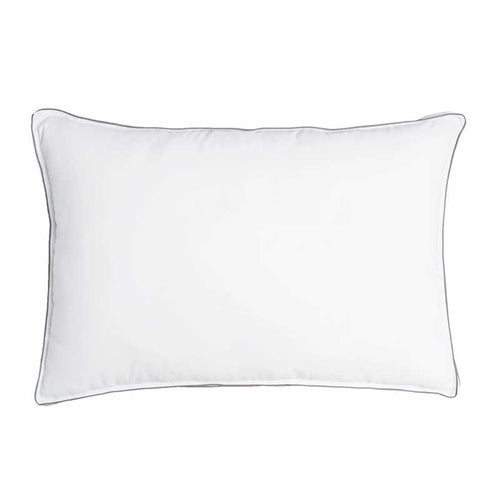
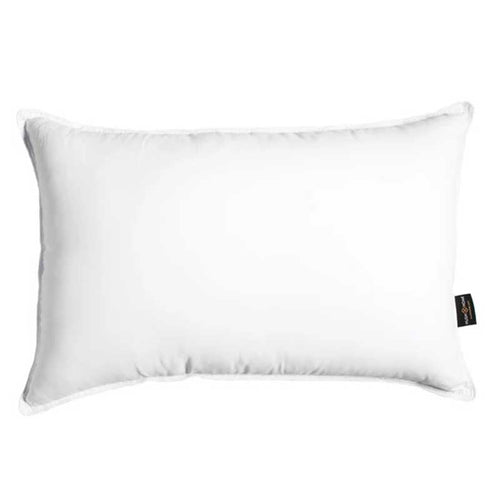
The Loft Pillow™ uses soft down-like microfiber, so it compresses more easily than a dense solid-foam pillow. The lower version is nominally 12 cm.
That can make the 12 cm Loft feel considerably lower once your head rests on it, but Hush does not publish a compressed-height figure. It may suit some stomach or stomach-combination sleepers who like a soft surface, but should be tested rather than assumed.

The Miracle Pillow™ offers excellent adjustability within its intended range, but its current four nominal height configurations are 12, 14, 16 and 18 cm. That means even the lowest published setup is above the typical under-7.6 cm stomach-sleeper starting range.
It can still work for a combination sleeper who spends only some time on the stomach, particularly if the softer surface compresses enough for that person. For a dedicated stomach sleeper who knows they need an ultra-low pillow, it is not the most obvious starting point.

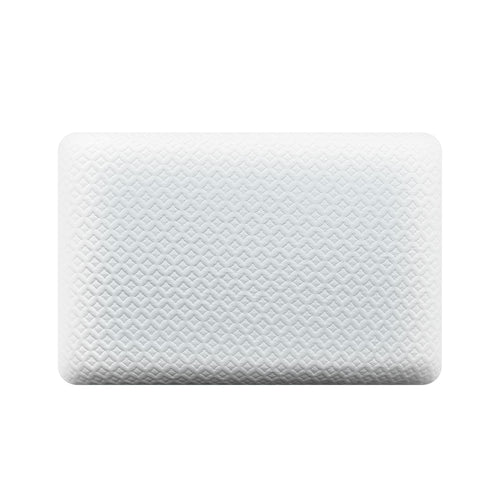
The Essence Memory Foam Pillow™ uses a fixed approximately 12 cm medium-hard memory-foam core. Because there are no removable layers and the foam is relatively structured, it offers less ability to reduce effective loft than the adjustable Hush models.
For a dedicated stomach sleeper looking for a very thin pillow, this is therefore the least flexible Hush option. It may make more sense for back sleepers or people whose individual setup genuinely suits a firmer 12 cm profile.

These signs are not a medical diagnosis. Persistent pain, numbness, tingling or weakness should be discussed with an appropriate healthcare professional.
Mayo Clinic notes that stomach sleeping can be hard on the back. If you cannot comfortably change positions, placing a small pillow under the hips and lower abdomen can reduce some strain for certain people.
That is a different job from the head pillow. A person may use little or no pillow under the head while using a thin support pillow under the pelvis or lower abdomen.
Cleveland Clinic also suggests that a body or side pillow can help some habitual stomach sleepers transition toward a side-lying position if they want to reduce stomach sleeping.
A stomach sleeper's face often has more direct contact with the pillow surface than a back sleeper's, so heat and moisture feel can be especially noticeable.
Look for a pillow that combines low effective loft with airflow or moisture management. A very cool pillow that is much too tall is still the wrong height, while a perfectly thin pillow that traps excessive heat may still be uncomfortable in a humid bedroom.
Material, pillowcase, air-conditioning, room humidity and how much of your face is pressed into the pillow all influence overnight temperature.
Supportive does not mean suitable for every sleeping position. A supportive pillow that is too high can still hold a stomach sleeper's head at an uncomfortable angle.
A soft 10 cm pillow and a dense 10 cm foam pillow can create very different final head positions. Compression matters.
For stomach sleeping, softness can be useful because it lets the head settle lower. The key is whether the pillow stops at a comfortable effective height instead of collapsing unpredictably.
Stomach sleepers generally need the least head elevation, so stacking two standard pillows often moves in the wrong direction. If you use a second pillow, it may be more useful elsewhere for body support.
Pillow height can influence comfort, but persistent pain has many possible causes. A pillow guide cannot diagnose or treat a medical condition.
A common starting point is low loft under 3 inches / about 7.6 cm. Some stomach sleepers prefer no pillow, while others can use a slightly taller soft pillow that compresses significantly.
It may be for many dedicated stomach sleepers, especially if the pillow is firm and retains most of its height. A soft 10 cm pillow that compresses substantially may feel much lower. Test the effective height rather than judging 10 cm in isolation.
Not necessarily. Five centimetres sits within the low-loft range and may work well for some stomach sleepers. Whether it feels too thin depends on mattress firmness, body size, head weight and material.
Some adults are comfortable without a head pillow because it removes extra elevation. Mayo Clinic and Sleep Foundation both acknowledge no-pillow stomach sleeping as a possible setup. If it is uncomfortable for you, use a very thin pillow instead.
Soft to medium is usually the more practical starting point because the pillow can compress and mold around the face. A firm pillow can work if it is genuinely very thin, but a firm standard-height pillow is more likely to hold the head too high.
It can be if the pillow is thin enough or adjustable enough. A standard fixed 12–15 cm solid memory-foam pillow may be too high for many dedicated stomach sleepers because it retains more height than soft fiber.
There is no perfect dedicated stomach-sleeper model in the current four-pillow range because Hush does not publish a sub-8 cm adult pillow. The OnePillow™ is the most adjustable candidate because fill can be removed, while the 12 cm Loft Pillow™ may compress substantially because of its soft microfiber construction. Both should be tested for actual effective height.
Two standard pillows directly under the head are usually less likely to suit because they add height. A second pillow can be more useful under the hips/lower abdomen or as a body pillow, depending on comfort and guidance from a healthcare professional where relevant.
Choose primarily for your dominant sleep position. If you switch frequently, adjustable fill is useful because a pillow that is perfect for pure stomach sleeping may be too low when you roll onto your back or side.
For dedicated stomach sleepers, thinner is usually better. Start by thinking below 3 inches / around 7.6 cm, then adjust for mattress firmness, body weight, material compression and comfort. Some sleepers need almost no elevation at all.
Do not buy by nominal height alone. A soft 10 cm pillow may sleep lower than a firm 7 cm pillow. The real target is the final compressed height that lets you rest without adding unnecessary lift to an already rotated neck position.
And if you are shopping within the current Hush Home range, be realistic about the published dimensions. The OnePillow™ offers the most adjustment potential, and the 12 cm Loft Pillow™ offers the most compressible fixed-height construction, but neither should be assumed to create an ultra-low stomach-sleeper profile without testing.