


What Should You Do With Old Pillows? Disposal, Donation & Recycling in Hong Kong
07 Oct 2026

Replacing a pillow is relatively easy. Working out what to do with the old one can be much less obvious.
A pillow is not quite the same as a T-shirt, towel or piece of packaging. It may combine a textile cover with memory foam, latex, polyester microfibre, down, feathers, cooling fabrics, adhesives or zippers. It is also an item that has spent hundreds or thousands of hours in close contact with a sleeper’s face, hair and skin.
That combination of mixed materials and hygiene concerns is why the most responsible answer is not simply “donate it” or “put it in textile recycling”. You first need to decide whether the pillow is genuinely reusable, whether a specific organisation has confirmed it will accept it, and whether material recycling is actually available for that construction.
Quick Answer: What Is the Best Way to Get Rid of an Old Pillow in Hong Kong?
Use this order of preference:
Most pillows are composite products. A memory foam pillow may have a polyurethane-foam core, polyester or cotton cover, zipper, mesh panel and bonding materials. A hotel-style pillow may combine a woven shell with loose synthetic fibre. A hybrid pillow may combine foam pieces and microfibre in separate chambers.
Recycling works most efficiently when the material stream is clean and relatively consistent. A pillow often needs disassembly and material sorting before any component can be processed, and the value of the recovered material may be low relative to the labour and logistics required.
This is why “made from recyclable material” and “locally recyclable as a complete used pillow” are two very different claims.
Hong Kong’s Home Affairs Department currently states that its Community Used Clothes Recycling Bank Scheme accepts clean clothing, footwear, handbags, bags, accessories and certain dolls in good condition. It lists used bed mattresses or bedding among the items not suitable for donation.
Friends of the Earth (HK), one of the scheme operators, gives the same warning: its used-clothes programme does not accept bed mattresses or bedding.
The Salvation Army’s current Family Store donation guidance likewise says it does not accept furniture, used bed mattresses or bedding.
So even though the word “recycling” appears on a clothing bank, a used pillow should not be placed inside unless that specific operator has explicitly confirmed otherwise.
Sometimes, but only through a channel that has specifically agreed to accept it.
Used bedding creates legitimate hygiene and storage issues. A charity may not have the facilities to inspect, sanitise, store or redistribute bulky soft furnishings. That is why many organisations accept clothes but reject used pillows, mattresses and bedding.
Before donating, contact the organisation and describe the exact item, material, age and condition. Do not leave a pillow outside a charity shop, donation point or shelter without approval.
A reasonable donation candidate should be clean, fully dry, structurally intact and free from strong odour, mould, pest activity and persistent stains. It should still provide a usable sleep surface rather than simply being something you personally no longer want.
Do not donate a pillow that is heavily yellowed from contamination, wet internally, mouldy, infested, torn open, shedding foam particles, badly clumped or permanently flattened to the point that it no longer provides meaningful support.
Donation should extend an item’s useful life, not transfer disposal cost to someone else.
Do not assume so. Animal charities often have very specific laundry, storage and safety requirements.
For example, Hong Kong Dog Rescue stated in a March 2025 update that it was happy to accept towels and bedding that could be washed, but specifically not pillows or small cushions because they could not be washed in the same practical way.
The lesson is broader than one organisation: contact the shelter before bringing anything. A blanket or towel may be useful where a pillow is not.
Hush Home does not operate a routine used-pillow collection or take-back service. Customers should not bring or send used pillows to Hush Home unless a specific, current campaign explicitly says they are being accepted.
From time to time, Hush Home may participate in charity or community initiatives. These should be treated as temporary campaigns with their own dates, eligibility and handover instructions—not as a permanent disposal route.
If no active campaign is published, use the normal Hong Kong options in this guide: confirmed charity acceptance, safe household reuse, a recycler that has agreed to take the material, or household-refuse disposal when the pillow is no longer reusable.
Even when a retailer, charity or community group runs a pillow-donation campaign, the acceptance criteria may be narrower than the headline suggests. Campaigns may limit brands, quantities, condition, collection dates or drop-off locations.
Do not rely on an old social post or expired promotion. Check that the campaign is currently active and that used pillows are specifically listed as accepted before travelling or arranging a courier.
This is especially important for bedding because hygiene, inspection, storage and redistribution requirements are usually stricter than for ordinary clothing.
Sometimes individual materials may be recyclable, but there is no simple citywide consumer rule saying that every household pillow can be dropped into one standard recycling bin.
The Environmental Protection Department maintains a Hong Kong Collector / Recycler Directory that includes businesses handling textiles and other materials. However, the directory itself advises users to contact recyclers in advance because the market is dynamic and individual operators have different collection arrangements.
A directory listing under “textile” is therefore a lead to investigate, not proof that the company accepts one used household pillow from a walk-in consumer.
Most memory foam is a form of polyurethane foam. It is not the same material as expanded polystyrene, or EPS, commonly called Styrofoam or 發泡膠 in everyday recycling discussions.
That means you should not put a memory foam pillow into an EPS or foam-packaging recycling point unless the operator explicitly confirms that polyurethane foam is accepted.
If you find a recycler that accepts polyurethane foam, ask whether it accepts post-consumer household foam, whether the fabric cover must be removed and whether there is a minimum quantity.
Latex may be durable and can have natural-rubber content, but a finished latex pillow can still include blended latex, additives, fabric covers and other components.
Do not assume it can go into a general rubber-recycling stream or compost simply because the product is described as “natural”. Contact a recycler or the original manufacturer and ask about the exact product construction.
Polyester fibres are technically a textile material, but an old pillow is not equivalent to a clean polyester garment. Loose filling, stitching, blended shell fabrics, hygiene and contamination all affect whether a recycler can use it.
Again, the practical rule is to confirm acceptance first. Do not place the whole pillow into a used-clothes bank simply because the filling is polyester.
Down and feathers can sometimes be reused as filling if they are clean, dry and contained safely, but reuse is not the same as an established municipal recycling service.
Opening an old pillow can release fine feathers, dust and allergens. If you plan to reuse the filling for a cushion or craft project, do so only if the material is clean and you can transfer and contain it safely.
Do not assume old down or feathers should be composted. Finished bedding may contain treatments, mixed fibres and contaminants that make home composting inappropriate.
If the pillow is clean but no longer supportive enough for nightly sleep, lower-stakes household reuse may extend its life.
Possible uses include a knee or leg cushion, temporary packing protection for fragile objects, a floor cushion inside a secure new cover, a draft-blocking cushion or filling for a craft project where the material is suitable.
Do not reuse mouldy, pest-affected or contaminated filling. And if foam is crumbling into small pieces, keep it away from children and pets and dispose of it rather than creating a new exposure problem.
Only if the pillow is clean, structurally intact and suitable for your pet. A pet that chews fabric or foam can turn a damaged pillow into an ingestion or choking risk.
Use a secure, washable outer cover and stop using it if the filling becomes exposed. Do not use pet repurposing as a reason to keep a mouldy or contaminated pillow.
Follow the care label. Washing the wrong type of pillow can damage the filling or trap moisture inside it.
Many loose-fibre pillows can be washable if the manufacturer allows it, while many memory foam cores should not be immersed or machine washed. A removable cover being washable does not mean the inner foam can be washed in the same way.
Most importantly, never donate or store a pillow before it is completely dry. Internal dampness can create odour and mould even when the outside feels dry.
Disposal is appropriate when reuse would be unhygienic, unsafe or unrealistic. Examples include widespread mould, persistent dampness, pest infestation, bodily-fluid contamination that cannot be safely cleaned, severe tearing, crumbling foam or a pillow that has degraded so much that no reasonable reuse purpose remains.
Trying to “recycle at all costs” can create contamination in a recycling stream and extra sorting work for charities or recyclers.
If your building has normal household-refuse collection, follow the property-management rules. Put the pillow in a suitable bag or wrapping so loose filling does not escape during handling.
If you need to deliver household refuse yourself, the Food and Environmental Hygiene Department states that the public may bring household refuse to FEHD Public Refuse Collection Points. Check the relevant location and opening hours before travelling.
A household replacing one or two pillows is different from a hotel, serviced apartment, hostel or office clearing dozens at once.
For larger quantities, contact your building management, waste contractor, original supplier or a recycler in advance. Bulk quantities may justify collection arrangements that are not available for a single household item.
Separate removable components before deciding what to do. A clean removable cover may have a different reuse potential from the worn-out foam core inside.
However, do not automatically put used pillowcases or pillow covers into a clothing bank. Hong Kong’s government-supported scheme excludes used bedding, and individual operators may apply the same restriction to pillowcases.
If the fabric is still useful, household reuse as a storage bag, protective cloth or craft material may be more realistic than donation.
Ask these questions in order:
Good care can delay replacement and reduce waste. Hush Home’s current Care Guide recommends product-specific cleaning rather than one universal washing method.
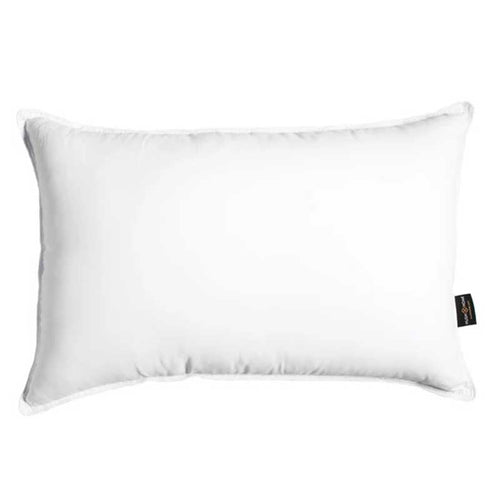
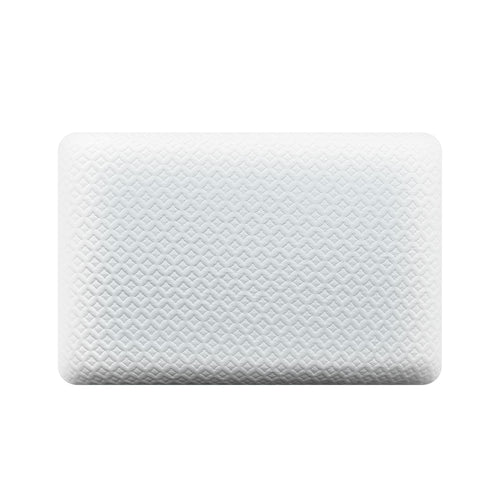
For example, Hush advises protecting adult pillows with a pillowcase and pillow protector. The Miracle Pillow™ outer cover is spot-cleaned; the Essence Memory Foam Pillow™ and OnePillow™ have care instructions that specifically keep their memory-foam components out of water; and the Loft Pillow™ is dry-cleaned according to its current care instructions.
The longer a pillow remains clean and structurally sound, the more options you retain for continued use or an approved donation route later.
Before getting rid of a pillow, check:
False. Hong Kong’s main Community Used Clothes Recycling Bank Scheme excludes used mattresses and bedding.
False. Hygiene, storage and laundering requirements are different. Always confirm first.
Usually false. Memory foam is generally polyurethane foam, while common Styrofoam/EPS recycling deals with expanded polystyrene. Acceptance must be confirmed with the recycler.
Not necessarily. Finished pillows may contain blended latex, additives, covers and other components. “Natural” is not a disposal instruction.
False. Some shelters cannot practically wash or safely use pillows. Ask before donating.
False. Contamination and unwanted materials can create extra transport and sorting waste. Correct disposal is better than wish-cycling.
False. Check internal dampness, odour, structural damage and the receiving organisation’s rules as well.
Generally, no. The Home Affairs Department’s Community Used Clothes Recycling Bank Scheme excludes used bed mattresses or bedding, and major operators such as Friends of the Earth (HK) and The Salvation Army publish similar restrictions.
Only if the specific charity or programme confirms it will accept the pillow. Do not assume that an organisation accepting clothes also accepts used bedding.
Generally, no. Hush Home does not routinely accept used pillows or operate a permanent pillow take-back service. If Hush Home runs a specific charity or collection campaign in future, only follow that campaign’s current published instructions and eligibility criteria.
Possibly through a recycler that specifically accepts post-consumer polyurethane foam, but do not put it into an EPS/Styrofoam collection point without confirmation. Remove covers only if the recycler instructs you to do so.
There is no universal household drop-off rule for latex pillows in Hong Kong. Contact the manufacturer or a suitable recycler and describe the exact construction first.
Only after asking. Some shelters prefer washable towels and blankets and do not accept pillows or cushions.
Do not donate it. If mould is widespread or the filling cannot be safely cleaned and fully dried according to the manufacturer’s instructions, securely bag the pillow and dispose of it through an appropriate household-refuse route.
Sometimes, if it is clean, dry, structurally sound and suitable for the new use. Avoid reusing contaminated, mouldy or crumbling material, and keep loose foam or fibres away from children and pets.
Follow your building’s household-refuse rules and bag the pillow so filling cannot escape. If you need a public disposal point, FEHD advises that household refuse can be delivered to its Public Refuse Collection Points; check location and opening hours first.
If a clean, genuinely usable pillow has a confirmed donation route, reuse usually preserves more of the product’s existing value than breaking it down into materials. If it is no longer suitable for reuse, investigate material recycling. If neither route is genuinely available, dispose of it correctly rather than contaminating another collection stream.
In Hong Kong, the responsible way to deal with an old pillow is to match the disposal route to the pillow’s real condition—not to put every soft item into the nearest “textile recycling” bin.
Start with reuse: if the pillow is clean and genuinely usable, look for a charity or temporary collection programme that explicitly confirms acceptance. Do not assume Hush Home—or another retailer—accepts used pillows on an ongoing basis; check that a current campaign is active before handing anything over.
If reuse is not possible, investigate material recycling by contacting an appropriate recycler. Do not assume memory foam belongs with EPS, that natural latex is automatically compostable, or that a textile recycler accepts whole household pillows.
And when a pillow is mouldy, contaminated, structurally degraded or simply has no confirmed reuse or recycling route, responsible disposal as household refuse is better than passing an unusable item to a charity or contaminating a recycling stream.