



















Hypnic Jerks: Why Do You Feel Like You're Falling Just as You Fall Asleep?
09 Oct 2026

You are drifting off, your muscles are relaxing and then—suddenly—you feel as though you have missed a step, fallen off a ledge or dropped through the bed. Your leg kicks, your arm moves or your whole body jolts awake.
That experience is often a hypnic jerk. In most otherwise healthy people, an occasional hypnic jerk at sleep onset is considered a normal physiological event rather than a disease.
Quick Answer: What Is a Hypnic Jerk?
A hypnic jerk is a sudden, brief and involuntary muscle contraction that occurs as you transition from wakefulness into sleep. Sleep medicine also uses terms such as sleep start, hypnagogic jerk and hypnic myoclonus.
The movement may involve one arm or leg, several muscles or much of the body. Some people barely notice it; others are startled fully awake. The jerk can also be accompanied by a sensory experience such as falling, tripping, an internal shock, a flash of light or a brief dream-like image.
The honest answer is that researchers do not yet know exactly why hypnic jerks happen or why falling sensations so often accompany them.
One popular theory is that as muscle tone decreases during sleep onset, the brain may occasionally interpret that sudden relaxation as instability or falling and trigger a startle-like motor response. Another possibility is that the jerk and the falling imagery arise together from the unusual mixture of waking awareness, muscle relaxation and dream-like sensory activity that occurs during the hypnagogic transition.
These are plausible explanations, not proven mechanisms. It is therefore better to say that the falling sensation is commonly associated with hypnic jerks than to claim that the brain definitely thinks you are falling and sends a signal to “save” you.
Hypnic jerks occur around sleep onset, during the transition from wakefulness into very light sleep. They are usually brief and non-rhythmic rather than a long series of repeated movements.
That timing is one reason they can feel so vivid. You are not yet fully asleep, so you may still remember the movement, the falling sensation or the split-second image that accompanied it.
Hypnic jerks are widely described as common, and sleep-health sources often cite estimates around 60–70% of people experiencing them at some point. However, the exact population prevalence is not especially well established, partly because the events are brief and many people do not remember them.
The useful takeaway is therefore not the exact percentage. It is that an occasional sleep-onset jerk can occur in healthy people of any age and is not unusual by itself.
There is no single confirmed cause, but several factors are repeatedly associated with more noticeable or more frequent sleep starts.
Being very tired does not guarantee a hypnic jerk, but sleep deprivation and irregular sleep can make the transition into sleep less smooth and are commonly cited as triggers.
Stress can make it harder to wind down physically and mentally. If you become anxious about the jerk itself, the pattern can become especially frustrating: you start to fall asleep, jerk awake, worry that it will happen again and become more alert.
Caffeine and nicotine increase alertness and can interfere with settling into sleep. They do not cause every hypnic jerk, but high intake or use close to bedtime may make sleep-onset disruption more likely in susceptible people.
Regular exercise generally supports good sleep. However, very vigorous exercise immediately before bed can leave some people physiologically activated when they are trying to fall asleep. If you notice a consistent pattern between late intense workouts and sleep starts, moving the hardest training earlier may be worth testing.
Myoclonus can sometimes be influenced by medications or substances. If frequent jerks began soon after starting, stopping or changing a medicine, discuss the timing with a doctor or pharmacist rather than changing prescribed medication on your own.
Occasional hypnic jerks are generally considered benign physiological myoclonus. Merck Manual and the U.S. National Institute of Neurological Disorders and Stroke both describe sleep-onset jerks as examples of myoclonus that can occur normally in healthy people.
A typical hypnic jerk does not mean your heart stopped, your breathing stopped or your brain was “checking whether you were still alive.” Those explanations are internet myths rather than established sleep physiology.
Not every movement or strange sensation at night is a hypnic jerk. Timing and pattern matter.
A hypnic jerk is a brief movement as you are falling asleep. Sleep paralysis is almost the opposite experience: you are conscious or becoming conscious but temporarily unable to move voluntarily, usually around falling asleep or waking.
Restless legs syndrome involves an uncomfortable urge to move the legs, usually while resting and often relieved temporarily by movement. A hypnic jerk is a sudden involuntary contraction rather than an ongoing urge to move.
Periodic limb movements are repetitive movements that occur during sleep in a more recurring pattern. A classic hypnic jerk is usually brief and happens around sleep onset rather than repeating rhythmically throughout the night.
Most sleep starts are not seizures. However, repeated unusual movements, events outside the normal sleep-onset pattern or episodes accompanied by impaired awareness should not simply be labelled hypnic jerks without assessment.
You probably cannot guarantee that you will never have another hypnic jerk—and you do not need to if they are occasional and harmless. The more realistic goal is to reduce factors that may make them more frequent or disruptive.
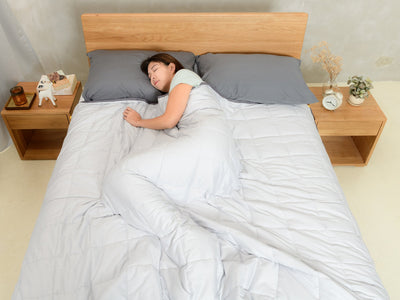
There is no evidence that a particular mattress, pillow, duvet or bedding material prevents hypnic jerks. They are neurological motor events associated with the sleep-wake transition, not a problem caused by the mattress surface itself.
A comfortable sleep environment can still support the bigger picture: making it easier to relax, maintaining a comfortable temperature, reducing unnecessary disturbances and following a consistent bedtime routine. But bedding should not be marketed as a treatment for hypnic jerks.
An occasional single jerk while drifting off usually does not require medical evaluation. Consider speaking with a healthcare professional if the movements are frequent enough to prevent you from falling asleep, are becoming much more frequent or severe, occur repeatedly while you are fully awake, continue throughout the night in an unusual pattern, or are accompanied by other concerning neurological symptoms.
You should also seek medical advice if an episode involves loss of awareness, significant injury, or symptoms that do not fit the usual brief sleep-onset pattern. A clinician may need to distinguish a benign sleep start from other forms of myoclonus, periodic limb movements, medication effects or less common neurological causes.
False. A typical hypnic jerk is a normal sleep-transition motor event. There is no established mechanism in which the brain must jolt you awake because your heart or breathing has stopped.
Not proven. The “misinterpreted muscle relaxation” explanation is one theory. Researchers still do not know the exact mechanism, and falling imagery may be part of the broader hypnagogic sensory experience.
Usually not. Ordinary sleep starts are recognised physiological events. Some other night-time movements can resemble them, which is why unusual, repetitive or otherwise concerning episodes should be assessed rather than self-diagnosed.
False. Hypnic jerks can happen to healthy sleepers. Stress, fatigue or stimulants may increase the likelihood, but having an occasional jerk does not mean you have poor sleep health.
Yes, occasional hypnic jerks are generally considered normal physiological myoclonus during the sleep-wake transition. They are usually harmless when brief and limited to sleep onset.
The falling sensation is a well-described sensory experience that can accompany a hypnic jerk. The exact reason is unknown. It may relate to muscle relaxation, startle pathways and dream-like hypnagogic imagery, but no single explanation has been proven.
It may. Caffeine increases alertness and can interfere with sleep onset, and excessive or late caffeine intake is commonly reported as a factor associated with more hypnic jerks. Individual sensitivity varies.
Stress does not explain every hypnic jerk, but it can make falling asleep more difficult and is repeatedly associated with more frequent or noticeable sleep starts.
Yes, more than one jerk can occur, especially around repeated attempts to fall asleep. But frequent, repetitive movements that persist well beyond sleep onset or repeatedly prevent sleep deserve a closer look rather than automatically being labelled normal sleep starts.
Yes. Sleep starts can occur at any age. As with adults, the usual brief sleep-onset pattern is different from persistent or unusual movements that may need medical assessment.
No. A hypnic jerk is an involuntary movement. Sleep paralysis is temporary inability to move despite awareness around sleep onset or awakening. They are different sleep-transition phenomena.
That sudden “fall” just as you are falling asleep is usually a hypnic jerk: a brief physiological muscle contraction during the transition into sleep. It can feel dramatic, but occasional sleep starts are common and generally harmless.
The exact mechanism remains uncertain. Rather than worrying about internet myths, focus on the pattern. A single brief jerk at sleep onset is very different from repeated movements while awake, persistent night-long jerking or episodes involving other neurological symptoms.
If hypnic jerks are merely occasional, you usually do not need to “fix” them. Consistent sleep, enough rest, sensible caffeine timing and a calmer transition into bedtime may help reduce common triggers—and if the pattern changes or becomes disruptive, seek professional advice rather than guessing.