



What Is Sleep Divorce?
08 Sep 2026
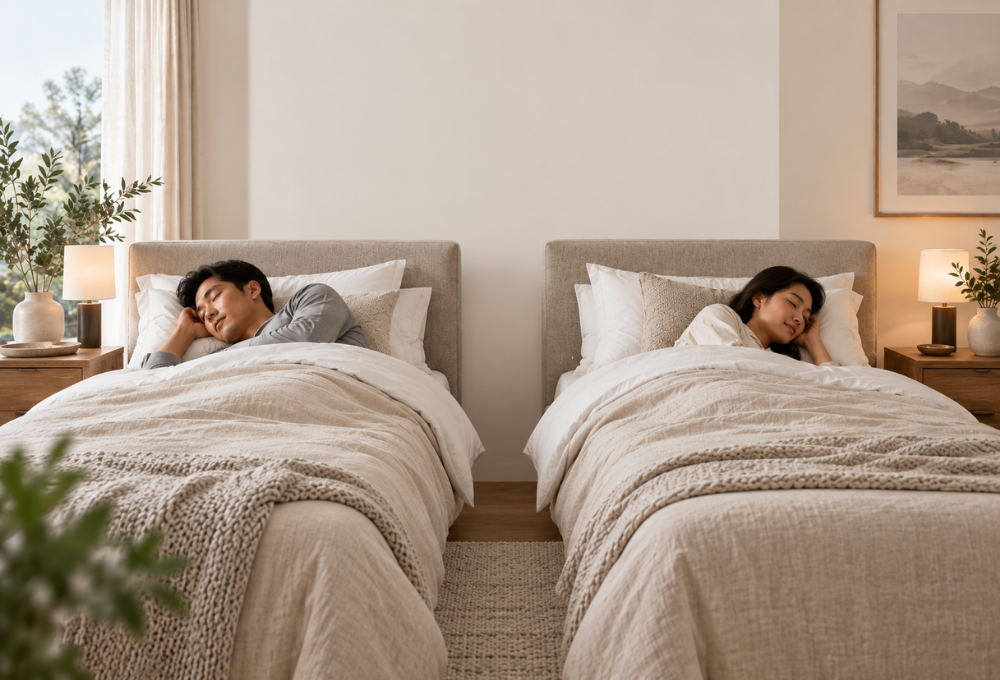
A sleep divorce is an arrangement in which a couple chooses to sleep in separate beds or bedrooms to improve one or both partners’ sleep. Despite the dramatic name, it is not a legal divorce and does not automatically mean the relationship is failing.
Some couples sleep separately every night. Others do so only on work nights, during illness, while caring for a baby, when one partner has an unusually early schedule or whenever either person particularly needs uninterrupted rest.
Sleep divorce is a sleep arrangement, not a relationship diagnosis. Whether it helps depends on why the couple is sleeping poorly, whether both partners agree and how they maintain closeness outside sleeping hours.
Sharing a bed combines two sets of sleeping habits in one space. Differences that feel minor during the day can become highly disruptive at two o’clock in the morning.
Common reasons for considering a sleep divorce include:
Not necessarily. Sleeping in the same bed does not guarantee a healthy relationship, and sleeping separately does not prove that a relationship is in trouble.
A Sleep Research Society overview of couples’ sleep notes that partners’ sleep can be highly interdependent. Research summarised in the report suggests that a meaningful share of one person’s sleep quality may be influenced by their partner. However, it also emphasises that there is no single sleeping arrangement that works for every couple.
The most important distinction is whether separate sleeping is a mutually agreed solution or an expression of unresolved conflict. A practical arrangement developed through open communication is very different from one partner leaving the bedroom as punishment.
Sleeping separately may reduce awakenings caused by snoring, movement, alarms, light or incompatible schedules. This can be particularly helpful when one partner is a very light sleeper.
The CDC states that adults aged 18 to 60 generally need at least seven hours of sleep, while sleep quality also depends on whether that sleep is sufficiently uninterrupted and refreshing.
Separate rooms let each person choose their own temperature, mattress feel, lighting, bedding, background noise and bedtime routine.
Repeatedly being woken by a partner can create frustration, even when the disturbance is unintentional. Better rest may make it easier to communicate calmly and enjoy time together during the day.
Temporary separate sleeping can be practical during shift work, illness, injury recovery, pregnancy, infant care or periods of unusually high work pressure.
Bedtime often provides quiet time for talking, physical affection and reconnecting after a busy day. Sleeping separately can reduce these spontaneous moments unless the couple intentionally creates them elsewhere.
One person may see separate sleeping as a practical solution, while the other experiences it as rejection. If that difference is not discussed openly, the arrangement can create emotional distance even when sleep improves.
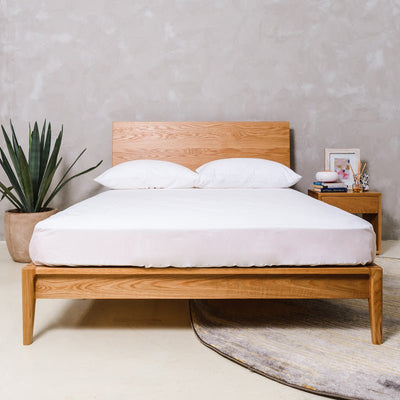
A full sleep divorce usually requires a second bed or bedroom. That may be unrealistic in many Hong Kong homes, where space is limited and every room has another purpose.
Separate sleeping can reduce the disturbance without resolving its cause. This matters when loud snoring, repeated breathing pauses, choking sounds or extreme daytime tiredness may indicate a sleep-related medical problem.
The NHS advises seeking medical advice when symptoms of sleep apnoea are present. A new mattress or separate bedroom should not be treated as a substitute for professional assessment.
Sleep divorce does not have to mean permanently moving into separate bedrooms. Couples can choose an arrangement that matches the actual problem.
This provides the greatest independence over noise, light, temperature, schedule and mattress choice, but also requires the most space and intentional effort to maintain bedtime closeness.
Two beds can reduce movement and firmness conflicts while keeping both partners in the same bedroom. The room must be wide enough to accommodate the layout comfortably.
Couples may sleep separately only before early workdays, during illness, while caring for a baby or when one person particularly needs recovery sleep.
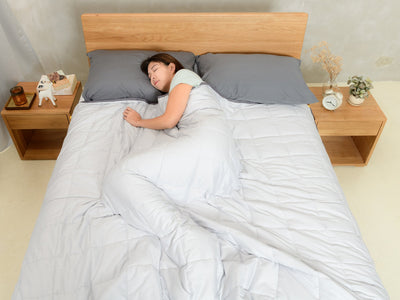
Some couples remain in one bed but personalise each side through separate duvets, different pillows, individual temperature products or independently configurable mattress firmness.
This is not technically a sleep divorce, but it may solve the problem that made separate sleeping feel necessary.
The first step is to identify the disturbance precisely. “We do not sleep well together” is too broad. Is the actual problem noise, movement, temperature, mattress firmness, space, light or schedule?
If snoring is loud, frequent or accompanied by breathing pauses, gasping, choking sounds or substantial daytime sleepiness, seek medical advice rather than relying only on earplugs or separate rooms.
For general snoring-related ideas, see our guide on what to do if your partner’s snoring keeps you awake.
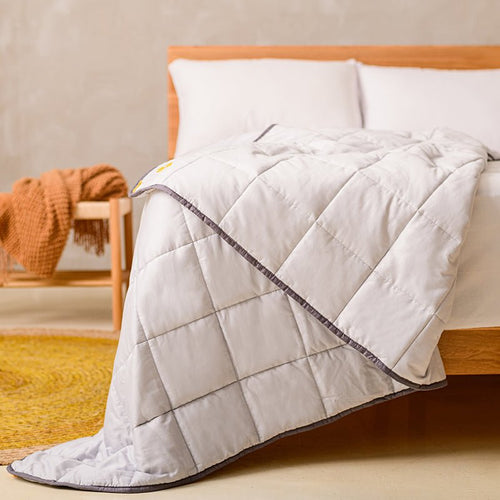
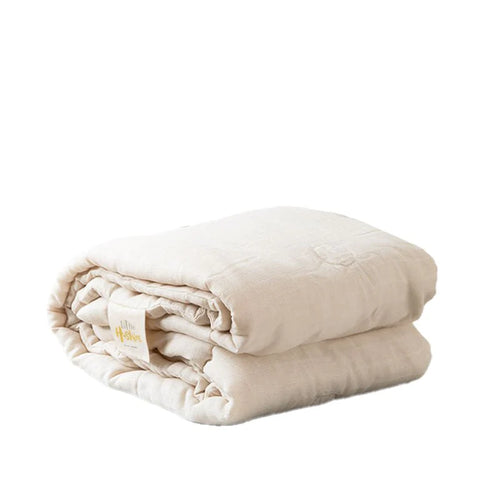
The “Scandinavian sleep method” involves sharing one bed while using a separate duvet for each person. It can reduce blanket pulling and allow each partner to choose a different weight or warmth level.
A mattress with good motion isolation can make a meaningful difference when one partner turns frequently or gets out of bed earlier. Pocket coils and movement-absorbing comfort layers may help reduce—but not necessarily eliminate—disturbance.
If one partner likes a softer mattress and the other wants firmer support, neither person needs to be a restless sleeper for the bed to become a source of frustration.
An independently configurable mattress lets each sleeper choose their own firmness without requiring two separate beds. This can be particularly useful when body weights, sleeping positions or comfort preferences differ.
Try lighter or separate bedding, breathable sheets, improved air circulation and a consistent room temperature. If the mattress itself retains heat, breathable covers, open-cell materials and airflow through a pocket-coil core may improve comfort.
More width creates greater personal space and can reduce accidental contact. In Hong Kong, moving from a 137 cm Full mattress to a 152 cm Queen adds approximately 7.5 cm of width per person.
Check our Hong Kong mattress size guide and measure both the bedroom and delivery route before ordering.
Headphones, dimmer lighting, quieter alarms and agreed limits on phone or television use may help couples with different bedtime routines share the room more comfortably.
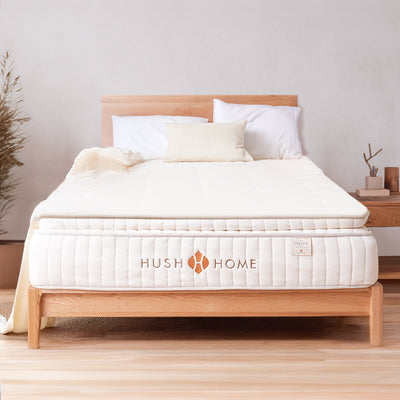
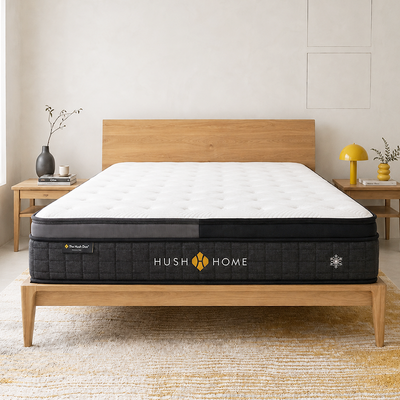
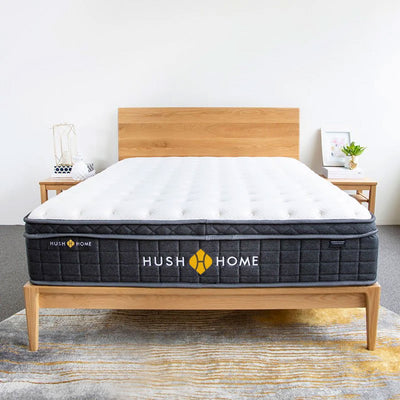
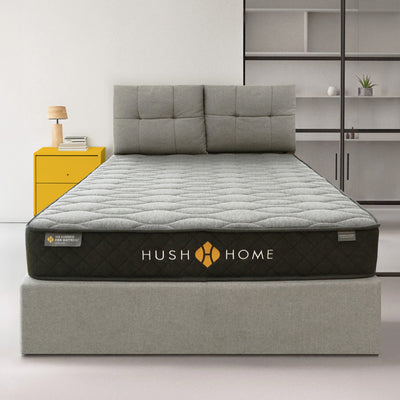
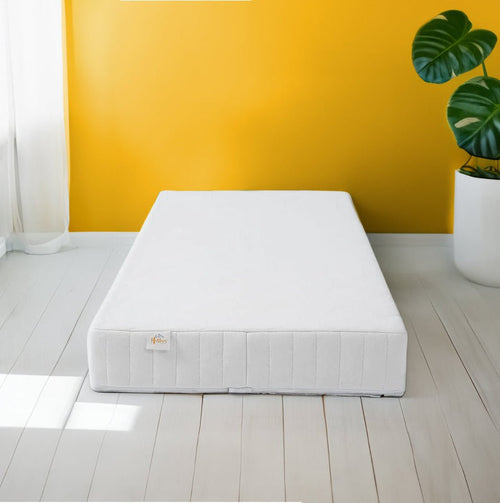
It depends on what is disrupting the couple’s sleep. The Hush Duo Mattress™ may help when the main issues are different firmness preferences, movement across the bed, heat or limited usable sleeping space.
The left and right sides can be configured independently across four firmness profiles, allowing one partner to choose a more cushioning feel while the other selects firmer support.
A continuous outer cover keeps the surface smooth without the centre gap associated with two separate mattresses. Underneath, five-zone pocket coils help provide targeted support and reduce movement between sleepers.
ArcticFlow™ cooling construction and reinforced EdgeSupport™ address two other shared-bed concerns: combined body heat and competition for usable sleeping space.
During the first 365 nights, the Hush Duo Comfort Guarantee allows eligible customers to request up to two additional inserts free of charge if either side needs to be made softer or firmer. This is a firmness-adjustment guarantee rather than a full mattress-return trial.
However, no mattress can treat sleep apnoea, stop every form of snoring, reconcile incompatible work schedules or replace relationship communication. Hush Duo is most relevant when the mattress itself is the main source of compromise.
If the couple still wants to try separate sleeping, treat it as a shared experiment rather than an indefinite emotional withdrawal.
Agree on what you are trying to improve: fewer awakenings, longer sleep, better energy, less irritability or an easier workday.
Try the arrangement for one or two weeks, unless a longer period is required for a particular reason. Decide in advance when you will discuss the results.
Each person can note bedtime, estimated time to fall asleep, night-time awakenings, waking time and daytime energy. This provides more useful information than relying on one unusually good or bad night.
Continue a shared bedtime ritual, such as talking, reading or relaxing together before moving to separate sleeping spaces. Morning routines and physical affection can also help maintain closeness.
The second sleeping space should not feel like a punishment room. Both partners should have a reasonably comfortable environment, and responsibility for moving rooms should not automatically fall on the same person every night.
Separate sleeping may remain the most practical arrangement when partners have fundamentally incompatible work schedules, one person requires medical equipment, infant care repeatedly interrupts the night or attempts to control noise and movement have not worked.
It can also be a healthy temporary choice during illness, injury recovery or exceptionally demanding periods. The goal is not to prove that sleeping together or separately is better—it is to protect sleep without unnecessarily weakening the relationship.
A sleep divorce is neither automatically healthy nor automatically harmful. It can improve rest when it addresses a real source of disturbance and both partners agree on the arrangement. It can create distance when it is imposed, poorly communicated or used to avoid a wider problem.
Before moving into separate rooms, identify whether the problem can be solved within the shared bed. Separate duvets, better temperature control, more space, stronger motion isolation or independent firmness may allow both people to sleep better without giving up bedtime together.
For couples whose main disagreement is mattress firmness, Hush Duo offers four configurable firmness profiles on each side beneath one continuous sleeping surface.
Sleep divorce means a couple deliberately sleeping in separate beds or bedrooms to improve sleep. It does not refer to a legal divorce or automatically indicate relationship trouble.
It can be healthy when it improves sleep, both partners agree and the couple maintains communication and closeness. It may be unhelpful if it is imposed on one person or used to avoid addressing medical, sleep or relationship problems.
No. Couples may sleep separately for practical reasons such as snoring, shift work, temperature differences, illness or light sleeping. The quality of communication and mutual agreement matters more than the room arrangement alone.
Temporary separate sleeping may help the other partner rest, but persistent loud snoring should not simply be ignored. If it is accompanied by breathing pauses, gasping, choking sounds or excessive daytime tiredness, seek medical advice.
The Scandinavian sleep method involves two people sharing one bed but using separate duvets. It can reduce blanket pulling and let each sleeper choose a different warmth or weight without sleeping in separate rooms.
It may help when the main issues are mattress firmness, partner movement, heat or lack of usable space. It will not resolve every cause, including untreated sleep disorders, loud snoring or incompatible schedules.
Hush Duo allows the left and right sides to be configured independently across four firmness profiles. Its continuous outer cover avoids a centre gap, while pocket coils help reduce movement between sleepers.
For an informal experiment, one or two weeks can provide more useful information than a single night. Agree on the goal and review date in advance, then compare awakenings, sleep duration, daytime energy and how both partners feel about the arrangement.