


How to Protect Your Mattress in Hong Kong: 5 Essential Tips
25 Aug 2026
Protecting a mattress comes down to five things: keep liquids off the surface, rotate it as recommended, use the correct support base, control bedroom humidity, and clean spills without soaking the mattress. In Hong Kong, moisture control is especially important because the climate is humid for much of the year.
A mattress is a long-term investment in comfort and support, but daily sweat, spills, dust, humidity and an unsuitable bed base can all contribute to premature wear. The goal is not to keep a mattress looking untouched; it is to protect its materials and structure so it can perform as intended for as long as possible.
KEY TAKEAWAY
Use a waterproof, breathable protector; rotate your mattress on the manufacturer's schedule; support it on a flat, stable base; keep indoor humidity under control; and treat stains quickly without soaking the mattress.
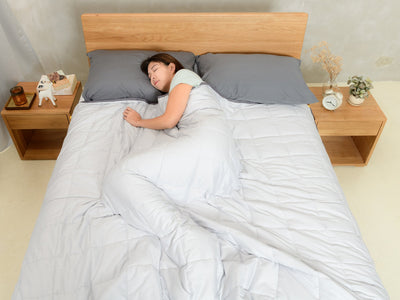
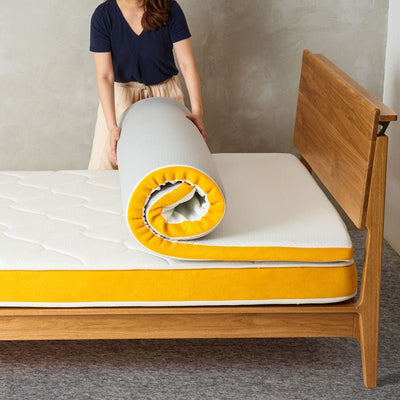
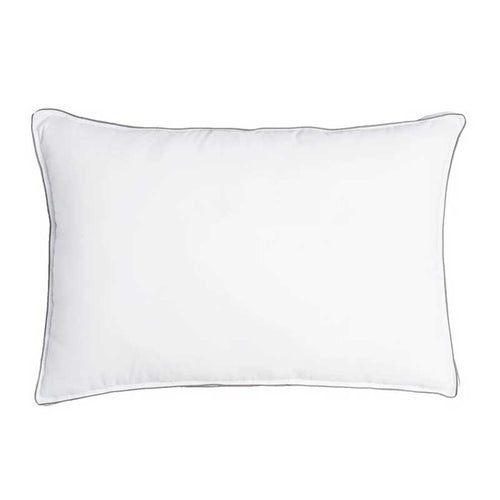
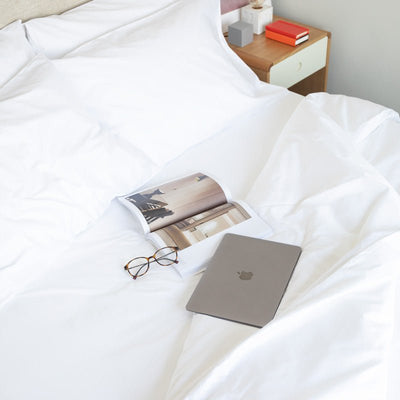
A mattress protector is the simplest first line of defence against sweat, accidental spills, skin oils and everyday staining. It sits between your fitted sheet and the mattress, so it can be removed and washed more easily than the mattress itself.
For Hush owners, the Waterproof Mattress Protector™ uses a soft knitted-cotton surface with a waterproof barrier, giving the mattress protection without turning the sleep surface into a heavy padded topper.
It is also worth being precise about warranty language. HushCare does not state that owning a protector is itself a condition of warranty validity. However, the limited warranty excludes liquid damage, stains, and mould, discolouration or odour arising from poor care or external environmental conditions. A protector is therefore a practical way to reduce exposure to several types of damage that are not covered.
Rotation helps spread repeated pressure across a larger area instead of loading the same zones night after night. The correct schedule depends on the mattress design, so the manufacturer's care instructions should always come first.
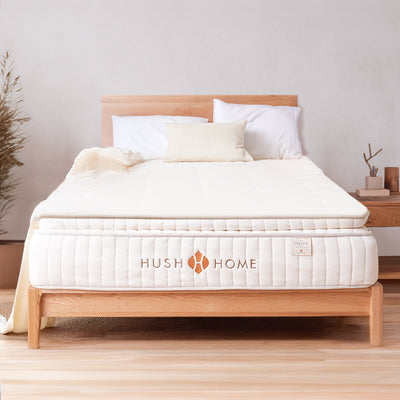
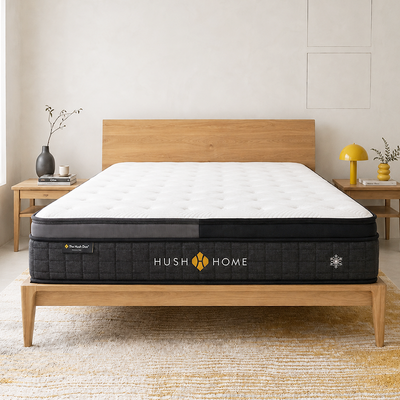
The current Hush Home Care Guide recommends rotating Hush Home mattresses approximately once every three months. Hush mattresses are designed to be rotated rather than flipped, unless a specific product is expressly designed for two-sided use.
A protector keeps the surface clean, but the mattress also needs proper support underneath. An unstable, bowed or widely spaced base can change how the mattress carries weight and may contribute to structural problems over time.
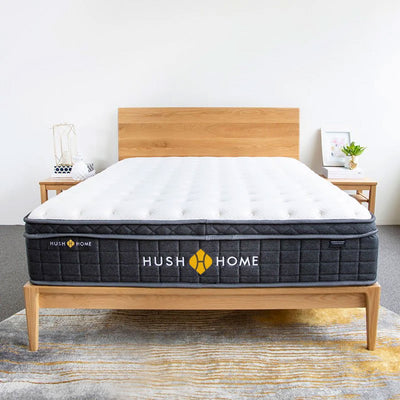
Hush Home recommends a flat platform, box spring, or slatted base with slats no more than 7 cm apart. The HushCare FAQ also excludes mattress damage caused by an improper base or foundation.
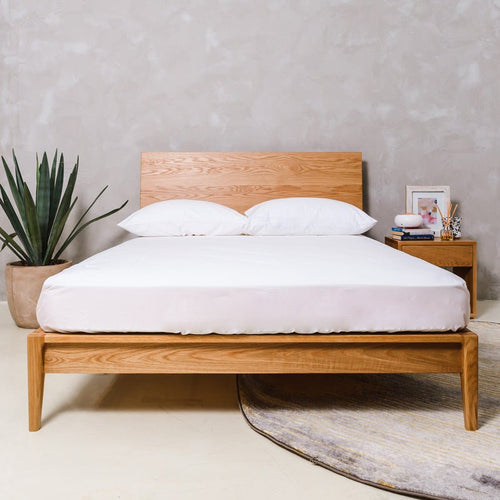
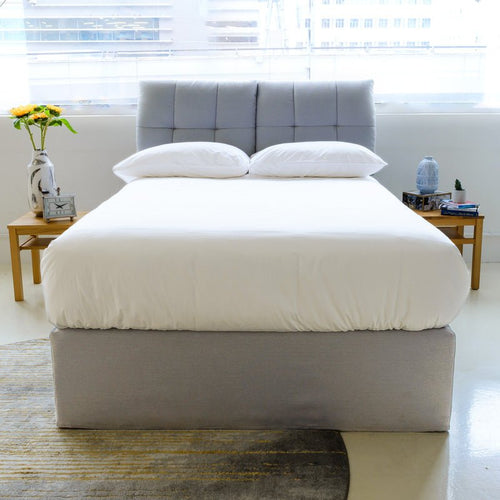
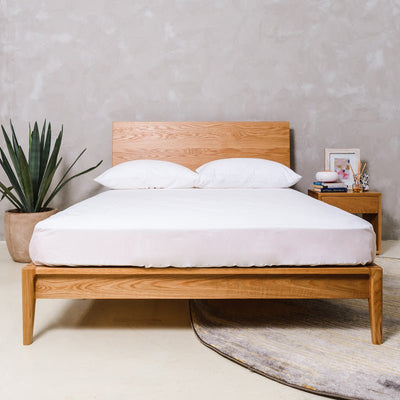
If you are choosing a new frame, the Solid Wood Bed™ provides a flat platform, while the Hydraulic Storage Bed™ uses supportive solid-wood slats. The important principle is stability and continuous support - not that every mattress must sit on one specific style of frame.
For Hong Kong homes, moisture management is one of the most important parts of mattress care. High indoor humidity can encourage condensation and mould growth on damp materials, particularly where airflow is poor.
The U.S. Environmental Protection Agency advises keeping indoor relative humidity below 60%, and ideally between 30% and 50%. In humid Hong Kong weather, a hygrometer plus air-conditioning or a dehumidifier can make this much easier to manage.
Cleaning a mattress is useful, but too much liquid can create a bigger problem than the original stain. Foam and other absorbent layers can hold moisture internally, so the safest approach is usually light surface cleaning rather than saturation.
For stain-specific instructions, follow Hush Home's step-by-step guide on How to Clean a Mattress. Deep liquid penetration, persistent dampness or widespread mould may require professional assessment rather than repeated DIY cleaning.
| Protection habit | What it does | Why it matters |
|---|---|---|
| Waterproof protector | Blocks spills, sweat and stains. | Helps reduce liquid and stain damage that HushCare does not cover. |
| Regular rotation | Helps reduce uneven wear and repeated pressure. | Hush recommends approximately every 3 months. |
| Stable support base | Helps reduce structural stress and sagging risk. | Hush slats should be no more than 7 cm apart. |
| Humidity + airflow | Helps manage dampness, condensation and mould risk. | EPA guidance: below 60% RH, ideally 30-50%. |
| Light cleaning | Helps remove dust, loose debris and fresh stains. | Vacuum lightly, spot clean and dry fully. |
There is no universal replacement interval. Inspect it regularly and replace it if the waterproof layer is cracked, peeling or leaking, if elastic no longer holds it securely, or if it can no longer be cleaned properly. Always follow the product's own care instructions.
Most current Hush Home mattresses are designed to be rotated, not flipped. Hush recommends rotation approximately once every three months. For any non-Hush mattress, follow the manufacturer's instructions because some two-sided models are designed differently.
It still benefits from a waterproof protector and moisture control. Hush Home also advises avoiding direct sunlight or UV exposure when the Organic Mattress™ cover is removed, because UV can deteriorate latex over time.
A floor can be flat and stable, but it offers less airflow around the underside than a raised, ventilated base. In a humid room, reduced airflow can make moisture management more difficult. A stable platform or properly spaced slatted base is generally the more practical long-term setup.
It is best avoided. Hush Home's care guidance advises against children jumping on mattresses, and the HushCare limited warranty excludes damage caused by standing or jumping on the product.
Remove wet bedding, blot up liquid, improve airflow and allow the mattress to dry fully. Do not simply remake the bed over a damp surface. If moisture has penetrated deeply, the mattress remains damp or a musty smell develops, seek professional advice.
The best mattress-protection routine is not complicated. Keep moisture and spills away from the mattress, distribute wear through regular rotation, give the mattress a stable base and good airflow, control humidity, and clean gently when needed. Those habits protect both hygiene and the structural performance you paid for.
Ready to add a washable barrier between everyday life and your mattress? Explore the Hush Home Waterproof Mattress Protector™ or review the Hush Home Mattress Care Guide for more maintenance advice.