







Mattress Topper vs New Mattress: When Is a Topper Enough—and When Should You Replace the Mattress?
12 Oct 2026
The key question is whether your problem is mainly about comfort or about structure.
A topper changes the upper sleep surface. A new mattress replaces both the comfort system and the underlying support system. That distinction explains why a topper can transform a bed that is basically healthy—but can only mask, not repair, a mattress whose support has already failed.
Quick Answer
A topper is usually enough when the mattress is still flat, stable and supportive, but you want to change its firmness, cushioning, pressure relief or temperature feel.
Replace the mattress when the underlying bed has deep sagging, broken or noisy support components, severe unevenness, damaged foam, persistent loss of support or other structural deterioration. A topper may improve comfort temporarily, but it cannot restore the support system underneath.
A mattress topper is an additional comfort layer placed on top of your existing mattress, normally beneath the fitted sheet. Most toppers are roughly 1 to 4 inches thick and are designed to noticeably change surface feel.
Depending on its material and firmness, a topper can add cushioning, reduce the immediate feel of a very firm mattress, create a firmer-feeling surface over a mattress that feels slightly too soft, add contouring, alter motion feel or improve temperature comfort.
What it cannot do is replace the job of the mattress support core. If the springs, foam base or structural layers below have already weakened, the topper still rests on that weakened foundation.
This is one of the strongest reasons to buy a topper. If the mattress is flat and supportive but creates pressure around the shoulders or hips, a softer topper can add cushioning without replacing the support core.
A firmer topper can change the immediate surface feel of a mattress that is only a little softer than you prefer. This works best when the mattress underneath is still level and does not collapse under the hips or torso.
If the problem is deep sinkage caused by a weakened support core, however, a firm topper cannot fully stop the mattress underneath from giving way.
A topper can smooth out minor surface inconsistency and make light wear less noticeable. Independent guidance generally treats this as a temporary comfort improvement rather than a structural repair.
A mattress can remain structurally healthy even when your preferred firmness changes. Changes in body weight, sleeping position, pregnancy, injury recovery or simply personal preference can make the same mattress feel different over time.
A topper is a relatively low-cost way to test a new comfort direction before committing to a full mattress replacement.
A guest mattress that is basically supportive but not especially comfortable may not justify full replacement. A topper can be an efficient upgrade for occasional use, rental accommodation or a temporary living arrangement.
A topper can buy time when replacement is financially inconvenient. The important point is to treat it as a bridge if the mattress is already near the end of its useful life, not as proof that the underlying problem has been solved.
Deep sagging is one of the clearest signs that the support or comfort layers have permanently compressed. A topper will follow the shape underneath, so it may reduce the sensation temporarily but cannot reverse the sag.
If the mattress no longer holds your body evenly and you feel the centre collapsing beneath you, the issue is usually deeper than surface firmness. Extra foam on top cannot fully restore resistance that has been lost underneath.
A topper cannot repair mechanical damage. New or worsening squeaks do not always mean the mattress has failed—bed frames can also make noise—but broken, displaced or protruding springs are structural problems.
Foam naturally changes with years of compression. If the mattress has lost resilience across large areas or the material is visibly breaking down, a topper only sits above the deterioration.
A visible permanent dip with no load is stronger evidence of structural wear than temporary compression that rebounds after you get out of bed. Check the warranty definition before replacing, because some manufacturers cover indentations above a specified depth.
If you repeatedly wake up more comfortable after sleeping on another suitable mattress, your current bed may no longer match your support or comfort needs. This is more meaningful when the pattern is consistent, not based on one unusually good or bad night.
A topper should not be used to conceal hygiene or moisture problems. If contamination cannot be safely remediated or the internal materials have been affected, replacement may be necessary.
Independent guidance often uses roughly 6 to 8 years as a general point at which owners should assess whether replacement is needed, while other durability estimates put many mattresses around the 7-to-10-year range. These are guidelines, not expiry dates.
A well-supported, high-quality mattress may remain comfortable beyond those averages. A cheaper or heavily used mattress may fail much earlier. Condition and performance matter more than birthday alone.
A weak foundation can make a healthy mattress feel as if it is sagging. Loose slats, excessive spacing, a weak centre beam or damaged bed-frame components can allow the mattress to dip unevenly.
Before buying a topper or a new mattress, inspect the foundation and compare it with the mattress manufacturer’s support requirements. Replacing a mattress without fixing an inadequate base can simply recreate the same problem.
Not in the structural sense. Independent mattress guidance consistently treats a topper as a temporary comfort measure for sagging—not a true repair.
A thick, supportive topper may make a mild dip feel less obvious for a while. But because the topper sits on the mattress, it eventually follows the uneven surface underneath. If the sag is deep or caused by failed springs or a weakened foam base, replacement is the more durable solution.
This is worth clarifying because mattress-topper marketing sometimes describes toppers as a quick fix for sagging. That can be reasonable as a short-term comfort statement, but it should not be interpreted as repairing structural sagging.
Sometimes—if the mattress is structurally healthy and only slightly softer than you prefer. A firm topper can make the top layer feel more resistant.
If the mattress support core has weakened and your body is sinking deeply, however, the topper cannot prevent the mattress underneath from compressing. In that case, “too soft” is really a support problem, not only a surface-firmness problem.
This is usually the strongest use case for a topper. A mattress can be perfectly supportive yet feel too hard at the surface. Adding a softer topper changes cushioning without sacrificing the stable foundation underneath.
Thickness matters: a thicker topper changes the overall feel more dramatically than a thin one. Material also matters because memory foam, latex, fibre and wool respond differently.

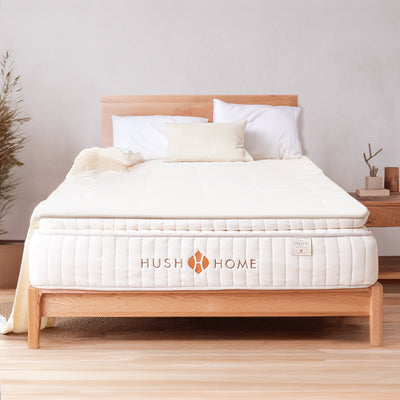
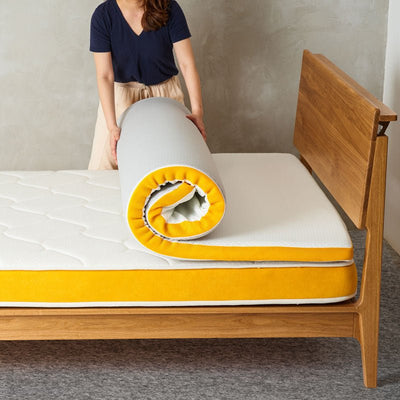
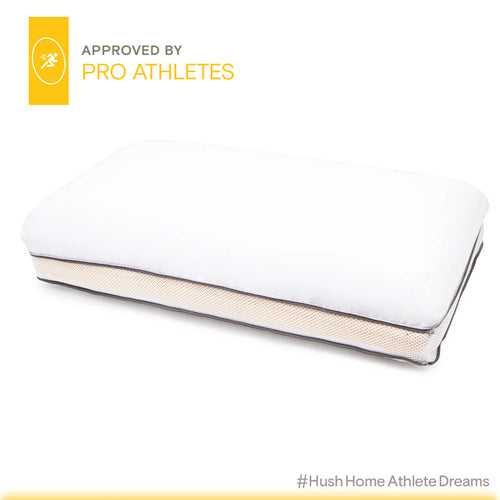
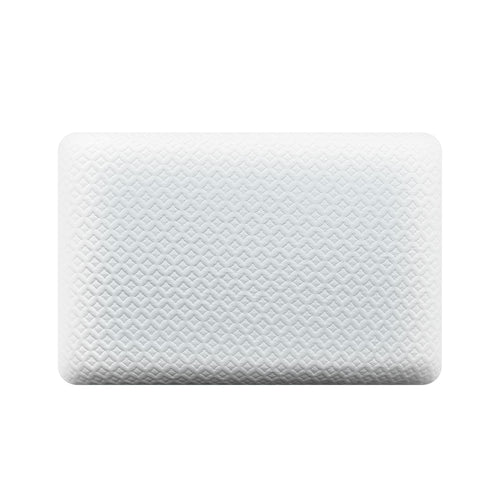
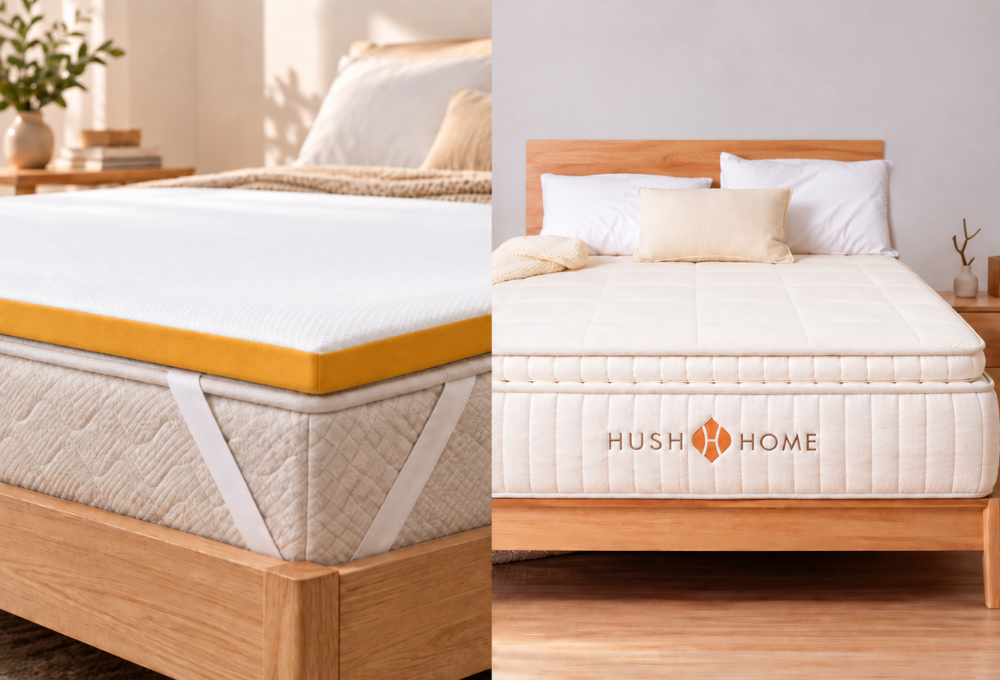
Hush Home’s Dual Mattress Topper™ is 2.5 inches thick and currently starts from HK$1,380. It uses reversible memory foam: a medium-firm white side for more cushioning and a firmer grey side for more resistance.
That makes it most relevant when the mattress underneath is still serviceable but the surface feel is wrong. Hush currently gives the topper a 30-night home trial and 3-year HushCare warranty.
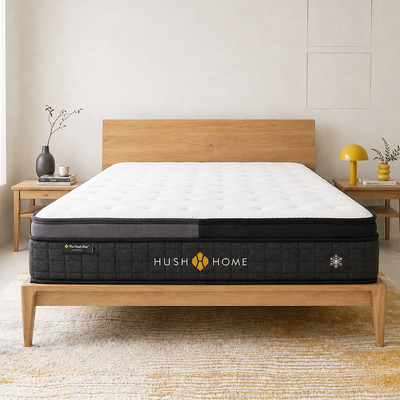
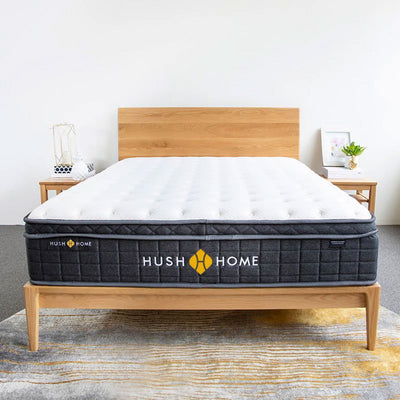
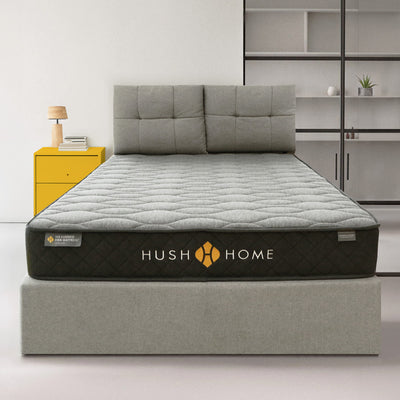
A new Hush adult mattress currently starts from approximately HK$3,500 for the 5-inch Loft Mattress™, HK$4,900 for Essence Firm Mattress™, HK$5,900 for the Hush Mattress™, and substantially higher for Hush Duo Mattress™ and Organic Mattress™. Most conventional Hush adult mattresses include a 100-night home trial and 15- or 25-year warranty.
The topper is therefore far cheaper than replacing the mattress—but only if the mattress underneath is still worth keeping.
Choose a topper if: the mattress is flat and structurally sound; the main issue is firmness or cushioning; the wear is mild; you need a temporary improvement; or the bed is for occasional guests.
Choose a new mattress if: there is deep permanent sagging; support has collapsed; springs or foam are damaged; the bed is severely uneven; moisture or contamination has affected the structure; or sleep quality remains poor because the mattress no longer supports you consistently.
Check the foundation first if: the dip lines up with missing or weak slats, the mattress looks better on a flat test surface, or the bed frame itself moves or sags.
False. Thickness can mask mild unevenness, but the topper still follows the damaged support surface underneath. Structural sagging remains structural sagging.
False. Age is a screening tool, not a fixed expiry date. Condition, comfort, support and damage matter more than age alone.
Not if the support core is failing. A firm topper can change the surface feel of a structurally healthy mattress, but it cannot rebuild deep support that has been lost.
Only when it postpones a replacement that genuinely is not needed yet. Buying a topper for a failed mattress and then replacing the mattress shortly afterward can cost more overall.
False. A new or structurally healthy mattress can simply be the wrong firmness for you. That is exactly the situation in which a topper may be more appropriate than replacement.
It can reduce direct wear on the mattress surface and improve comfort, so it may extend the useful period of a mattress that is still structurally sound. It cannot meaningfully extend the life of a support core that has already failed.
Only temporarily in terms of comfort. It cannot structurally reverse deep sagging. If the mattress has a permanent dip or failed support system, replacement or manufacturer repair is the real fix.
There is no exact age cutoff. If an older mattress remains flat and supportive, a topper may still be worthwhile. If the mattress is already sagging, damaged or no longer supporting you evenly, age becomes less important than condition.
Use a softer topper when the mattress is structurally supportive but too firm. Use a firmer topper when the mattress is structurally healthy but only slightly softer than you prefer. Do not use firmness choice as a substitute for fixing structural sagging.
Most toppers are roughly 1 to 4 inches thick. Thicker toppers usually alter the feel more strongly, while thinner toppers make a subtler change. The correct thickness depends on how much change you need and the condition of the mattress underneath.
Not based on that symptom alone. Discomfort can have many causes. Check whether the mattress is visibly worn, whether the foundation is supportive, whether the firmness suits you and whether the pattern improves on another suitable bed. Persistent or severe pain should be discussed with a qualified healthcare professional.
Often yes, if the mattress is structurally healthy and the problem is mainly comfort. A topper can be especially useful when your firmness preference has changed or the original mattress was simply the wrong feel from the beginning.
Use a mattress topper to change comfort. Replace the mattress when you need to replace support.
That simple rule prevents the two most common mistakes: replacing a healthy mattress just because it feels a little too firm, and spending money on a topper when the mattress underneath is already structurally finished.
If the mattress is flat, stable and supportive, a topper can be an efficient and affordable upgrade. If it is deeply sagging, broken, unstable or no longer supports you evenly, the topper is only delaying the real decision.