
Sofa Bed vs Daybed vs Murphy Bed: Which Is Best for a Small Hong Kong Home?
14 Sep 2026
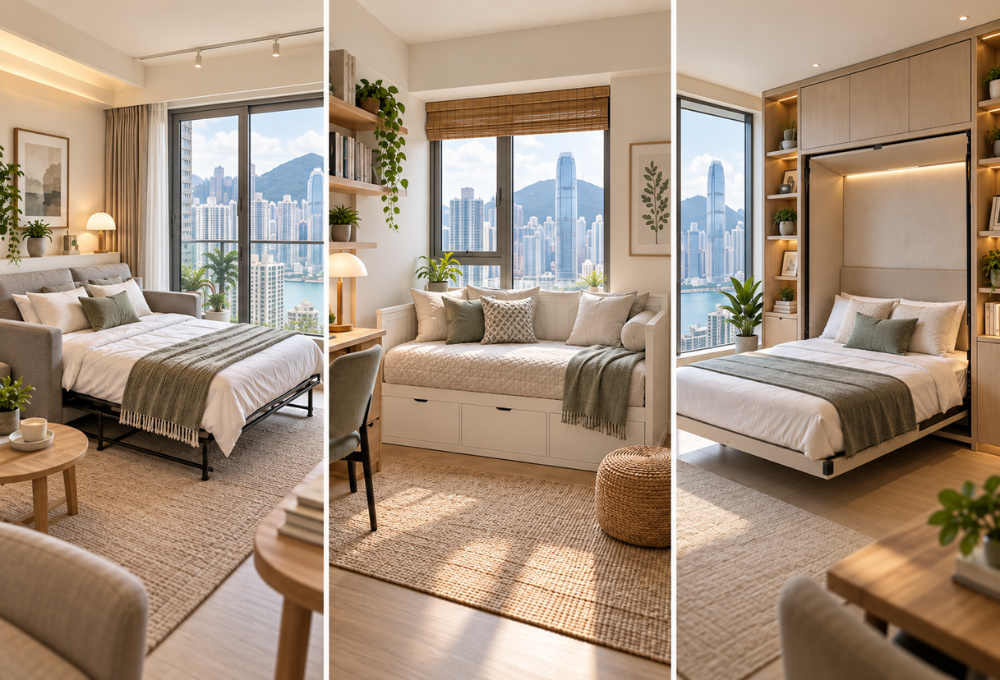
Choose a sofa bed when the room is mainly a living room, a daybed when you want a bed that can also serve as seating, and a Murphy bed when reclaiming daytime floor space is the priority. The best choice for a small Hong Kong home depends on which function you need most—not which piece looks smallest in a showroom.
All three can be useful, but their space-saving benefits work differently. A sofa bed changes function, a daybed shares a mattress between sitting and sleeping, and a Murphy bed stores its sleeping platform upright or sideways within a cabinet. Each still needs enough room when it is being used as a bed.
KEY TAKEAWAY
Measure the room in both daytime and sleeping mode. Check the open footprint, the actual sleeping surface, the conversion routine, delivery access and the mattress requirements. A compact frame is not useful if it blocks the door or needs a mattress that does not fit your needs.
| Consideration | Sofa Bed | Daybed | Murphy Bed |
|---|---|---|---|
| Main function | Sofa that converts into a bed | Bed that can double as seating | Bed that folds into a cabinet |
| Daytime footprint | Sofa remains in the room | Bed-sized footprint remains | Cabinet remains; floor in front can be reclaimed |
| Nightly setup | Unfold, pull out or rearrange | Often minimal; more if extended | Lower the bed and prepare bedding |
| Mattress choice | Often tied to the mechanism | Separate mattress on many designs | Must meet the specific system’s limits |
| Main check | Both sitting and sleeping comfort | Mattress fit, seat depth and any pull-out space | Installation, open clearance, mattress thickness and weight |
| Useful starting point | Living room with occasional guests | Study or guest room with a permanent sleep surface | Multi-use room needing clear floor by day |
This compares typical arrangements, not every model. Some daybeds extend into a larger bed, and some wall beds include a sofa or desk. Judge the actual product’s open and closed layouts before applying a category label.
A sofa bed converts from a seat into a sleeping surface. Depending on the design, the back may fold down, a platform may pull out, or a separate mattress may unfold from inside the frame. These mechanisms create different bed heights, surface joins and storage requirements.
It is a sensible starting point when the room is used mainly for sitting, watching television or entertaining, and sleeping is occasional. For nightly use, test it as a bed just as carefully as you would a conventional mattress. A comfortable sofa seat is not proof of a comfortable sleep surface.
Check whether the sleeping area includes joins, a firmness change between sections or supporting bars you can feel. Ask where the cushions, pillows and bedding go when it changes function. Any extra mattress topper also needs storage and must not obstruct the folding mechanism.
A daybed, also called a sofa-style or sitting-and-sleeping bed, typically keeps a full-length mattress in place and adds back or side supports so it can be used for lounging. Unlike a folding sofa bed, many designs do not require the mattress itself to bend every time you change use.
This can suit a study, guest room or compact bedroom where a sleeping surface is useful every day. The trade-off is that the bed-sized footprint stays in the room. Deep mattresses and large back cushions can also change how comfortably you sit, so test the seating position as well.
An extending daybed or a trundle can accommodate additional sleepers on suitable models, but the extra platform needs its own clearance and mattress arrangement. IKEA Hong Kong’s HEMNES daybed is one example of a product that changes between a compact and expanded setup; its exact specifications should not be applied to other daybeds. [1]
A Murphy bed is a wall-bed system that raises the bed into a cabinet when it is not in use. Vertical designs fold along the mattress length; horizontal designs fold along its side. Neither removes the need to account for the cabinet’s width, depth and height.
It can be particularly useful when one room must serve as an office, exercise area or living space by day and a bedroom at night. The important test is whether you can lower it without moving half the room, and still walk around it safely.
Installation is a central part of the purchase, not an optional finishing detail. Resource Furniture stresses secure wall attachment, following the specific instructions and using an experienced installer. The requirements for the wall, floor and fixings depend on the system and the site. [3]
Start by comparing sofa beds. Prioritise daily seating comfort, then check the opened bed with the kind of guest you expect in mind. Make sure the converted layout does not block the bathroom route, door or essential storage.
A daybed can keep preparation simple because the main mattress stays in position. Choose it when you can accept the permanent footprint and want to spend less time unfolding the bed. Check whether your preferred mattress fits the frame before buying them separately.
A Murphy bed may provide the most useful change of layout, provided the installation is suitable and the nightly routine is manageable. Do not count floor space as “saved” if it immediately fills with furniture that must be moved every evening.
Check installation permission with the landlord before committing to an anchored wall bed, and obtain advice on whether it can be safely dismantled and reinstalled. A freestanding sofa bed or daybed may be simpler to relocate, but still check its largest delivery pieces and any anchoring instructions.
Measure the complete frame or cabinet, including arms, upholstery, headboards, handles and skirting-board clearance. The mattress measurement alone does not describe how much room the furniture occupies. Hush Home’s Hong Kong Bed Frame Size Guide illustrates why external frame dimensions are larger than mattress dimensions. [6]
Mark the open footprint on the floor with removable tape. Include the movement path of the mechanism and the place you need to stand. Test door swings, drawers, walkways and access to sockets rather than measuring only whether the bed fits between two walls.
Ask for the dimensions of the largest packaged or assembled component. Compare them with the building entrance, lift, staircase, corridor and tight turns. Furniture that fits the room on a floor plan may still be difficult to carry into it.
No. Compatibility involves dimensions, support, thickness, weight and whether the mattress must bend. Ask the bed-frame supplier and mattress supplier to confirm the exact combination before ordering.
For a folding sofa bed, the mattress must be approved for that folding mechanism. For a daybed or trundle, check the precise sleeping area and any height limit. For a Murphy bed, check both minimum and maximum mattress requirements; a mattress can be too light or too thin as well as too heavy or too thick. [2]
For example, Bestar’s referenced Pur Full wall-bed system specifies a mattress 8–10 inches thick and 60–90 lb. These are model-specific requirements, not universal wall-bed rules. They show why choosing the thinnest mattress available is not a reliable compatibility test. [2]
Size names also need checking. IKEA Hong Kong’s referenced HEMNES listing specifies a 92 × 189 cm mattress, while Hush Home’s standard Single size is 91 × 183 cm. Do not assume “Single” means the same fit across different furniture brands. [1] [5]
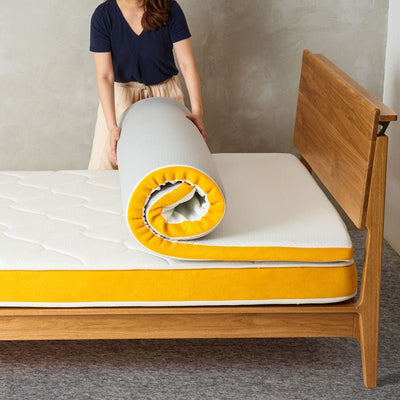
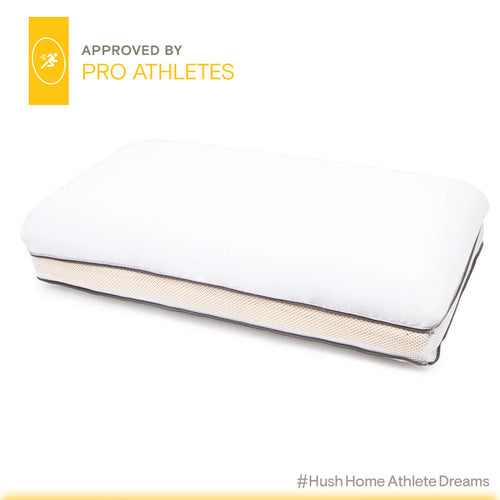
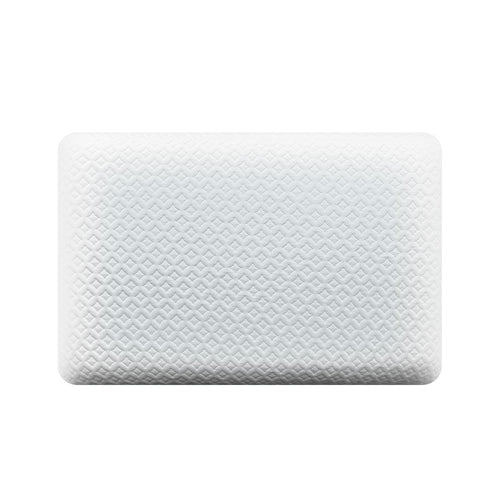
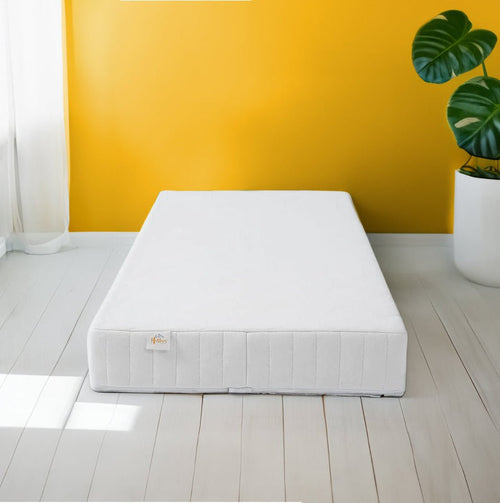
The Loft Mattress™ is a 5-inch pocket-spring mattress with foam on both sides and two different firmness options when flipped. Its low profile makes it worth considering when a compatible frame requires a slimmer mattress. [4]

That is a starting point for checking a compatible daybed or space-saving frame—not a blanket recommendation for every sofa bed or Murphy bed. A 5-inch mattress would not meet the 8-inch minimum of the Bestar example above, and a pocket-spring mattress should not be folded into a sofa mechanism unless the exact combination is approved. [2] [4]
Before choosing: share the bed-frame model, required mattress dimensions, permitted thickness and weight, and support details with Hush Home. Confirm the combination first, then compare the mattress’s feel.
Compare quotes that include the frame, mattress, delivery, installation, any site work and future servicing. A cheaper frame is not necessarily the cheaper complete setup. Ask what happens if a mechanism or fabric component needs replacing later.
Count the duvet, pillows, protector, sheets and loose cushions as part of the space plan. Check whether the chosen Murphy bed permits bedding to remain attached, or whether the sofa bed needs everything removed before closing. Do not force the mechanism around extra bedding.
Let damp bedding dry before enclosing it, follow the product’s cleaning instructions and make sure you can reach the areas that need cleaning. Keep children, pets and loose objects clear of moving parts. If a bed is unstable, damaged or no longer securely fixed, stop using it and contact the supplier rather than attempting to force it shut. [3]
A Murphy bed can reclaim the floor in front of its cabinet during the day. A sofa bed combines two functions, while a daybed keeps a permanent sleeping footprint. The most useful saving depends on how the room is used.
Only choose it for nightly use after checking that the model is intended for that use and that the mattress, joins and support feel comfortable to you. Do not judge it from the sofa position alone.
No. Some remain single-sized, while others extend or have a trundle. Check the deployed sleeping dimensions and whether separate mattresses meet in the middle.
Use an experienced installer and follow the manufacturer’s requirements for the exact model and site. Wall and floor anchoring requirements are not interchangeable between products.
No. Some mechanisms specify a minimum thickness or weight as well as a maximum. Choose a mattress within the complete permitted range.
No. Its 5-inch profile is only one part of compatibility. The exact dimensions, support system, weight limits and any folding requirements must also match.
A topper may change surface cushioning, but it does not repair damaged supports or a faulty mechanism. Check its storage and folding implications before adding it.
The best space-saving bed is the one you can sit on, sleep on, open, close and clean comfortably in your real home. Start with the dominant use of the room, then check the full footprint and mattress compatibility. Saving floor space should not create a daily obstacle course.
Compare Hong Kong mattress sizes, then explore the Loft Mattress™ if its specifications match your chosen frame.
Product specifications and cited examples checked in September 2026. Confirm current product details before ordering.