




Why Is My Pillow Turning Yellow? Causes, Cleaning & When to Replace It
06 Oct 2026
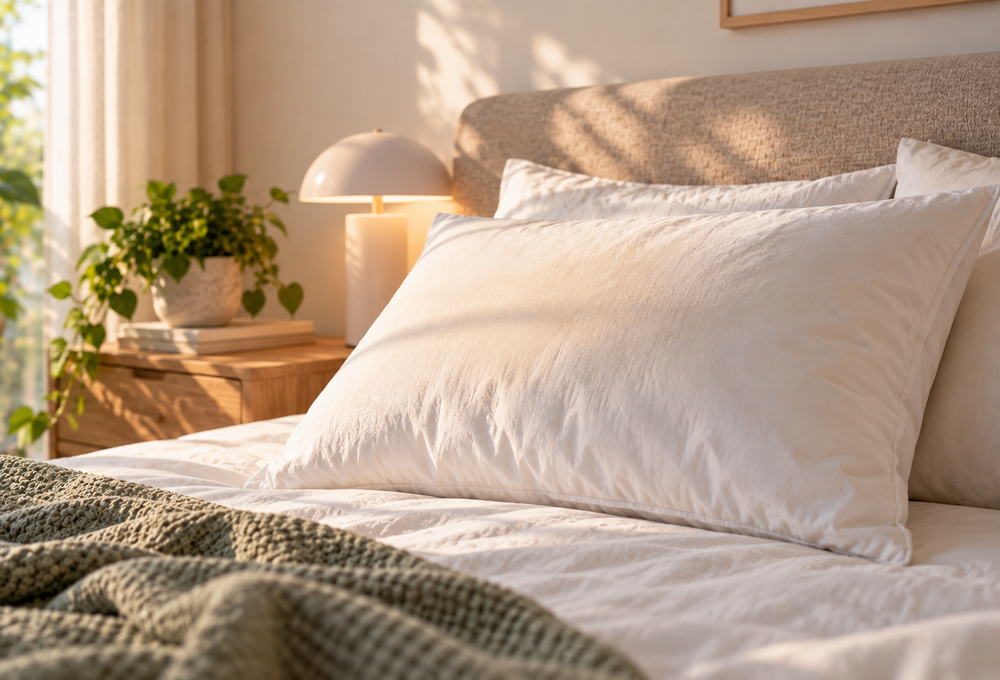
You remove the pillowcase and notice pale yellow patches—or perhaps the whole pillow has gradually changed from bright white to cream or yellow. This is extremely common. Most yellow pillow stains develop because moisture and oily residues pass through the pillowcase and accumulate in the cover or filling over time.
Sweat is one of the best-known causes, but it is not the only one. Saliva, sebum from skin and hair, damp hair, moisturiser, hair products and repeated moisture exposure can all contribute. As body oils age and react with oxygen, they can also leave yellow or rust-coloured discoloration.
Quick Answer: Yellowing Is Usually Moisture + Residue + Time
Pillow yellowing is usually a staining and ageing process rather than one single event. The most common contributors are sweat, drool, skin and hair oils, wet hair, skincare products and incomplete drying. The pillowcase may absorb some of this material, but it does not form a perfect barrier.
Importantly, yellowing alone does not tell you whether the pillow is cleanable, mouldy, structurally worn out or still supportive. Those are separate questions that should be assessed independently.
Sweating during sleep is normal. Moisture can pass through a pillowcase and reach the pillow cover or filling. When this happens repeatedly, sweat and the substances carried with it can leave gradual yellow staining.
The amount varies greatly from person to person and from night to night. A warm bedroom, heavy bedding, illness, hormones, medication and individual physiology can all influence sweating, so two people can use the same pillow model and see very different rates of discoloration.
Drooling introduces additional moisture directly around the face area. Over time, repeated wetting and drying can create localised yellow or darker patches, especially around the side of the pillow where the mouth normally rests.
A drool stain does not automatically mean the whole pillow needs replacing. The first question is whether the affected cover or pillow can be cleaned according to its care instructions.
Sebum helps protect skin and hair, but excess oil can transfer onto a pillowcase and eventually into the pillow. These oils can oxidise over time, contributing to yellow or yellow-brown stains.
This is one reason yellowing often develops gradually even when the pillow does not regularly become visibly wet.
Going to bed before your hair is properly dry places moisture directly against the pillow for a prolonged period. That repeated dampness can accelerate staining and can also make it harder for the pillow to dry fully before the next night.
If you normally shower at night, allowing your hair to dry before bed is one of the simplest ways to reduce unnecessary moisture reaching the pillow.
Moisturisers, facial oils, leave-in conditioners, hair treatments and styling products can transfer onto bedding if they have not absorbed or dried before sleep. Depending on the ingredients, they may leave oily, yellow or darker marks.
You do not need to stop using skincare. Giving products time to absorb before your head touches the pillow and washing pillowcases regularly can reduce transfer.
Some discoloration can also appear simply as materials age. Oils and residues exposed to oxygen can oxidise, while textile covers and foams may naturally change colour over time. A colour change therefore does not always mean a fresh stain has just occurred.
This is particularly important with foam. Cosmetic colour change should be judged separately from physical deterioration such as cracking, crumbling, permanent compression or loss of support.
Humidity does not create every yellow stain by itself, but it can slow evaporation. If a pillow repeatedly absorbs moisture and does not dry properly, residues remain in the material for longer and the pillow spends more time damp.
This is particularly relevant in Hong Kong. Hong Kong Observatory 1991–2020 normals show annual mean relative humidity of 78%, with monthly means reaching 82–83% from March through June. These are outdoor climatological readings rather than your bedroom humidity, but they illustrate why thorough drying deserves extra attention during humid periods.
Not automatically. Yellow colour is evidence of discoloration, but colour alone cannot tell you the exact hygiene condition of the pillow. A structurally sound pillow with an old cosmetic stain is different from a pillow that stays damp, smells musty, has visible mould growth or cannot be cleaned according to the manufacturer's instructions.
It is also possible for a clean pillow to retain a permanent stain after washing or spot treatment. Cleaning can remove residues without necessarily restoring the original bright-white colour.
Sometimes. Fresh surface staining is generally easier to reduce than deep, old discoloration. The result also depends heavily on the pillow's construction and what cleaning the manufacturer allows.
The safest rule is simple: never choose a cleaning method based only on the stain colour. Start with the care label. A washing method that works for a machine-washable fibre pillow can damage memory foam, latex, glued layers or an adjustable multi-part pillow.
Find out whether the entire pillow can be machine washed, whether only the cover can be cleaned, whether spot cleaning is required, or whether professional dry cleaning is specified. The manufacturer's instructions should override generic internet cleaning recipes.
The pillowcase is the first layer exposed to sweat, skin oils and hair products. A protector adds another barrier between these residues and the pillow itself. Wash each removable layer according to its own label rather than assuming every layer uses the same cycle or temperature.
Recent stains are generally easier to manage than residue that has gone through months of repeated wetting, drying and oxidation. If spot cleaning is allowed, use only the products and amount of moisture permitted by the manufacturer.
Some synthetic, down-alternative, down or feather pillows can be washed, but not all of them can. The label determines the correct water temperature, detergent, wash cycle and drying method. Washing an unsuitable pillow can cause clumping, damaged foam, distorted layers or trapped moisture inside the fill.
Foam pillows often have much more restrictive care requirements than fibre-filled pillows. Many should not be put in a washing machine or fully saturated. If only a removable cover is washable or cleanable, keep the foam core dry and follow the exact care instructions.
A pillow that is clean but still damp is not ready to go back on the bed. Thick filling and foam can hold moisture internally even when the surface feels dry. Follow the permitted drying method and give the pillow enough time to dry all the way through.
Some general cleaning guides suggest bleach or oxidising stain removers for washable white pillows. That does not mean they are safe for every pillow. Bleach can damage certain fibres, dyes, finishes and foam constructions. Never use it unless the actual care instructions allow it.
If the label allows machine washing, follow the specified cycle, detergent and drying instructions. Avoid overloading the machine, which can prevent effective cleaning and rinsing. The pillow must be fully dry before use.
Some can be machine washed while others specify professional cleaning. Down and feathers must be dried thoroughly because retained moisture can cause unpleasant odour and other problems. Always follow the maker's instructions rather than assuming all natural-fill pillows use the same method.
Memory foam commonly requires spot cleaning or cleaning of the removable outer cover rather than machine washing the foam itself. Fully soaking foam can make it difficult to dry and can damage its structure. If the foam itself has deep staining, follow the manufacturer's specific instructions before attempting any wet treatment.
Treat each component separately. A fabric outer shell, microfiber layer and memory-foam insert may all have different care rules. Do not assume that because one part can be tumble dried or dry cleaned, the inner foam can be treated the same way.
A protector can slow the transfer of sweat, saliva, oils and spills into the pillow, especially if it includes a moisture-resistant or waterproof barrier. It is an extra layer of protection, not a guarantee that a pillow will remain perfectly white forever.

The protector itself also needs regular cleaning. A dirty protector simply becomes another layer holding accumulated body oils and moisture close to the pillow.
Yellow staining alone is not proof of mould. Sweat and oxidised oils commonly create yellow discoloration without visible mould growth. Conversely, mould is not always yellow, so colour alone cannot rule it in or out.
Visible fuzzy or spreading growth, persistent musty odour and a history of prolonged dampness deserve different treatment from ordinary staining. The U.S. EPA notes that mould can penetrate porous materials and may be difficult or impossible to remove completely. If you suspect actual mould inside a porous pillow, follow the manufacturer's guidance and consider replacement rather than repeatedly wet-cleaning a product that cannot be fully decontaminated or dried.
Yellowing by itself is not a perfect replacement rule. A lightly stained pillow that still cleans satisfactorily, dries properly and provides good support may remain usable. Replacement becomes more reasonable when discoloration is accompanied by other signs of deterioration.
Permanent cosmetic staining does not automatically make a pillow unusable, but extensive deep discoloration together with residue, odour or ageing may indicate that the pillow has accumulated more than surface-level staining.
A pillow that smells because it was temporarily damp should first be cleaned or dried according to its care instructions. If unpleasant odour repeatedly returns after appropriate treatment and full drying, replacement may be more practical.
This is different from ordinary yellowing. Because porous materials can be difficult to remediate completely once mould grows within them, replacement may be the safer practical option when the affected pillow cannot be cleaned according to manufacturer guidance.
Support matters more than colour. If the pillow stays flat, no longer rebounds, cannot hold the height you need or leaves your head and neck poorly supported, the filling may have reached the end of its useful life regardless of whether it is yellow.
Some fibre pillows can be restored by proper fluffing, but permanent clumps, empty spots or collapsed areas create an uneven sleep surface. If the condition cannot be restored according to the care instructions, replacement may make sense.
Foam changing colour is not the same as foam physically breaking down. Structural deterioration such as cracking, crumbling or permanent compression is a much stronger replacement signal than yellowing alone.
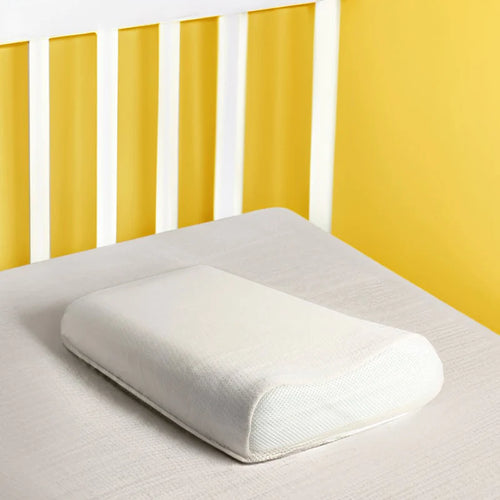
Hush Home's current Care Guide uses different instructions for each pillow, so there is no single Hush cleaning method for yellow stains.
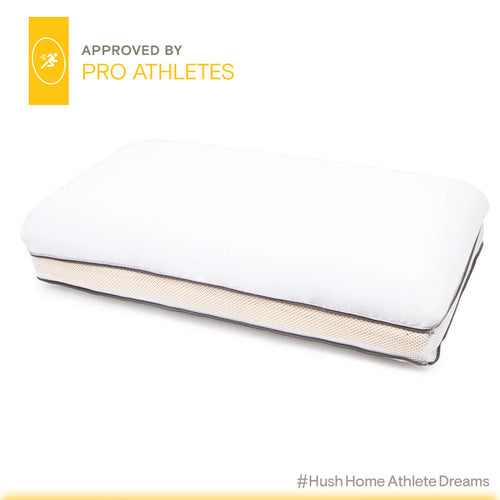
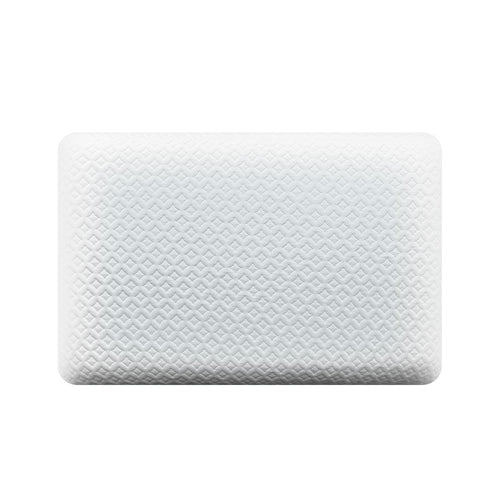
Hush recommends protecting the Miracle Pillow™ with a pillowcase and waterproof pillow protector. The soft outer cover should be spot cleaned only as needed. Hush says not to dry clean it, wash it in water or use bleach. The outer cover may be tumble dried below 50°C.

Hush recommends dry cleaning the outer cover only as needed, but not the memory-foam inner pillow. The foam should not be washed in water or bleached. The outer cover may be tumble dried below 60°C.

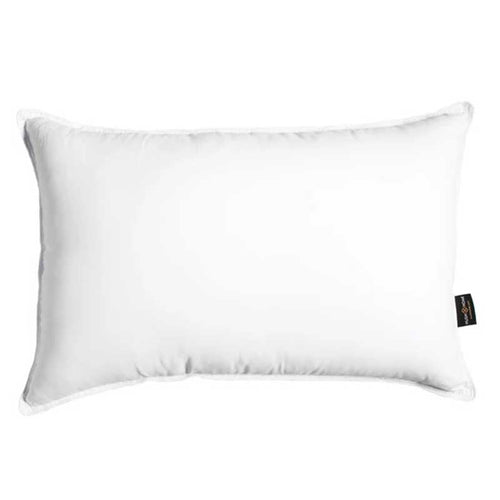
Hush recommends protecting the Loft Pillow™ with a pillowcase and protector, fluffing it daily and dry cleaning the pillow as needed. Hush says not to wash it in water or use bleach. It may be tumble dried below 60°C.
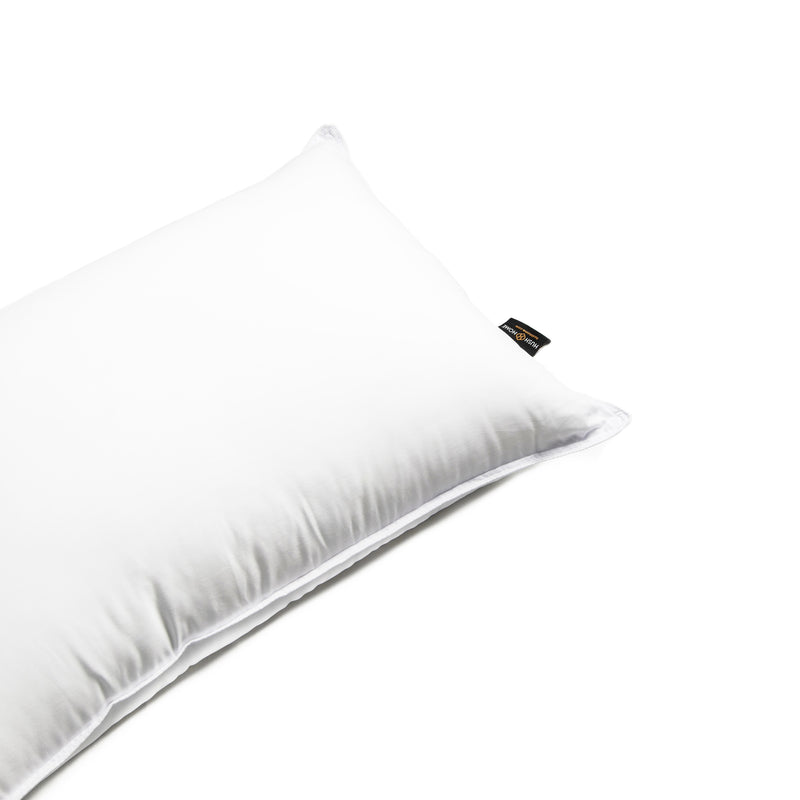
The OnePillow™ has different components. Hush recommends dry cleaning the outer cover only, not the adjustable inner layer. It should be protected with a pillowcase and waterproof protector, and Hush says not to wash the pillow in water or use bleach. The outer cover may be tumble dried below 60°C.

These instructions matter because a generic online recipe involving soaking, bleach or machine washing could directly conflict with the care requirements of the actual Hush pillow.
False. Sweat, saliva, oils and oxidation can all create yellow staining without visible mould. Mould should be assessed separately based on growth, odour, moisture history and the material involved.
Not necessarily. Check whether the staining can be cleaned safely and whether the pillow remains dry, odour-free, structurally sound and supportive. Colour alone is only one piece of information.
False. Bleach is unsuitable for many pillow materials and is explicitly prohibited for several Hush Home pillows. Follow the exact care label rather than trying to restore the original colour at the expense of the pillow's construction.
False. A pillowcase helps, but moisture and oils can still migrate through fabric over time. A protector adds another layer, but no barrier guarantees that a frequently used pillow will remain perfectly white forever.
Pillowcases are breathable fabric, not sealed moisture barriers. Sweat, saliva, oils and skincare residues can gradually pass through them. Regularly washing the pillowcase and adding a suitable protector can reduce the amount reaching the pillow.
People differ in sweating, skin and hair oil production, drooling, hair-washing habits, skincare use and sleeping position. Even two identical pillows used in the same bedroom can therefore age and discolour at different rates.
Only if the manufacturer specifically allows it. Many memory-foam pillows should not be machine washed or soaked. Often the removable cover is cleaned separately while the foam itself is kept dry or spot treated according to instructions.
Not necessarily. Discoloration can happen before the filling loses support, or a pillow can lose support while still looking relatively clean. Evaluate colour, cleanliness, odour, loft, shape and support separately.
No protector can guarantee zero discoloration forever, but it can substantially reduce direct exposure to sweat, oils and accidental spills. It is most useful when it is also cleaned regularly according to its own care instructions.
A permanent cosmetic stain alone does not necessarily make replacement mandatory. Consider the whole condition of the pillow. Persistent odour, visible mould, uncleanable contamination, permanent flattening, lumpiness, foam breakdown or loss of support are stronger reasons to replace it.
Most yellow pillows are telling you a simple story: moisture and residue have been reaching the pillow over time. Sweat, saliva, skin and hair oils, wet hair and personal-care products can all contribute, while oxidation can make those stains more visible as they age.
The right response is not automatically “bleach it” or “throw it away.” First identify the pillow construction, follow the care label, clean only in an approved way and dry it completely. Then judge whether the remaining yellowing is cosmetic or whether the pillow also has odour, mould, structural damage or loss of support.
For prevention, the basics matter most: a clean pillowcase, an appropriate protector, dry hair, less trapped moisture and prompt attention to spills. You may not keep a heavily used pillow perfectly white forever, but you can slow unnecessary staining and make it easier to judge the pillow by its actual condition rather than colour alone.