



Cooling Pillow Guide: Which Pillow Materials Sleep Coolest in Hong Kong?
13 Oct 2026
The coolest pillow is usually not defined by one material alone. For hot sleepers, the best-performing designs tend to combine an airy or heat-dissipating fill with a breathable, moisture-managing cover and enough internal space for air to move. Independent pillow testing consistently finds shredded latex, down-alternative fill and buckwheat among the stronger materials for temperature control, while solid memory foam is more prone to heat buildup unless ventilation or a cooling cover offsets it.
Quick Answer: Which Pillow Materials Sleep Coolest?
As a broad starting guide, shredded or aerated latex, buckwheat hulls and airy down-alternative or microfiber fills are strong cooling candidates because they allow more air movement. Shredded memory foam can be cooler than a solid foam block because there is more space between pieces. Solid memory foam usually has the greatest heat-retention risk, although perforated foam, open-cell structures and advanced cooling covers can improve it substantially.
Do not turn that into a rigid ranking. Whole-pillow construction matters more than the fill label alone. A well-ventilated memory-foam pillow can sleep cooler than a dense synthetic-fibre pillow, and a breathable latex pillow can still feel warm if it is wrapped in a poorly ventilated cover.
Hong Kong is not just hot; it is humid. Hong Kong Observatory's 1991-2020 climate normals show monthly mean relative humidity of about 81% to 83% from April through August.
That matters because a pillow can feel uncomfortable in two separate ways: it can hold heat, and it can hold moisture around the head and face. In humid weather, moisture management can be just as important as initial coolness.
Hong Kong Consumer Council's 2026 pillow testing illustrates this clearly. The tested pillows showed different surface-temperature categories, and two memory-foam samples recorded comparatively poorer moisture permeability. The lesson is not that all memory foam is bad; it is that both heat and moisture performance vary by actual construction.
Open internal structure gives heat somewhere to escape. Shredded latex, buckwheat hulls, loose down-alternative fill and perforated foam all create air pathways that a dense solid block does not naturally provide.
Some foams absorb body heat and hold it close to the head. Memory foam is particularly known for this tendency because it softens in response to heat and pressure.
A pillow can feel clammy even when it is not especially hot. Breathable covers and open fills allow water vapour to move away from the skin more easily.
Gel layers, phase-change fabrics and other cooling textiles can lower or buffer the temperature you feel when your skin first touches the pillow. That can be pleasant, but cool-to-touch is not identical to all-night airflow.
The outermost layer can change how a pillow feels. Cotton, bamboo-derived fabrics, Tencel and other breathable or moisture-wicking textiles can improve surface comfort, while dense or poorly ventilated covers can partially cancel out an airy fill.
Latex is one of the strongest all-round choices for hot sleepers. Sleep Foundation notes that latex is generally more breathable than synthetic foam, and aerated or shredded latex allows even more airflow.
Talalay latex is often especially airy because of its production structure, but construction still varies by product. Dense solid latex can retain more warmth than shredded or heavily perforated latex.
Buckwheat pillows are among the strongest airflow performers because the rigid hulls leave large gaps between pieces. Sleep Foundation's testing methodology lists buckwheat among the core materials with the best cooling performance.
The trade-off is feel. Buckwheat is much firmer, heavier and noisier than foam or microfiber, so it is a cooling choice with a very specific texture rather than a universally comfortable option.
Loosely packed down-alternative or microfiber can perform well because the fill contains a large amount of air. Sleep Foundation's testing has found down-alternative fills among the better temperature-control performers.
Density matters. A very tightly stuffed synthetic pillow can sleep warmer than a light, fluffy one. The cover matters too, because some polyester fabrics restrict airflow more than breathable cotton or moisture-managing technical fabrics.
Shredding memory foam creates air gaps and usually improves ventilation compared with one solid slab. Blending shredded foam with airy fibres such as kapok or down alternative can further reduce the dense foam feel.
However, the foam itself still has a tendency to absorb heat. The final result depends on how much foam is used, how tightly it is packed and what cover surrounds it.
Solid memory foam is usually the riskiest common fill for heat retention, but it can be engineered to perform much better. Perforations, air channels, open-cell foam, copper or graphite infusions and breathable covers can all help move or dissipate heat.
Independent testing shows that some specially ventilated solid-memory-foam pillows can perform very well despite the base material's warmer tendency. That is why the construction matters more than the words memory foam alone.
Natural down feels light and luxurious, but down is also an effective insulator. Sleep Foundation's laboratory methodology notes that down tends to retain heat rather than rank among the coolest fills.
Feather-heavy or less densely packed designs may allow more airflow than very lofty down clusters, so again, the exact blend and fill density matter.
Silk can perform well for temperature control in some pillow constructions because it does not necessarily hold as much heat as dense foam and can feel smooth against the skin.
However, silk is less common as a mainstream pillow fill in Hong Kong and is usually expensive. A silk pillowcase is far easier to find than a silk-filled pillow.
Cooling gel can improve surface temperature management, particularly during initial contact. Gel layers or gel infusions can absorb and spread heat away from a small contact point.
But gel does not create unlimited cooling. Once the material warms toward body and room temperature, the cool-to-touch effect can become less obvious unless the pillow also has a way to release that heat.
For Hong Kong, gel is therefore most convincing when it is paired with ventilation, an open structure or a breathable cover rather than used as the only cooling feature.
Phase-change materials are designed to absorb and release thermal energy around a target temperature range. In bedding, they are often used in pillow covers to create a cooler or more temperature-neutral surface.
These technologies can be useful, but they should be evaluated as part of the whole pillow. A cool cover over a dense heat-trapping core may still feel warmer later in the night than a highly ventilated pillow with a less dramatic first-touch sensation.
Breathable cotton is a dependable choice because it allows air and moisture to move through the surface. Lighter weaves generally feel airier than dense, heavy constructions.
These fabrics are commonly used for moisture management and a smooth surface feel. Sleep Foundation specifically lists bamboo-derived fabrics and Tencel among breathable, moisture-wicking shell materials worth considering for hot sleepers.
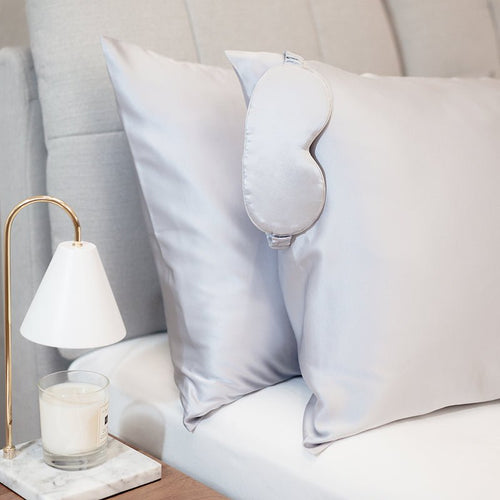
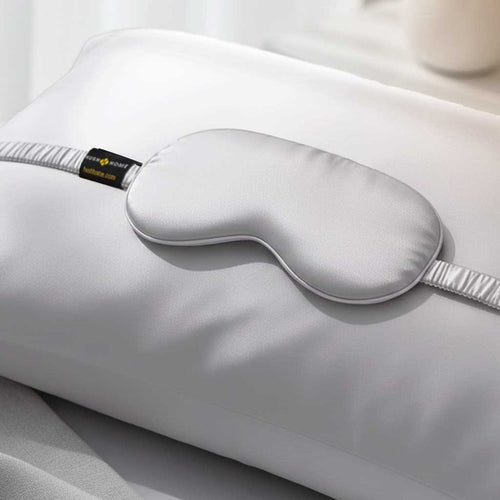
Silk can feel naturally smooth and cool against the skin. Hush Home's current Mulberry Silk Pillowcase™ uses 22-momme mulberry silk and is positioned as cool to the touch.
Treat this as surface comfort rather than whole-pillow cooling. Changing the pillowcase cannot fully cancel the heat characteristics of the fill beneath it.
Basic dense polyester can sleep warmer, but not all polyester behaves the same. Technical fabrics can be engineered for moisture wicking, faster drying or heat transfer, so judge the specific textile rather than rejecting the fibre name automatically.
Hush Home's four adult pillows use different heat-management approaches. There is no published independent head-to-head temperature test proving one Hush model is objectively the coolest, so the fairest comparison is by construction.
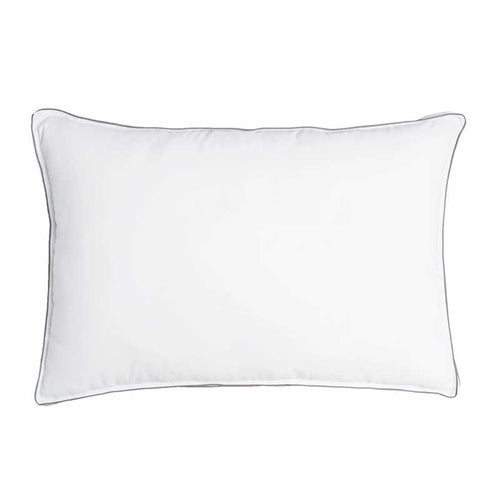
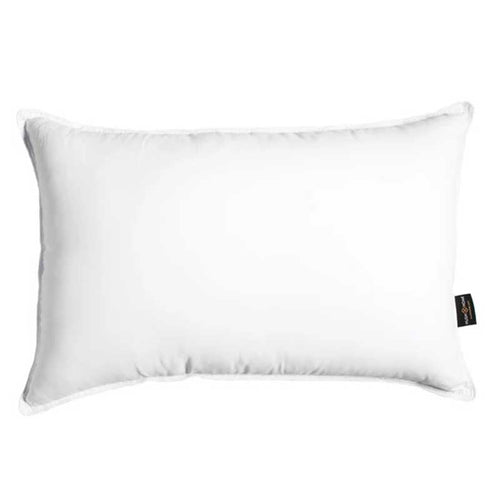
The Loft Pillow™ contains airy down-like microfiber rather than a solid foam core. That loose, lofty fill gives air more space to move, and the current PeachFiber™ cover is marketed by Hush as moisture-wicking and cooling.
For someone who mainly wants a soft hotel-pillow feel with no dense foam block, Loft is the clearest Hush starting point. That is a construction-based recommendation, not a claim that it has been laboratory-proven cooler than every other Hush pillow.

The OnePillow™ uses soft microfiber outer chambers with an adjustable interlocking-memory-foam centre. Hush highlights air spaces within the middle fill and a PeachFiber™ cover designed to manage moisture and heat.
This is a useful compromise for sleepers who want a hotel-style surface but need more internal support and height adjustment than a pure microfiber pillow.

The Miracle Pillow™ uses removable memory-foam layers, which would normally create more heat-retention risk than an airy fibre pillow. Hush offsets that with air channels through the foam, a ventilated mesh gusset and the PeachFiber™ outer fabric.
Hush currently claims the combined ventilation features increase airflow by 20%. Treat that as a manufacturer claim rather than independent comparative proof.

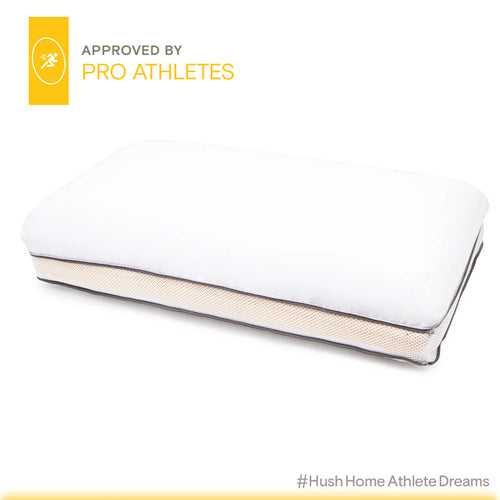
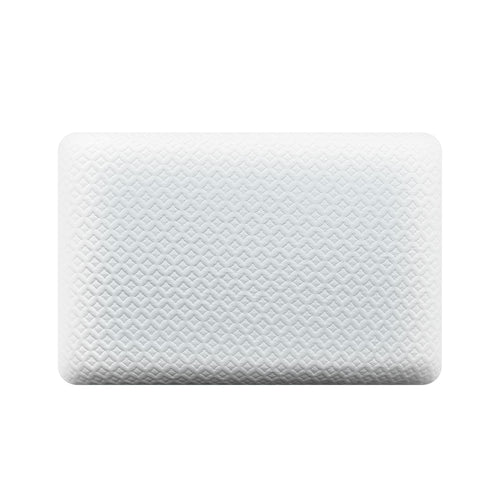
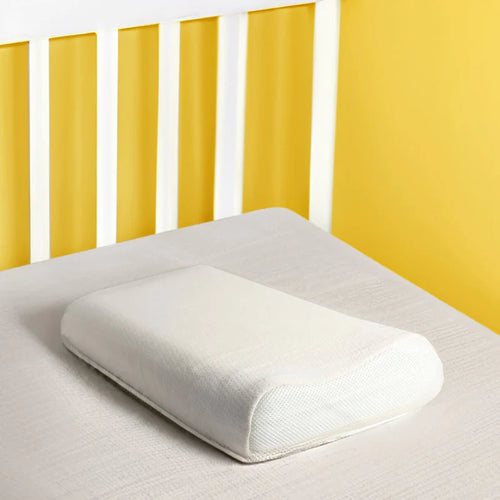
The Essence Memory Foam Pillow™ uses one solid supportive memory-foam core. From a material perspective, that construction has more potential to retain heat than airy microfiber or shredded fill.
Hush uses a bamboo-fabric cover and positions it as breathable and moisture-managing. If you strongly prefer firm solid-memory-foam support, that cover is relevant; if maximum airflow is your first priority, an airier fill may be a more natural starting point.

Indirectly, yes. A pillow that lets your head sink very deeply creates more contact area around the face and sides of the head, which can trap more heat locally. A firmer or more resilient pillow may expose more surface to room air.
But height should still be chosen primarily for sleeping position and body fit. Do not buy an unsuitable low or high pillow just because it feels cooler.
Firmness itself is not a cooling material, but it changes contact. Very soft pillows can wrap more closely around the head, increasing contact area, while firmer pillows can hold the head more on top of the surface.
Again, do not sacrifice fit for temperature. The best cooling pillow still needs the right height and support for your sleep position.
Too broad. Solid memory foam tends to trap more heat than many open fills, but perforation, open-cell structure, ventilation channels and cooling covers can materially improve temperature control.
Usually not. Gel can improve first-touch and short-term heat distribution, but it still needs the rest of the pillow to release accumulated heat.
Not necessarily. Latex can be very breathable, but natural down is an effective insulator. Material category alone does not guarantee cooling.
A breathable or moisture-managing cover can improve surface comfort, but it cannot fully erase heat retention from a dense core.
Cooling is only one part of fit. Height, firmness, sleep position, pressure distribution and personal comfort still matter.
There is no universal single winner, but shredded or aerated latex, buckwheat hulls and airy down-alternative fills consistently perform well for airflow and temperature control. Whole construction still matters.
Generally, yes. Latex is usually more breathable than synthetic memory foam, especially when aerated or shredded. A highly ventilated memory-foam pillow can still outperform a dense latex design, so compare the specific construction.
An airy microfiber or down-alternative pillow often allows more airflow than solid memory foam. Very dense synthetic fill or a poorly ventilated cover can reduce that advantage.
Not necessarily. Down is naturally insulating, so it can retain warmth. Loose or feather-heavy constructions may ventilate better, but down should not automatically be treated as a cooling fill.
They can improve surface comfort and moisture management. Cool-to-touch fabrics, breathable cotton, Tencel, bamboo-derived fabrics and silk can all change how the face feels against the pillow. They cannot completely override a heat-retaining core.
There is no published independent test naming one Hush pillow the coolest. By construction, The Loft Pillow™ is the most airflow-first because it uses airy microfiber without a solid foam core. The OnePillow™ combines airy microfiber with adjustable memory foam, while The Miracle Pillow™ uses deliberate ventilation to offset memory-foam heat retention.
High humidity can make moisture evaporate less efficiently and increase clammy discomfort, so a pillow's moisture permeability becomes especially important even if its surface temperature is not especially high.
No. Avoid assuming all memory foam performs the same. Look for perforations, air channels, open-cell foam, ventilated gussets, shredded structures and breathable covers, then test whether heat actually builds for you.
For Hong Kong hot sleepers, the best cooling pillow is usually one that manages both heat and moisture. Airy fills such as shredded latex, buckwheat and down alternative have a natural structural advantage, while solid memory foam needs more deliberate ventilation to compete.
Do not buy on the word cooling alone. Check the fill, internal airflow, cover material, moisture handling and how deeply your head sinks into the pillow.
And in Hong Kong's humid climate, a pillow that stays dry and breathable through the night may feel more comfortable than one that only gives a dramatic cold sensation for the first few minutes.