

Best Pillow for Side Sleepers: Height, Firmness & Material Guide
18 Sep 2026
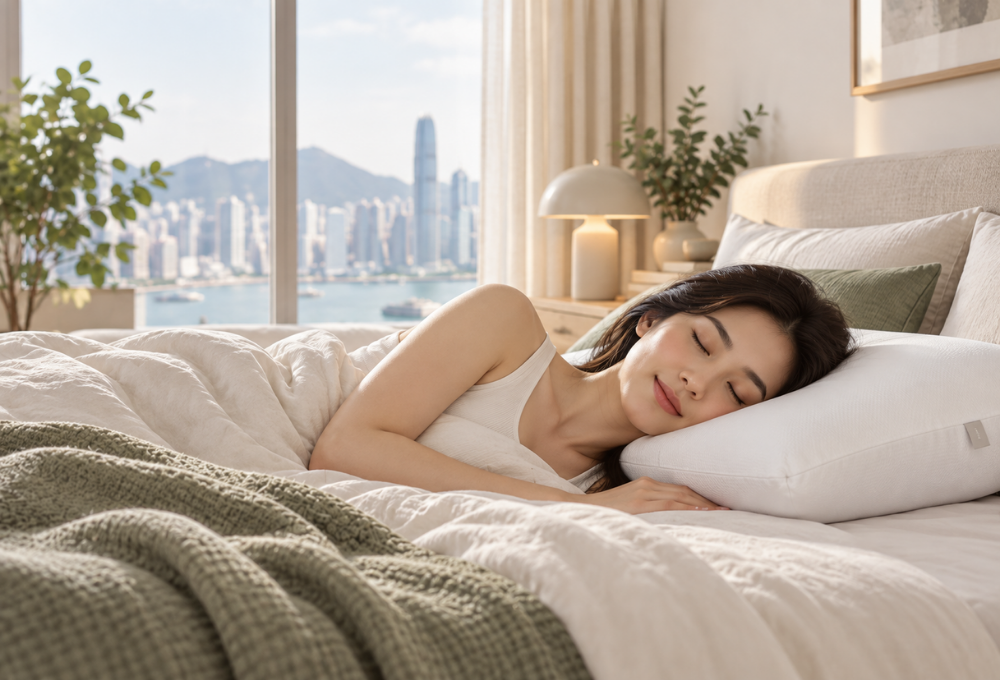
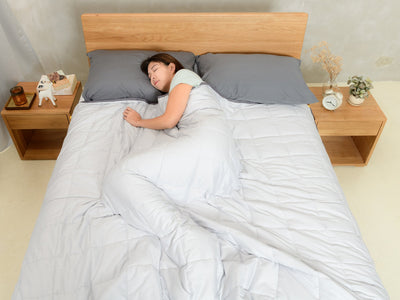
Side sleeping creates a simple pillow problem: your shoulder keeps your head farther away from the mattress than when you sleep on your back. Your pillow therefore has to fill that extra space well enough to keep your head and neck comfortably supported rather than tilted noticeably toward the mattress or pushed too far upward.
That is why side sleepers often do well with a higher and more supportive pillow than back or stomach sleepers. But there is no single height or firmness that is automatically correct for every side sleeper. Shoulder width, body size, mattress firmness, how deeply your pillow compresses and even whether you place your arm under the pillow can change the height you actually need.
The most useful goal is not to find the “highest side-sleeper pillow.” It is to find a pillow whose effective, compressed height fills the space between your head and mattress while keeping your neck in a comfortable continuation of the rest of your spine.
QUICK ANSWER
For many side sleepers, a medium to medium-firm pillow with enough loft to fill the shoulder-to-head gap is a sensible starting point. The pillow should resist collapsing completely overnight, but it does not need to feel hard. What matters is whether it keeps its supportive height once your head is resting on it.
A broad-shouldered person on a firm mattress will often need more pillow height, while a smaller-framed sleeper or someone on a softer mattress may need less because the shoulder sinks farther into the bed.
When you sleep on your side, one shoulder sits between your torso and the mattress. Unless the mattress lets that shoulder sink very deeply, your head is suspended some distance above the sleeping surface.
A pillow that is too low leaves the head dropping toward the mattress; one that is too high pushes the head away from it.
Hong Kong Consumer Council pillow testing has highlighted the same principle: suitable side-sleeping support depends on the relationship between pillow support height, shoulder width and the mattress underneath. Its testing also notes that mattress firmness affects pillow support height, which is why an identical pillow can feel correctly positioned on one mattress but too high or too low on another.
This is also why “side sleeper” is not enough information by itself when buying a pillow. Two people can both sleep on their sides but need noticeably different lofts because their shoulders, body size, mattress and pillow compression differ.
As a broad starting point, Hush Home’s existing Pillow Height Guide places many adult side sleepers around 13–18 cm (approximately 5–7 inches).
That range is useful for orientation, but it should not be treated as a prescription. The number printed on a pillow specification is its uncompressed height; what your neck experiences is the height after both your pillow and your shoulder have settled into the sleep surface.
The same nominal 15 cm pillow may behave very differently depending on construction. A dense memory foam core might retain much of that height under your head, while a fluffy microfiber pillow could compress much more. This is why “loft” and “support height” are related but not identical.
Often, yes—but not automatically.
Broader shoulders generally create a larger gap between the head and mattress when side sleeping. If the mattress is also firm, the shoulder remains relatively high above the sleeping surface, increasing the amount of space the pillow needs to fill.
But a broad-shouldered person on a plush mattress may sink farther into the bed than expected, while a smaller person on a very firm mattress may barely sink at all.
Shoulder width should therefore be considered together with mattress firmness rather than used as an isolated rule.
This is one of the most overlooked parts of pillow shopping.
A firm mattress keeps more of your shoulder above the mattress surface, so the gap from mattress to head is larger. A softer mattress allows the shoulder and hip to sink farther, bringing the head closer to the mattress and often reducing the required pillow loft.
If you replace your mattress with something substantially softer or firmer, it is worth reassessing your pillow rather than assuming the same setup will remain ideal.
This is one reason adjustable-height pillows can be useful: the pillow can be retuned when the mattress, sleeping position or your comfort preference changes.
If you also need help understanding the bed underneath you, see Hush Home’s Mattress Firmness Guide.
There is no single ideal firmness, but many side sleepers benefit from medium or medium-firm support because the pillow needs to resist excessive collapse while still cushioning the side of the head.
A pillow that feels wonderfully soft in your hands may become too low once your head rests on it for several hours.
Firmness should therefore be judged together with loft. A taller soft pillow can compress to an appropriate support height, while a shorter firm pillow might remain almost unchanged. Neither is automatically better.
If you prefer a very plush hotel-pillow feel, look for a design that combines softness with enough internal structure to stop the pillow collapsing completely. If you prefer a more defined, stable surface, solid or layered memory foam and latex generally provide a more consistent shape.
The material matters because it changes how quickly the pillow compresses, how well it holds height, how closely it contours and how easy it is to adjust. But material alone does not determine whether a pillow is suitable for side sleeping.
Memory foam can work very well for side sleepers because it contours under the head while providing resistance that helps the pillow retain supportive height.
Solid-core memory foam usually creates a more defined, stable feel, while layered or shredded foam can offer more flexibility and adjustability.
The trade-off is temperature. Dense foams can retain more heat than loose fills, so side sleepers in Hong Kong may want to look at ventilation channels, perforations, breathable side panels and cover materials rather than judging memory foam as one single category.
Latex tends to feel responsive and springy rather than slowly moulding around the head. It can provide strong shape retention and may suit side sleepers who want stable support without the slower sink of traditional memory foam.
Latex pillows can be made as solid moulded cores or shredded fill, so their feel still varies widely.
Hong Kong Consumer Council testing in 2026 found the memory foam and latex models tested generally performed satisfactorily for durability, while most polyester models in that particular sample set performed relatively less well.
This does not mean every latex or memory foam pillow will outlast every microfiber pillow. It reinforces the importance of shape retention for long-term support.
Soft-filled pillows are attractive if you like a plush hotel-style feel. The advantage is that the fill can often be fluffed and shaped around the neck.
The risk for side sleepers is excessive compression: if a very soft pillow loses too much height under the head, the neck may no longer be adequately supported.
For that reason, side sleepers who love a fluffy pillow may benefit from a taller model, more fill, a gusseted construction or an internal support chamber.
A hybrid pillow that combines a soft microfiber exterior with a more structured memory foam centre can offer a middle ground between hotel softness and stable support.
For a broader material comparison, see the Hong Kong Pillow Buying Guide.
Adjustability is especially useful for side sleepers because the ideal loft depends on several variables that are difficult to estimate perfectly before sleeping on the pillow.
Removable layers or adjustable fill let you change the support height gradually rather than choosing between one fixed “low” or “high” model.
This does not mean an adjustable pillow is automatically more comfortable. Some people already know the exact feel they like and may prefer the simplicity of a fixed core.
But if you are changing mattresses, alternate between side and back sleeping, share pillows between homes, or have repeatedly bought pillows that felt slightly too high or too low, adjustability gives you more room to correct the fit.
A practical way to check is to lie in your normal side-sleeping position and have someone look from behind, or take a photo at mattress level.
Your head should not appear obviously tilted upward away from the mattress or dropped downward toward it. The aim is a comfortable, natural continuation through the neck and upper spine rather than forcing an exaggerated bend.
| Possible Sign | What It May Suggest |
|---|---|
| Your head is consistently pushed upward. | The pillow may be too high. |
| Your ear feels pushed toward the upper shoulder. | The effective height may be excessive. |
| You need to move off the centre of the pillow to get comfortable. | The pillow shape or height may not suit you. |
| Your head drops toward the mattress. | The pillow may be too low. |
| You regularly put your hand or arm underneath the pillow. | You may be seeking extra height. |
| The pillow collapses substantially during the night. | Its shape retention may be insufficient for your required support height. |
Persistent neck, shoulder or arm pain can have many causes beyond a pillow. If symptoms are severe, persistent, associated with weakness or numbness, or continue despite changing your sleep setup, seek appropriate medical advice rather than assuming a pillow change alone will solve the problem.
There is no single Hush Home pillow that is best for every side sleeper. The better choice depends on whether you prefer memory foam or a fluffy hotel feel, how much height you need, whether you want adjustable firmness and how much your mattress lets your shoulder sink.
| Hush Pillow | Height / Adjustability | 手感 | Useful Starting Point for Side Sleepers |
|---|---|---|---|
| 神奇软硬枕™ | 12, 14, 16 or 18 cm; softer and firmer sides | Structured memory foam | Best suited to sleepers who want both height and firmness adjustment. |
| 壹枕™ | Adjustable fill up to approximately 20 cm | Soft hotel-pillow exterior with internal memory foam support | Useful if you want a plush feel with more gradual loft adjustment. |
| Loft Pillow™ | 12 cm or 15 cm | Soft, fluffy microfiber | The 15 cm version is the more obvious starting point when extra height is needed, but compression matters. |
| Essence Memory Foam Pillow™ | Fixed 12 cm | Medium-hard memory foam | May suit smaller shoulder-to-neck gaps or sleepers whose shoulders sink farther into a softer mattress. |
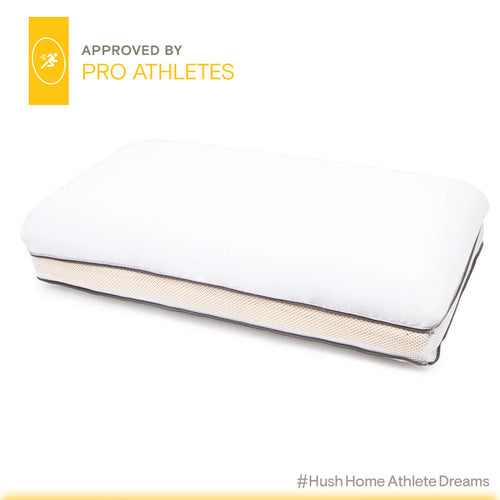
The Miracle Pillow™ is the most flexible option in Hush Home’s current range if you want a structured memory foam feel with both height and firmness adjustment.
Removable internal layers create four nominal height settings of 12, 14, 16 and 18 cm, while its two-sided design lets you choose a softer or firmer sleeping surface.
That combination is particularly useful for side sleepers because you can change two variables independently. A broader-shouldered sleeper may start with 16 or 18 cm and then assess alignment under actual compression, while someone on a softer mattress may find a lower setup more appropriate. These are starting points, not prescriptions.
The pillow also uses air channels, a ventilated gusset and a cooling cover, which are relevant considerations for Hong Kong sleepers who like memory foam support but are concerned about heat.
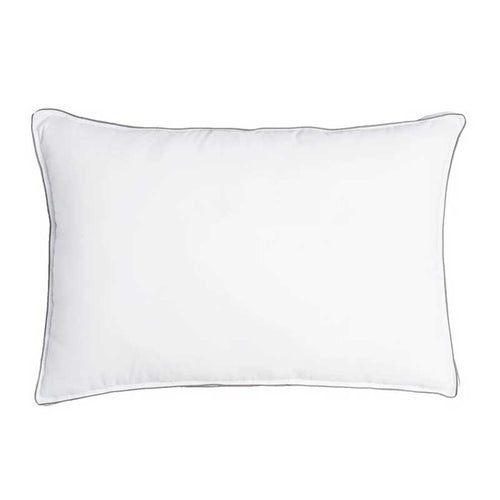
The OnePillow™ is designed for sleepers who prefer the soft, fluffy character of a hotel pillow but still want adjustable support.
It uses soft microfiber in the outer chambers with an adjustable middle layer of interlocking memory foam. The pillow can be adjusted to different heights up to approximately 20 cm.
For a side sleeper, the advantage is that the soft outer feel does not have to mean an entirely unstructured pillow. The internal memory foam can be added, removed and fluffed to change how much height and support remains beneath the head.
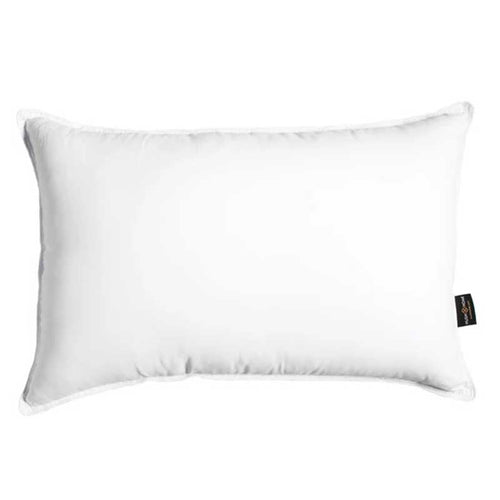
The Loft Pillow™ uses airy hypoallergenic microfiber filling and comes in two nominal heights: 12 cm and 15 cm.
For side sleepers, the 15 cm version is the more obvious starting point if a higher pillow is required, but soft microfiber compresses differently from memory foam.
Do not assume that a 15 cm Loft Pillow will provide the same effective support height as a 15–16 cm denser foam pillow. Try the pillow with your own mattress and judge the compressed position.
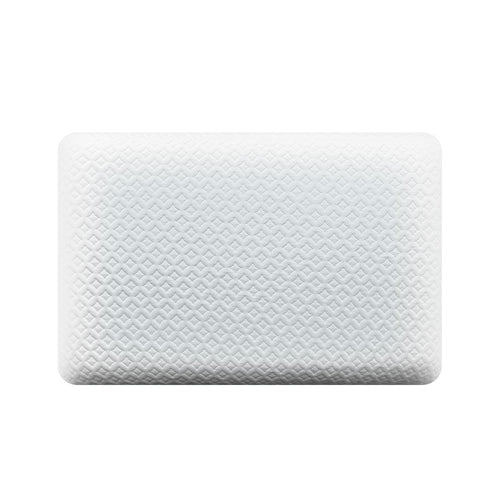
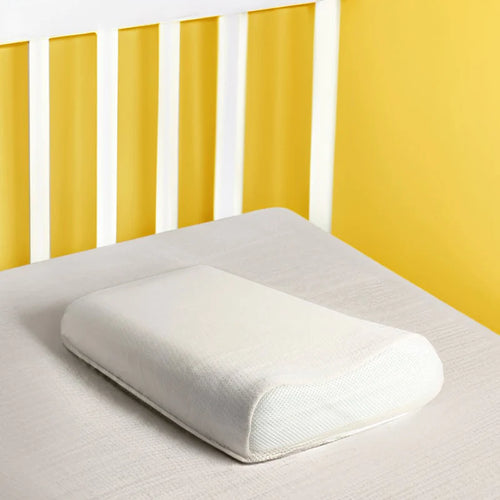
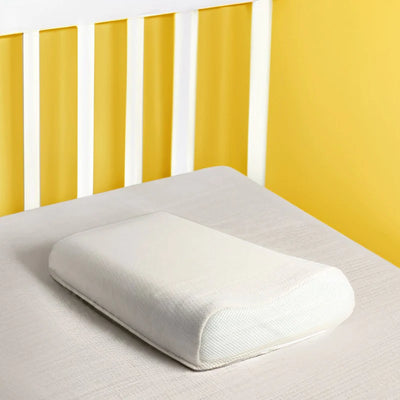
The Essence Memory Foam Pillow™ uses a single supportive memory foam core with a medium-hard feel and a fixed nominal height of 12 cm.
For some side sleepers—particularly those with a smaller shoulder-to-neck gap or those whose shoulders sink farther into a softer mattress—12 cm may provide an appropriate effective height.
For a broad-shouldered sleeper on a firm mattress, however, it may be lower than needed. The correct choice depends on alignment rather than the material name alone.
Choose the Miracle Pillow™ if you prefer a more defined memory foam surface and want to control both pillow height and surface firmness. Its four height settings make it easy to test noticeably different lofts.
Choose the OnePillow™ if you prefer a softer hotel-pillow feel but still want adjustable height and internal support. Its loose interlocking memory foam centre allows more gradual fine-tuning rather than fixed height steps.
Neither is automatically better for side sleeping. The important question is which feel you prefer and which one can be adjusted to keep your head and neck comfortably positioned on your own mattress.
No. A contour shape can help some sleepers position the neck consistently, but side sleepers do not need a visibly sculpted or orthopedic-looking pillow simply because they sleep on their side.
A traditional rectangular pillow can work perfectly well if its compressed height, firmness and shape retention suit the sleeper.
A contour pillow can also be too high, too low or poorly matched to your shoulder width. Shape should therefore be treated as one design feature rather than a guarantee of correct alignment.
Side sleepers often keep a larger area of the face pressed into the pillow than back sleepers, so surface temperature and moisture can be noticeable—particularly in Hong Kong’s hot, humid climate.
However, “cooling” should be judged from the whole pillow rather than one fabric buzzword.
A breathable pillowcase and a cool, well-ventilated bedroom can also affect comfort substantially.
Hush Home’s Miracle Pillow™ uses air channels, a ventilated gusset and cooling fabric, while the OnePillow™ uses air pockets in its interlocking memory foam layer with a breathable PeachFiber™ cover. The Loft Pillow™ uses a soft microfiber fill and PeachFiber™ cover, and the Essence Memory Foam Pillow™ uses a breathable fabric cover around its memory foam core.
Many adult side sleepers fall somewhere around 13–18 cm as a broad starting range, but there is no universal ideal height. Shoulder width, mattress firmness and how much the pillow compresses all change the effective loft you need.
Medium to medium-firm support is a useful starting point for many side sleepers because the pillow needs enough resistance to avoid collapsing too far. However, a softer pillow can work if it is sufficiently lofty and retains enough support under the head.
Yes, it can be. Memory foam can contour around the head while maintaining relatively stable support. Side sleepers who are sensitive to heat should compare ventilation and cover design as well as the foam itself.
Often, but mattress firmness matters. Broad shoulders usually create more space between the head and mattress, while a soft mattress can offset some of that distance by allowing the shoulder to sink farther.
Yes. A firmer mattress generally keeps the shoulder higher and can increase the loft needed for side sleeping. A softer mattress allows more shoulder sink and can reduce the gap the pillow must fill.
For some people, yes. A smaller-framed sleeper or someone on a softer mattress may find 12 cm suitable, particularly if the pillow retains its height well. A broad-shouldered person on a firm mattress may need more loft.
It can be a good starting point for many side sleepers, but 15 cm of soft microfiber and 15 cm of dense foam will not compress the same way. Effective support height matters more than nominal height.
They can be particularly useful if you are unsure of your ideal height, change sleeping positions, have recently changed mattresses or want to fine-tune support gradually. Fixed pillows can work just as well when their height and firmness already suit you.
For maximum adjustability, the Miracle Pillow™ offers four height settings plus a softer and firmer side. For a softer hotel-pillow feel with adjustable loft, the OnePillow™ allows its internal memory foam fill to be adjusted up to approximately 20 cm. The Loft Pillow™ offers soft microfiber in 12 cm and 15 cm versions, while the Essence Memory Foam Pillow™ provides a fixed 12 cm medium-hard memory foam option. The better choice depends on your required height and preferred feel.
A useful visual sign is obvious head tilt: if the pillow pushes your head upward or lets it drop toward the mattress, the effective height may be mismatched. Repeatedly putting your hand under the pillow for extra height can also suggest the pillow is compressing too low. Persistent pain should be assessed separately rather than automatically blamed on the pillow.
The best pillow for a side sleeper is not simply a “high pillow” or a “firm pillow.” It is a pillow that maintains the right effective height after your head, shoulder, pillow and mattress have all settled into position.
Start with your shoulder-to-neck gap, then account for mattress firmness and pillow compression. Choose the material according to the feel you enjoy—structured memory foam, responsive latex, soft microfiber or a hybrid—and prioritise enough shape retention to support your chosen loft throughout the night.
For Hush Home shoppers, the Miracle Pillow™ offers the broadest combination of adjustable height and firmness; the OnePillow™ offers adjustable support with a softer hotel-pillow character; the Loft Pillow™ prioritises fluffy softness; and the Essence Memory Foam Pillow™ offers a straightforward fixed-height memory foam feel.
There is no need to force every side sleeper into the same pillow.