
Does a Waterproof Mattress Protector Make You Sleep Hot?
29 Sep 2026
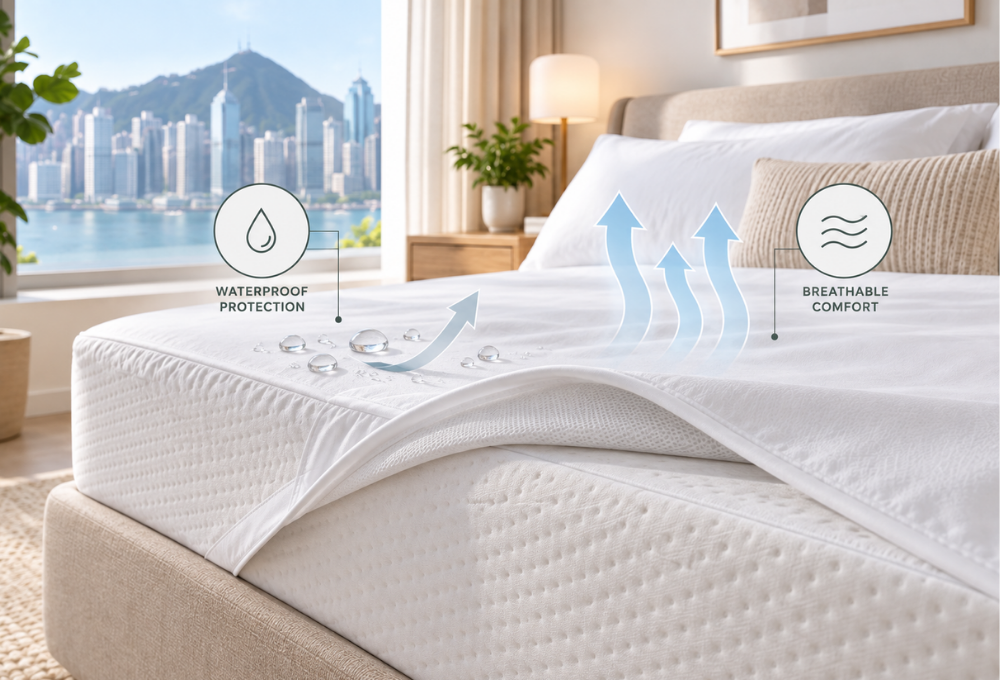
If you sleep hot, adding another layer between your body and mattress can sound counter-intuitive. Waterproofing also suggests a barrier, so it is reasonable to wonder whether a protector traps heat.
The accurate answer is: it can, but it does not have to.
Every waterproof protector creates some form of barrier to liquid water. The important question is how that barrier handles heat and water vapour. A thin, flexible membrane with good vapour transfer can behave very differently from a thick plastic-like layer with low permeability.
Quick Answer: Do Waterproof Mattress Protectors Sleep Hot?
Not necessarily. A waterproof protector may make a bed feel warmer if it reduces airflow or slows moisture evaporation around the body, especially for someone who already sleeps hot. But modern waterproof membranes can be engineered to block liquid water while still allowing some water vapour to pass through.
The word “waterproof” therefore tells you only one part of the story. Thickness, membrane construction, top fabric, padding, fit and the whole sleep system determine whether the protector feels neutral, slightly warmer or noticeably clammy.
Your body continuously produces heat and moisture during sleep. Comfort depends partly on allowing excess heat and water vapour to move away from the skin and out of the bedding microclimate.
A protector can affect this process in three main ways: it can add insulation, reduce direct air movement through the mattress surface, and add resistance to water-vapour transfer.
This does not mean the protector “creates” heat. Rather, a poorly ventilated layer can make it harder for heat and moisture generated by your body to dissipate.
Waterproofness, air permeability and water-vapour permeability are different properties.
A material can prevent liquid water from passing through while still allowing water vapour to move across it. Waterproof-breathable textiles used in other industries demonstrate this principle clearly.
It is also possible for a membrane to have very low air permeability while still transmitting water vapour. This is why the marketing word “breathable” should not automatically be interpreted as “air flows freely through it”.
For hot sleepers, water-vapour transfer can be just as important as direct airflow because a damp, humid microclimate often feels hotter and more uncomfortable than a similarly warm but drier one.
A waterproof membrane sits beneath or within the textile surface and prevents spills, sweat and other liquid moisture from reaching the mattress.
There are several membrane constructions. Some use microscopic pores; others are non-porous but move water vapour through the polymer by diffusion. Material, thickness, pore structure and lamination method all affect performance.
This is why two protectors both labelled “waterproof polyurethane” can still have different breathability, noise, stretch and feel.
Not automatically. Polyurethane can be made into thin flexible films and waterproof-breathable membranes with different levels of water-vapour permeability.
The polymer name alone does not tell you how breathable the finished protector is. Film thickness, membrane chemistry, porosity and the way it is bonded to the textile matter.
A very thin PU-backed protector may have less effect on bed feel than a thick padded protector, while another PU laminate with poorer vapour transfer may feel noticeably clammy. Judge the complete construction rather than assuming all polyurethane behaves the same.
Traditional thick vinyl-style protectors are often associated with a plasticky feel, noise and low vapour transfer. That reputation is one reason modern fitted protectors frequently use thin polyurethane or TPU-style membranes instead.
However, do not turn this into an absolute material ranking. Finished performance depends on the exact film thickness, formulation, textile layers and construction. If thermal comfort is important, look for actual breathability or water-vapour information where available rather than relying only on the polymer name.
Cotton can make the sleeping surface softer and can absorb moisture, but the top fabric does not erase the properties of the waterproof layer beneath it.
A knitted cotton top over a thin membrane may feel more comfortable than sleeping close to a bare plastic-like film. But the complete laminate still determines how easily moisture and heat move through the protector.
The same logic applies to TENCEL™, bamboo-derived viscose, polyester and other surface fabrics. No fibre name automatically guarantees a cool protector.
These are not the same product category.
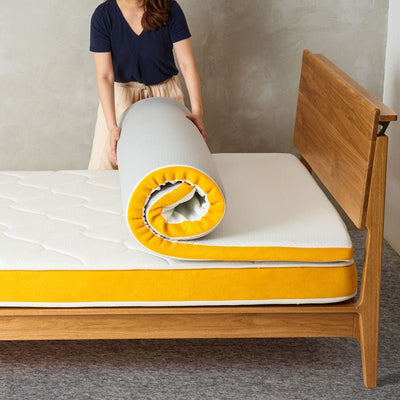
A thin fitted protector is primarily a protective barrier. A mattress pad or topper may add quilting, fibre fill, foam or several centimetres of cushioning. Those extra materials can meaningfully change thermal insulation and how deeply your body sinks into the bed.
If your goal is waterproofing with the least possible change to mattress feel and temperature, a thin protector is generally the more logical format than a heavily padded waterproof pad.
Potentially. Any added layer can modify how directly your body interacts with the mattress surface.
If a mattress relies heavily on a cool-to-touch cover, a thick protector can reduce how strongly you feel that initial surface sensation. A thin protector may preserve more of the underlying feel.
But cool-to-touch is not the same as all-night cooling. Overnight comfort still depends on heat transfer, moisture, airflow, room conditions, bedding and how the mattress surrounds the body.
When the air around the body is already humid, sweat evaporates less efficiently. A protector that adds resistance to moisture transfer can therefore feel more noticeable in humid conditions than in a cool, dry room.
This is particularly relevant in Hong Kong. Hong Kong Observatory 1991–2020 climate normals show an annual mean relative humidity of 78%, with monthly means of 82–83% from March through June and 81% in July and August.
Those are outdoor Observatory climate normals, not a claim that every air-conditioned bedroom has the same humidity. But they explain why moisture management is a practical concern for Hong Kong sleepers.
Look beyond the word “waterproof”. A useful checklist includes:
Do not rely on one warm night. Room temperature, humidity, duvet thickness, pyjamas, alcohol, illness, hormonal changes and mattress construction can all alter how hot you feel.
A simple home test is to keep everything else as similar as possible and compare several nights with the protector against several nights without it, provided removing it does not create a realistic spill or hygiene risk for you.
Record whether you wake because of heat, feel clammy around the back or hips, notice more sweating, or find the fitted sheet damp. If the difference repeats consistently, the protector may be contributing.
First check the room and upper bedding. A very warm duvet or humid bedroom can have a larger effect than a thin protector.
If the protector still appears to be the problem, move toward a thinner, less padded design with better moisture-vapour management. Make sure it fits smoothly and that the fitted sheet above it is not unusually dense or heavy.
Do not solve the problem by abandoning mattress protection if spills, children, pets, night sweats or staining are realistic risks. A better-designed protector is usually the more sensible compromise.
It can change the microclimate above any mattress, including memory foam. Memory foam is often discussed in relation to heat because some designs contour closely around the body, reducing exposed surface area for airflow.
A thick, low-permeability protector may add another barrier on top. But this does not mean every waterproof protector automatically makes every memory-foam mattress hot. Protector thickness, membrane performance and the mattress cover and foam design all matter.
It can still influence the surface microclimate, even if the mattress itself has an open coil structure underneath.
Pocket coils may allow more internal air space than a solid foam core, but the sleeper interacts first with the comfort layers, cover, protector, fitted sheet and duvet. A breathable mattress does not make the protector irrelevant.
A thin stretchy protector should generally have less effect on feel than a thick quilted pad. But any layer can slightly change surface stretch, friction and how directly you feel the mattress cover.
If the protector is too small or fitted under very high tension, it can also restrict the surface from conforming as freely. Choose the correct size and depth rather than stretching a shallow protector over a deep mattress.
They serve different jobs and are usually used together. A fitted sheet provides the direct sleeping surface, while the protector primarily shields the mattress underneath.
Either can influence comfort depending on thickness and construction. A dense flannel-like fitted sheet may feel warmer than a light protector, while a thick impermeable protector may dominate the microclimate even under a breathable sheet.
Think of the bed as a layered system rather than trying to assign all heat to one product.
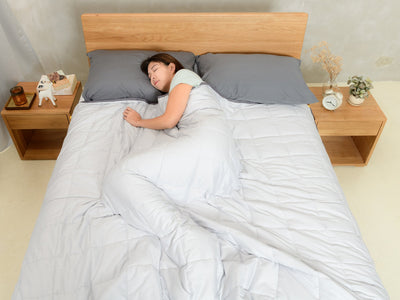
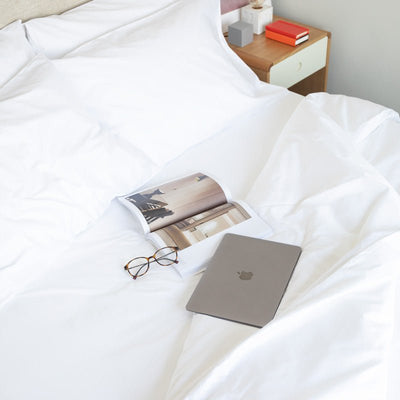
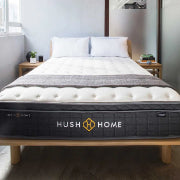
Hush Home's current Waterproof Mattress Protector™ uses a 100% knitted-cotton surface, a waterproof polyurethane layer and nylon skirting. It fits like a fitted sheet and is currently designed for mattresses up to 33 cm deep.
Hush describes the protector as soft and breathable and says its waterproof construction uses microscopic pores intended to keep liquid out while allowing ventilation and heat dissipation. Those are Hush product-design claims; the current product page does not publish a standardised MVTR, RET or air-permeability value that would let shoppers independently compare its membrane against every competing protector.
That does not make the claim meaningless—it simply means the most responsible wording is that the protector is designed to minimise the usual heat and moisture penalty of waterproofing, rather than claiming that it actively cools the mattress or can never feel warm.
Hush's current Care Guide recommends washing the mattress protector as needed at 50°C with mild liquid detergent and tumble drying below 60°C. It advises against bleach, ironing and dry cleaning. Following care instructions matters because excessive heat or unsuitable chemicals can damage laminated waterproof layers over time.
Because mattresses are difficult to wash. A removable protector creates a washable sacrificial layer between everyday life and the mattress.
This is useful for sweat, drink spills, children, pets, menstrual leaks and other accidents. It can also reduce the chance that liquid reaches foams, fibres and upholstery layers that may be slow to dry.
Hush's current mattress care guidance specifically recommends protecting its mattresses with a waterproof mattress protector and sheets. That advice is about protecting the mattress from wetting and staining, not a claim that every waterproof protector improves sleep temperature.
If you want mattress protection without making the bed unnecessarily warm, start with the thinnest practical waterproof protector that meets your protection needs, then use a lightweight fitted sheet and avoid excessive padding above the mattress.
Choose duvet weight for your actual room conditions rather than Hong Kong's outdoor temperature alone. An air-conditioned sleeper may need a different setup from someone sleeping with a fan and open windows.
If the room is humid, use air-conditioning or sensible dehumidification and improve ventilation. A breathable protector cannot compensate for persistent condensation, leaks or an excessively humid room.
False. Waterproof membranes differ substantially in thickness, structure and water-vapour permeability.
False. Some waterproof-breathable membranes transmit water vapour even when direct air permeability is very low.
Not necessarily. The membrane and laminate construction underneath still matter.
Not necessarily. A thin protector may only modestly change surface sensation. A thick layer can have a larger effect. The actual combination matters.
Not automatically. A protector still needs to provide the liquid protection, fit, durability and washability you need.
They should not be treated as identical. Water-resistant materials can repel limited moisture but may not provide the same barrier against sustained liquid exposure as a genuinely waterproof construction.
Not necessarily. If liquid protection is important, a thin, well-designed waterproof protector may be a better compromise than leaving an expensive mattress unprotected.
They can reduce heat and moisture transfer compared with having no barrier at all, but the effect varies greatly by construction. Thin, vapour-permeable membranes can minimise the difference, while thick low-permeability layers may feel warmer.
Some are. Waterproofness does not prevent a material from being water-vapour permeable. However, “breathable” is not a standardised guarantee unless the product provides a recognised test result such as water-vapour or evaporative-resistance data.
It can be, depending on formulation and membrane structure. Some PU films are engineered for water-vapour transfer; others are less permeable. Do not judge from “PU” alone.
There is no universal winner, but hot sleepers should generally prioritise a thin, minimally padded protector with good water-vapour management, a comfortable textile surface and a smooth fit.
It adds another surface layer and can reduce direct airflow through the top, but the magnitude depends on the membrane and fabric. Mattress airflow also occurs through sides, internal channels and the underside depending on construction.
A low-permeability protector can make moisture feel more noticeable, but persistent or unexplained night sweats may have medical causes. Do not assume the protector is the only reason if sweating is new, severe or accompanied by other symptoms.
Usually the protector is best positioned above the topper if you want to protect both topper and mattress, but follow the topper and protector manufacturers' instructions. Hush Home currently advises using a mattress protector on top of its Dual Mattress Topper™.
Generally yes. The protector protects the mattress; the fitted sheet provides the primary sleeping surface and can be washed frequently. Follow the product instructions for any specialised protector designed to be slept on directly.
There is no universal replacement interval. Replace it if the membrane cracks, peels or leaks, the elastic no longer fits securely, persistent odour or staining cannot be cleaned, or the product fails its intended waterproof function.
Compare multiple nights with and without the protector while keeping room temperature, duvet, sheets and clothing as similar as practical. Repeated differences in waking from heat, clamminess or sweating are more informative than one night.
A waterproof mattress protector can make some sleepers feel warmer, but waterproofing itself is not enough to predict comfort. The real issue is how much thermal and moisture resistance the complete protector adds to the bed.
For hot sleepers, prioritise a thin construction, sensible water-vapour management, a soft textile surface and correct fit. Then evaluate the rest of the bed: sheets, duvet, mattress, room temperature, humidity and airflow.
In Hong Kong, this whole-system approach matters even more because humidity is high for much of the year. A protector should protect against liquid without becoming the heaviest or least moisture-permeable layer in the bed.
Hush Home's Waterproof Mattress Protector™ combines a knitted-cotton surface with a waterproof polyurethane layer and is designed by Hush to provide liquid protection while remaining soft and breathable. The most accurate claim is not that it actively cools the bed, but that its thin waterproof construction is intended to minimise the usual comfort trade-off of adding a protective barrier.