



What Pillows Do 5-Star Hotels Use? Hotel Pillow Types Explained
10 Sep 2026
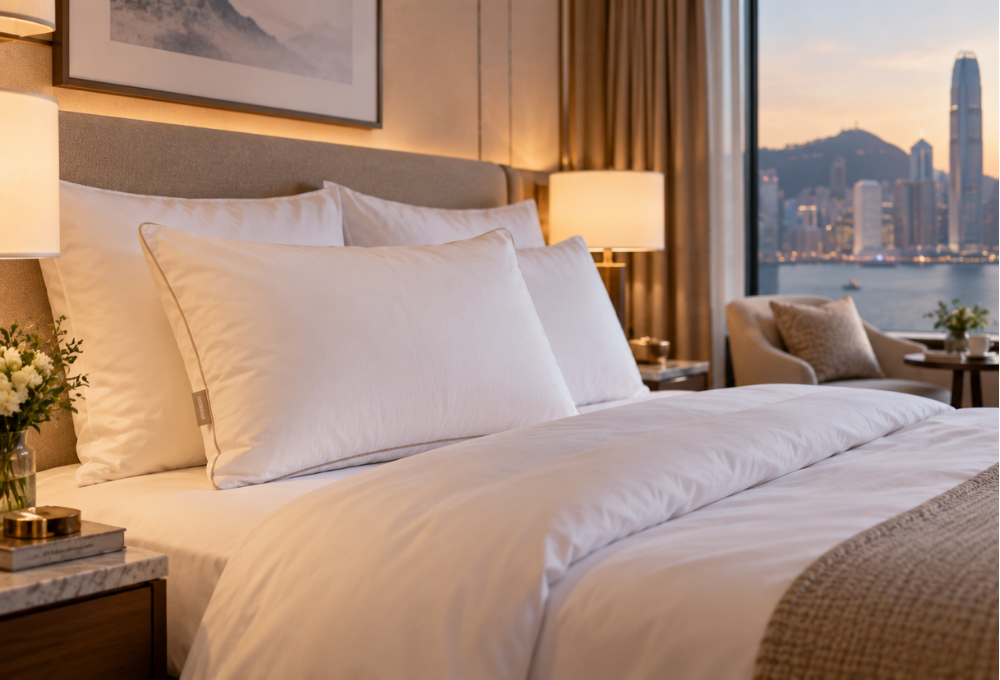
There is no single pillow used by every five-star hotel. Luxury hotel bedding ranges include down-and-feather blends and down alternatives, while some properties offer foam and other options through a pillow menu. The right question is not simply which hotel name appears on the label, but which filling, height and feel suited you. [1] [2] [4]
A pillow that felt wonderful on holiday is a useful starting point—not a guarantee that every hotel-style pillow will feel the same at home. Start by identifying what you enjoyed: a soft surface, a mouldable filling, a fuller shape or steadier support.
Copy the comfort, not just the hotel label. Check the pillow’s filling, its height under your head, how easily it changes shape and its care instructions. A fluffy hotel appearance does not automatically mean down filling, high firmness or the right fit for your sleeping position.
The examples below distinguish hotel-branded retail products from amenities listed for a particular room. Neither should be treated as proof that every property, room category or market uses exactly the same pillow.
Four Seasons at Home lists a Down & Feather Pillow containing 25% white down and 75% feather, with a cotton cover. It also sells a separate Down Alternative Pillow filled with polyester fibre. Even within one luxury hotel brand’s retail collection, there is more than one approach to pillow comfort. [1] [2]
The Ritz-Carlton’s official Shop Marriott collection includes a Down Alternative Pillow with fibre filling made from recycled plastic bottles and a cotton cover. This is a useful counterexample to the idea that luxury hotel pillows must contain natural down. [3]
Shangri-La Yiwu’s Grand Premier Room page lists feather pillows and a pillow menu that includes foam, side-sleeper foam and buckwheat-hull options. This is a specific property example, not a statement about every Shangri-La hotel. It illustrates why asking for another pillow may be more useful than assuming the first one is your only choice. [4]
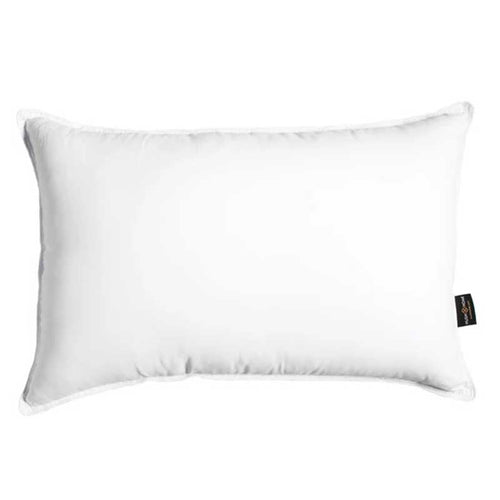
Down consists of soft clusters rather than the more structured feathers with quills. A down-filled pillow is worth considering when you enjoy a compressible, mouldable feel. However, the amount of filling and the way the pillow is constructed still matter: the word “down” alone does not tell you how high it will sit under your head.
A blend combines the characteristics of both fillings. Compare the actual ratio, fill weight and whether the pillow has separate chambers rather than assuming two blended pillows will feel identical. Someone who likes to scrunch a pillow into shape may enjoy a different blend from someone who wants a less changeable surface.
Down alternative describes a filling intended to create a down-like feel without natural down; polyester fibre is one example. It is not the same material as memory foam. Choose it for the feel and specifications of the actual pillow, not because “synthetic” automatically means inexpensive, cool or machine washable. [2]
Foam pillows offer a different response from loose feather or fibre filling. Some use a shaped core; others contain removable layers or loose pieces that allow adjustment. A hotel pillow menu may list a foam option, but “foam” does not automatically mean memory foam, and neither is a universal five-star-hotel standard. [4] [5] [6]
Some menus extend beyond the familiar soft hotel pillow to options such as buckwheat-hull or ergonomic designs. Treat these as different comfort choices rather than upgrades everyone needs. Ask what the pillow contains and how it feels before choosing from the name alone. [4]
Instead of attributing the experience to one secret filling, separate the details. Was the pillow freshly fluffed? Did you use one pillow rather than two? Was the pillowcase smooth? Did the mattress let your shoulder settle further than your mattress at home? These are useful questions when trying to reproduce that particular experience.
A full-looking pillow is not necessarily a tall pillow once you lie on it. Compare its working height under your head, not only its height on display. Likewise, several pillows arranged on a hotel bed are not an instruction to stack all of them beneath your neck.
If you loved a pillow that could be shaped around you, compare loose-fill options. If you liked a soft surface but wanted the middle to feel steadier, compare layered designs. If the hotel pillow felt too tall or too low, consider adjustability instead of buying another fixed height.
Lie down as you normally sleep and notice whether you keep adjusting the pillow to get comfortable. Test both your preferred position and the position you often turn into. A brief hand squeeze cannot tell you whether the pillow will feel right beneath your head.
Check the pillow’s actual width and length against your pillowcases. Then read the label for the pillow itself, the removable cover and any inner layers separately. A washable cover does not mean the complete pillow can go in the washing machine.
The difference is visible even in hotel-branded collections: Four Seasons lists its Down Alternative Pillow as dry-clean-only, while The Ritz-Carlton’s corresponding product is listed as machine washable. Follow the specific label rather than a rule based on filling alone. [2] [3]
Hush Home’s pillows offer ways to build your own hotel-inspired setup. The products below are not presented as the exact pillows used by the hotel brands mentioned above; the comparison is about the comfort features you may want at home.

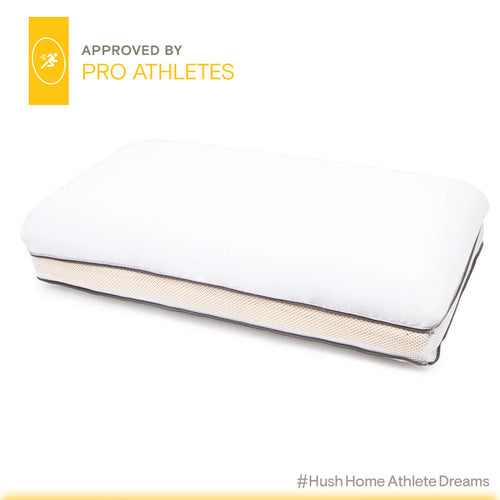
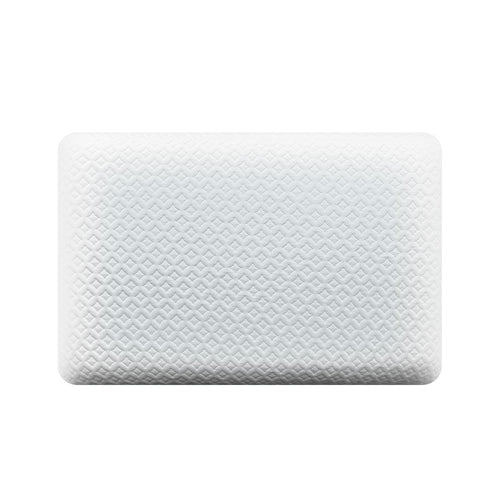
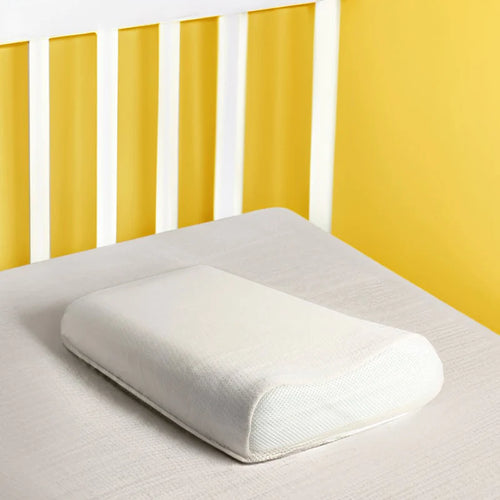
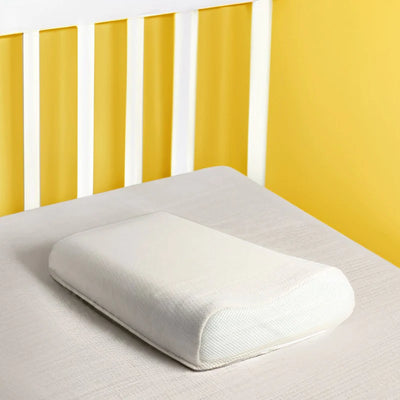
The OnePillow™ combines a soft, fluffy exterior with an adjustable interlocking memory-foam middle layer. It is worth comparing if you enjoy a hotel-style surface but want more control over the pillow’s height than a fixed loose-fill pillow provides. [5]
Explore the OnePillow™
The Miracle Pillow™ uses removable memory-foam layers with soft microfiber filling and a two-sided design. This offers a different route to comfort when you want to adjust height and firmness rather than replicate the feel of a feather-and-down pillow. [6]
Compare the Miracle Pillow™No. The official examples above include feather-and-down blends, down alternatives and property-specific foam options. Ask the hotel about the pillow in the room you actually stayed in.
There is no single answer. Filling, quantity, chambers and compression all affect feel. A soft outer surface and a supportive middle can also coexist in one pillow.
No. Down-alternative pillows commonly use loose fibres, while memory foam is a foam material. Some layered pillows combine fibre cushioning with a foam core.
Possibly. Ask for the manufacturer, model, filling and size, or contact the hotel’s official shop. A similar name or the same hotel logo does not establish that every specification matches.
Only according to that pillow’s care instructions. Check the filling and cover separately, and do not assume every fibre pillow is machine washable.
Start with the OnePillow™ for a fluffy exterior and adjustable middle layer. Compare the Miracle Pillow™ when adjusting both height and firmness is your priority. Choose by your own trial of the feel, not by hotel styling alone. [5] [6]
A five-star hotel does not point to one universal pillow material. Use the hotel experience to identify the features you enjoyed, then choose a pillow that fits your sleeping position, preferred height and care routine. The most successful recreation is the one that feels comfortable in your own bed.
[1] Four Seasons at Home — Down & Feather Pillow
View source
[2] Four Seasons at Home — Down Alternative Pillow
View source
[3] The Ritz-Carlton at Shop Marriott — Down Alternative Pillow
View source
[4] Shangri-La Yiwu — Grand Premier Room amenities and pillow menu
View source
[5] Hush Home — The OnePillow™
View product
[6] Hush Home — The Miracle Pillow™
View product