
Best Mattress for Couples With Different Sleeping Positions
19 Aug 2026
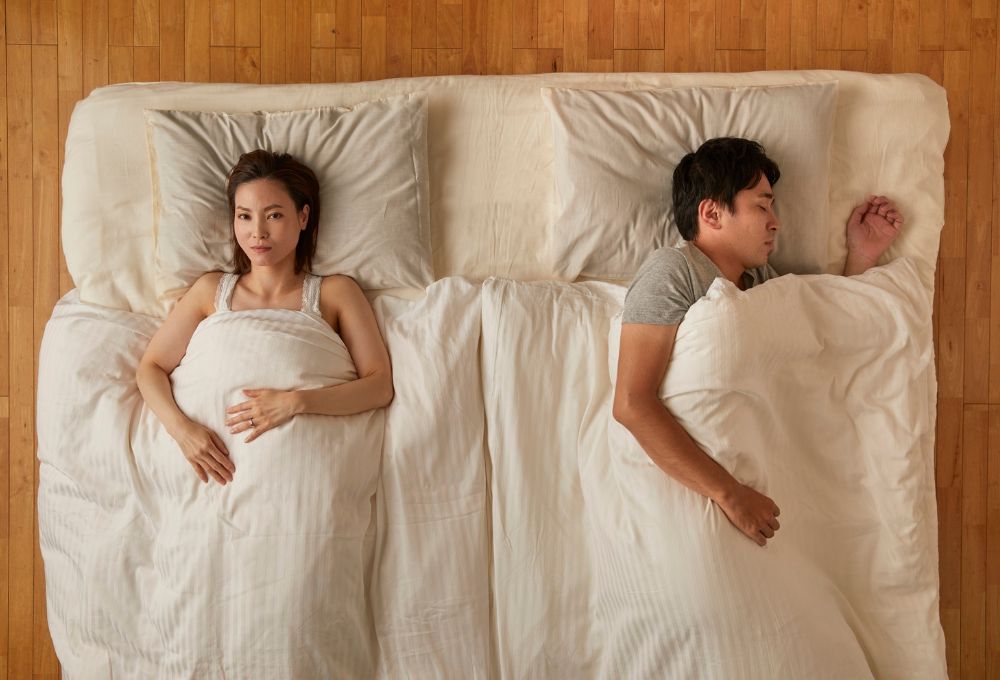
The best mattress for couples with different sleeping positions is one that balances pressure relief, support and partner-friendly features for both sleepers. If one person sleeps mainly on their side while the other sleeps on their back or stomach, a shared medium or medium-firm mattress may work when their needs are similar. If their preferred firmness levels are far apart, independent firmness on each side can reduce the need for compromise.
KEY TAKEAWAY
Sleeping position matters because it changes where the body loads the mattress, but it should never be considered alone. Body weight, body shape, personal firmness preference, motion sensitivity and mattress construction all affect what feels supportive and comfortable.
Side sleeping concentrates more load around the shoulders and hips. Back sleeping distributes weight more broadly across the back, pelvis and legs. Stomach sleeping can place greater demands on support beneath the torso and pelvis if the mattress allows the middle of the body to sink too deeply.
As a general starting point, side sleepers often prefer more cushioning, back sleepers often prefer a balanced medium to medium-firm feel, and stomach sleepers commonly prefer more resistance. These are guidelines rather than rules because body weight and personal preference can shift the ideal firmness considerably.
Side sleepers usually benefit from enough contouring for the shoulder and hip to settle into the comfort layers without creating excessive pressure. A mattress that feels too firm for that sleeper can make these contact points feel uncomfortable.
Body weight still matters. A lightweight side sleeper may need a more cushioning surface to engage the comfort layers, while a heavier side sleeper may want similar pressure relief with stronger underlying support.
Back sleepers generally need enough contouring to follow the body's natural shape while preventing excessive sinkage around the pelvis. For many people, this places the starting point around medium to medium-firm rather than at either extreme.
Stomach sleepers often prefer a firmer-feeling surface because excessive sinkage around the middle of the body can feel uncomfortable. However, firmer does not mean the hardest possible mattress; the surface still needs enough cushioning to remain comfortable.
The main question is not simply whether the two partners use different positions. It is how far apart their actual comfort and support needs are.
| Sleeping-position pairing | Typical mattress challenge |
|---|---|
| Side + side | Usually easier when body weights and firmness preferences are similar. |
| Side + back | Often manageable on a balanced medium or medium-firm mattress, but the side sleeper may want more cushioning. |
| Side + stomach | Often creates a larger firmness mismatch because one sleeper usually wants more contouring while the other wants more resistance. |
| Back + stomach | A medium-firm mattress may work well when body weights and firmness preferences are reasonably close. |
| Combination sleeper + fixed-position sleeper | Responsiveness and motion isolation become especially important because one partner may change positions more often. |
This pairing is often easier to accommodate. A medium or medium-firm mattress can provide enough cushioning for many side sleepers while remaining supportive for many back sleepers.
Dual firmness becomes more useful when the side sleeper is pressure-sensitive or lightweight and the back sleeper is much heavier or strongly prefers a firmer surface.
This is one of the clearest situations where two firmness preferences can diverge. The side sleeper often wants the shoulder and hip to settle further into the mattress, while the stomach sleeper often wants the pelvis to sink less.
Why this pairing can be difficult: one side is effectively asking for more contouring and cushioning, while the other is asking for greater resistance and stability.
A single compromise firmness may work for some couples, but it can also leave both partners feeling that the mattress is not quite right.
Firmness is only part of the decision. Combination sleepers may turn more often during the night, so motion isolation matters if the other partner wakes easily.
Individually wrapped pocket coils can respond more independently to pressure changes, while foam comfort layers can help absorb some surface movement.
Look beyond the firmness label. A good mattress for couples with different sleeping positions should ideally balance individual comfort with features that make sharing a bed easier.
Useful when one partner needs noticeably more cushioning or resistance than the other.
Zoned construction can vary support across areas such as the shoulders, back and hips.
Comfort foams can help spread load and reduce concentrated pressure, particularly for side sleepers.
Important when one partner moves frequently or changes position throughout the night.
Better edge stability lets both sleepers use more of the mattress surface.
Two sleepers share the same thermal environment, so breathable covers, open-cell materials and airflow through the support system can improve comfort.
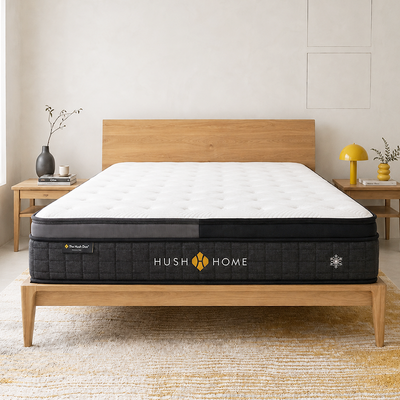
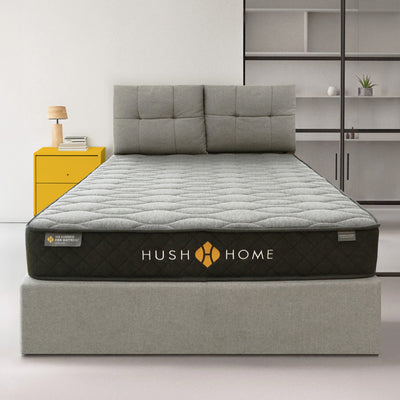
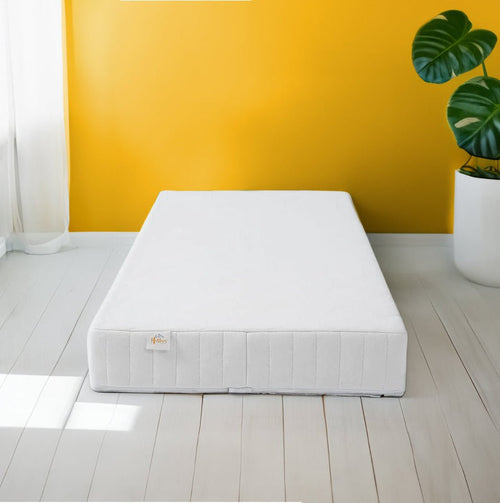
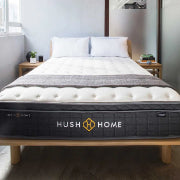
The Hush Duo Mattress™ is an 11-inch hybrid mattress designed so each sleeper can configure the firmness of their own side while keeping one continuous sleeping surface.
It offers four configurable firmness profiles spanning approximately 4.0 to 9.0, from Medium-Soft to Firm.
Can choose a more cushioning configuration to provide greater contouring around the shoulder and hip.
Can choose a configuration with greater resistance and a more supportive feel.
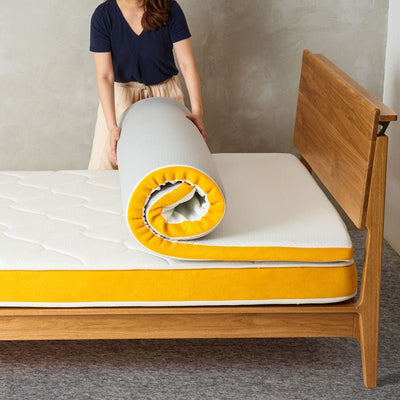
Underneath, a 16 cm 5-zone pocket-coil system provides targeted support. Rearrangeable Comfort Inserts use high-density cooling memory foam, while Support Inserts use high-density orthopedic open-cell foam.
Hush Duo also has a separate 365-Night Comfort Guarantee. During the first year, if either side feels too soft or too firm, Hush Home states that customers can receive up to two additional inserts free of charge to fine-tune firmness.
This is a firmness-adjustment programme, not the same as the 100-night mattress return trial used for other Hush Home mattresses.
Combination sleepers should usually avoid choosing an extreme firmness based on only one position.
For a combination sleeper sharing a bed, motion isolation also becomes more important if changing positions tends to disturb the other person.
Before choosing a mattress, each person should think about their own sleep habits separately.
One shared medium or medium-firm mattress may be enough.
Independent firmness becomes much more valuable because each sleeper can address their own comfort and support needs.
A good couples mattress does not need to treat both sleepers identically. Side, back and stomach sleepers load the mattress differently, and body weight can widen or narrow those differences.
If your needs are close, a shared medium or medium-firm mattress may be the simplest answer. If one partner needs substantially more cushioning while the other needs substantially more resistance, independent firmness can be the more practical solution.
Hush Duo Mattress™ allows both sleepers to customize their side while keeping one smooth, uninterrupted sleeping surface.
A balanced medium or medium-firm mattress can suit many couples with this pairing. If the side sleeper needs substantially more cushioning than the back sleeper prefers, independent firmness offers more personalization.
This pairing often has more divergent firmness needs. The side sleeper commonly benefits from more cushioning around the shoulder and hip, while the stomach sleeper often prefers more resistance under the torso and pelvis.
If a shared fixed firmness does not suit both, independent firmness is worth considering.
Yes. If their body weights and comfort preferences are reasonably similar, a medium-firm mattress may provide a practical balance for both.
No. Side sleepers usually need more pressure relief around the shoulder and hip, but ideal firmness also depends on body weight, body shape and personal preference. Heavier side sleepers may still prefer strong underlying support.
No. Many stomach sleepers prefer medium-firm to firm support, but comfort still matters. The goal is to limit excessive sinkage, not to choose the hardest possible surface.
Yes. Hush Duo Mattress™ lets each sleeper configure their side independently while keeping a single continuous mattress surface.
Combination sleepers often do best with balanced support, responsive materials and a firmness that remains comfortable across their most common positions rather than an extreme feel optimized for only one posture.
Both matter. Sleeping position changes where pressure concentrates, while body weight changes how deeply the sleeper compresses the mattress. The best firmness should consider sleeping position, body weight, body shape and personal preference together.