





How to Remove and Prevent Mattress Mould in Hong Kong
13 Aug 2026
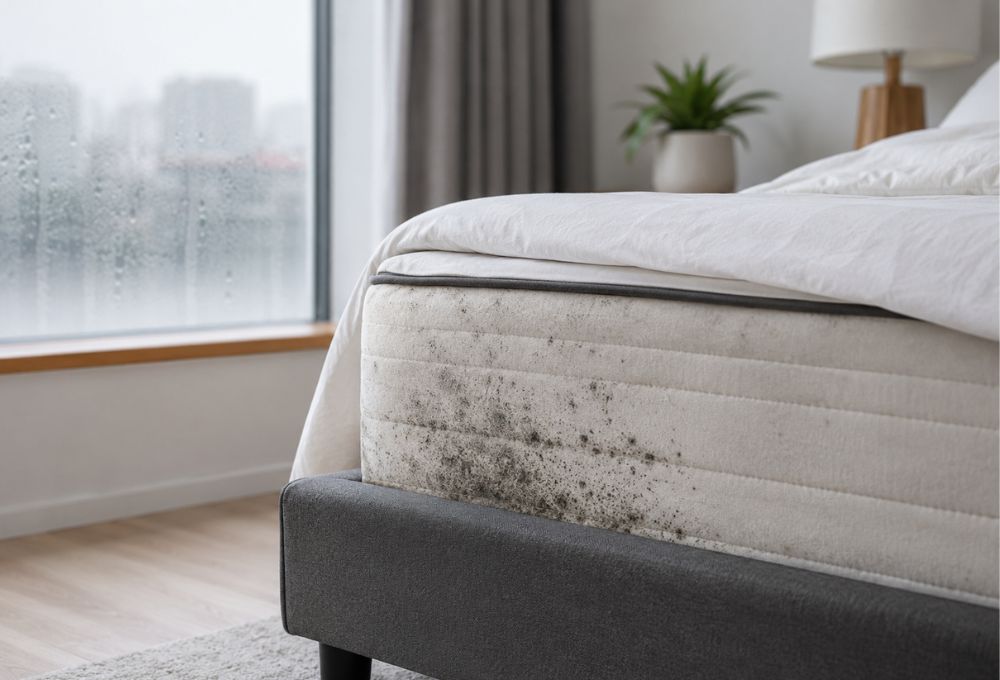
If you find mould on a mattress, first identify whether it is limited to a removable, washable cover or has reached the mattress itself. Because mattresses contain porous fabrics, foams and fibres, mould that has penetrated the mattress body can be difficult or impossible to remove completely. Widespread, recurring or deep mould may require professional assessment or mattress replacement.
To prevent mattress mould, control moisture rather than relying on disinfectants after the problem appears. Keep indoor humidity low, dry spills quickly, improve ventilation around the bed, avoid prolonged direct placement on a damp floor, and use a breathable waterproof mattress protector. The U.S. EPA recommends keeping indoor relative humidity below 60%, ideally around 30% to 50%.
It depends on where the mould is growing. A small mark confined to a removable, washable cover may be treatable according to the manufacturer’s care instructions. If mould is growing on the mattress fabric, quilting, foam or internal layers, or a musty smell persists, replacement or professional assessment may be safer because mould can grow into the crevices of porous materials.
The U.S. EPA notes that mould may be difficult or impossible to remove completely from porous materials once it grows into their empty spaces and crevices. That makes a mattress very different from a hard, non-porous surface that can simply be scrubbed clean.
Mattress mould develops when mould spores encounter enough moisture and a suitable material on which to grow. Mattresses can be vulnerable because fabric, dust, skin particles and other organic material accumulate over time, while moisture from humidity, condensation, spills or perspiration can become trapped in and around the bed.
Hong Kong’s climate makes moisture control especially important. Hong Kong Observatory’s 1991–2020 climate normals show average relative humidity of 82% in March and 83% in both April and May, which helps explain why spring and「回南天」can create challenging indoor conditions.
High humidity makes it harder for moisture to evaporate from bedding and mattress surfaces. Condensation can also form when warm, humid air meets cooler surfaces, particularly in air-conditioned rooms.
A mattress placed directly on the floor for long periods can trap moisture underneath, especially when the floor is cool or damp. A suitable bed frame and a dry, well-ventilated bedroom make it easier for moisture around the bed to dissipate.
Water, drinks, perspiration and damp sheets can all introduce moisture to the bed. The U.S. EPA recommends drying wet or damp materials quickly — generally within 24 to 48 hours after a leak or spill — to reduce the chance of mould growth.
Before cleaning anything, determine how extensive the problem is and protect yourself from unnecessary exposure. CDC guidance recommends at least a NIOSH-approved N95 respirator, protective gloves and goggles when cleaning mould. People with asthma, COPD, significant mould allergies, immune suppression or underlying lung disease should not personally take part in mould cleanup.
Check whether the mark is only on a removable cover or whether it appears on the mattress surface, seams, quilting or exposed internal materials. A persistent musty smell can also indicate moisture or contamination that is not limited to one visible spot.
Do not automatically apply alcohol, vinegar, bleach or other household chemicals to a mattress. Different foams, latexes, fabrics and adhesives have different care requirements, and excessive liquid can be difficult to remove from a porous mattress. Follow the manufacturer’s instructions before spot-cleaning or removing a cover.
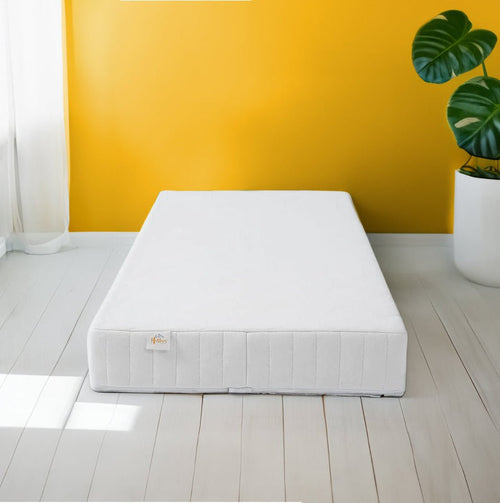
Hush Home’s Care Guide recommends spot-treating Hush mattresses with a small amount of mild detergent, allowing them to dry fully before use, and keeping mattresses dry and well ventilated. The Organic Mattress™ should not be left uncovered in direct sunlight because UV exposure can deteriorate natural latex over time.
If the mould is genuinely confined to a removable cover and the mattress underneath is clean, dry and odour-free, follow the cover’s care label or the mattress manufacturer’s instructions. Wash or spot-clean only as directed and do not reinstall the cover until it is completely dry.
Avoid soaking the mattress itself. Adding more moisture to an absorbent mattress can make complete drying difficult and may worsen the conditions that allowed mould to grow in the first place.
Replacement or professional assessment is worth considering when mould is no longer clearly limited to a removable surface. Warning signs include:
There is no universal “10% rule” for mattresses. The important question is whether contamination appears to have entered porous parts of the mattress and whether the item can be completely dried and safely cleaned according to its care instructions.
Prevention is far more reliable than trying to disinfect mould after it has penetrated a mattress. Focus on keeping the sleep environment dry, clean and ventilated.
Use an air conditioner or dehumidifier when Hong Kong weather becomes persistently humid. EPA guidance recommends keeping indoor humidity below 60%, ideally 30% to 50%, while CDC advises keeping home humidity no higher than 50% when possible. In practical terms, aiming around 40% to 50% is a useful target for many Hong Kong bedrooms.
A hygrometer makes it easier to monitor humidity instead of guessing from how the room feels.
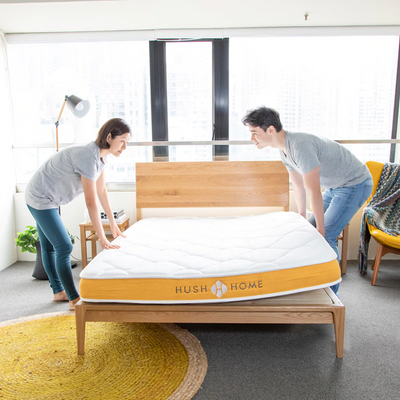
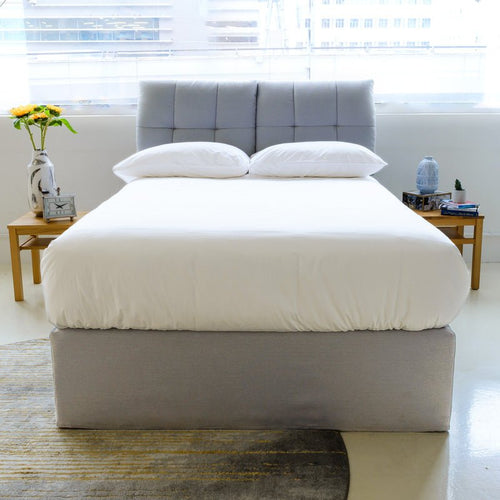
Avoid leaving a mattress directly on the floor for extended periods, particularly during humid weather. Use a manufacturer-approved bed frame or foundation and keep the space around and beneath the bed dry and reasonably ventilated.
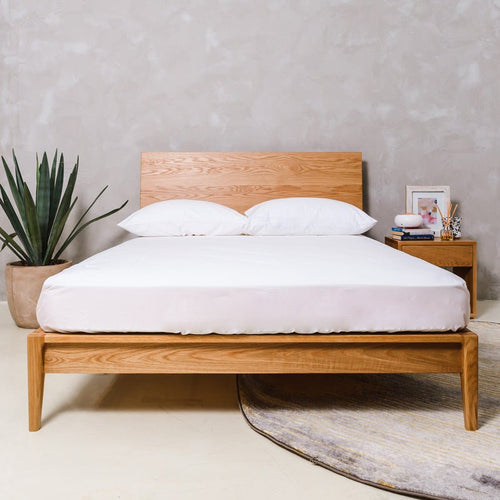
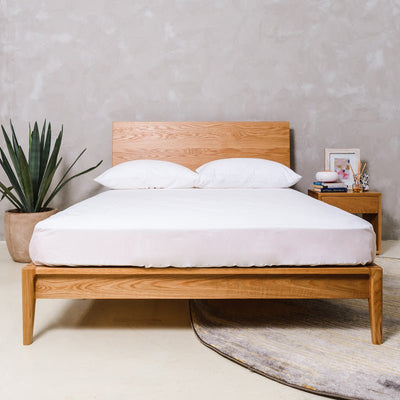
The Solid Wood Bed™ provides a stable, purpose-built foundation, while its hardwood is double kiln-dried specifically to help it cope with Hong Kong’s humidity and air-conditioning environment.
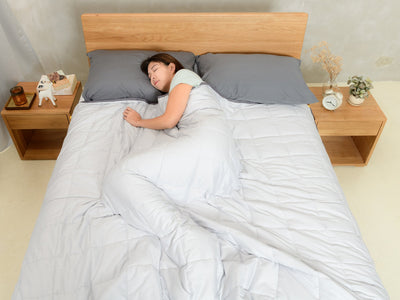
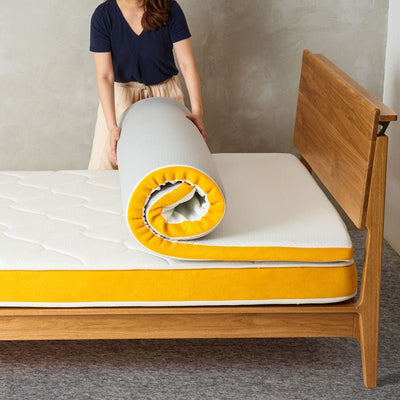
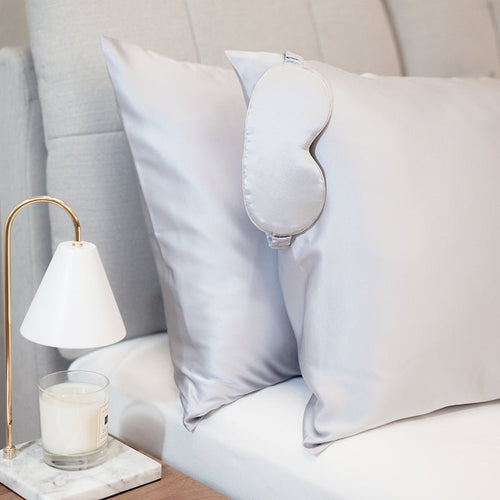
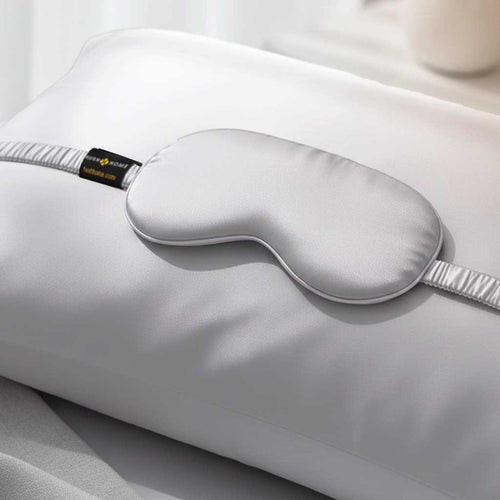
A mattress protector cannot guarantee that mould will never appear, but it can reduce the amount of everyday spills and moisture that reach the mattress itself. The Waterproof Mattress Protector™ uses a knitted cotton surface with a waterproof polyurethane membrane and is designed to remain soft and breathable.
Wash and dry the protector according to its care instructions, and never put damp bedding back onto the bed.
If a drink spills or bedding becomes wet, remove the wet layers promptly and dry the area thoroughly. Do not remake the bed until the mattress surface and protector are completely dry.
Regularly air the mattress as recommended, lightly vacuum with a suitable nozzle when appropriate, and keep the mattress from becoming wet. For Hush Home mattresses, refer to the Hush Home Care Guide for model-specific instructions.
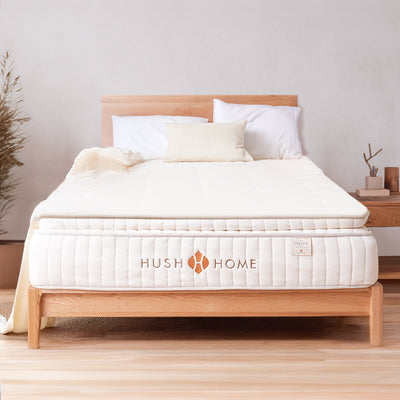
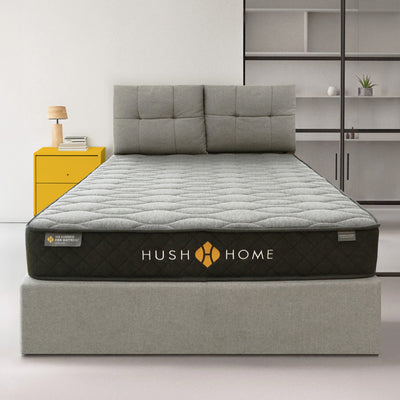
If you are choosing a new mattress for Hong Kong’s climate, breathability can be a useful consideration. Hush Home’s Organic Mattress™ uses natural latex that Hush describes as naturally cooling, hypoallergenic and resistant to mould, mildew and bacteria, together with ventilated coconut fibre and pocket coils.
Material choice does not replace humidity control, ventilation, a mattress protector or proper care. Even a breathable mattress still needs to be kept clean and dry.
Removable cover only — Small superficial mark limited to a washable cover: follow the manufacturer’s cleaning instructions and reinstall only when fully dry.
Possible mattress contamination — Mould on quilting, seams or the mattress body, or a persistent musty smell: stop using it temporarily and consider professional assessment.
Deep or widespread contamination — Mould inside foam or internal materials, extensive water damage, or recurring growth: replacement is usually the safer option.
A: It is best to avoid sleeping on a visibly mouldy mattress until the problem has been assessed. CDC notes that exposure to damp and mouldy environments can cause stuffy nose, sore throat, coughing, wheezing, burning or itchy eyes, and skin rash in some people. People with asthma or mould allergies may have stronger reactions, while immunocompromised people and those with chronic lung disease may face additional risks.
A: Do not use bleach on a mattress unless the manufacturer’s care instructions explicitly allow it. Bleach can discolour or damage some mattress materials, and wetting a porous mattress can make complete drying difficult. CDC also warns never to mix bleach with ammonia or other cleaners.
A: Sunlight should not be treated as a universal mattress-disinfection method. The priority is complete drying and following the manufacturer’s care instructions. Some mattress materials can be damaged by prolonged direct UV exposure; for example, Hush Home advises keeping the Organic Mattress™ out of direct sunlight when uncovered because UV can deteriorate natural latex.
A: EPA recommends keeping indoor relative humidity below 60%, ideally between 30% and 50%. CDC recommends keeping home humidity no higher than 50% when possible. For many Hong Kong homes, a practical target around 40% to 50% can help control moisture while remaining comfortable.
A: A persistent musty smell can be a sign of trapped moisture or hidden mould, although odour alone cannot confirm the cause. Remove bedding, ventilate the mattress and inspect seams, the underside and nearby bed-frame surfaces. If the smell persists, consider professional assessment or replacement rather than repeatedly adding cleaning liquids.
A: Usually not. CDC does not recommend routine home mould testing because there are no health-based standards for an acceptable amount of different indoor moulds. If you can see or smell mould, the practical priority is to address the moisture source and decide whether the affected item can be safely cleaned or needs replacing.
A: It can reduce moisture, spills and body fluids reaching the mattress surface, which is useful for prevention, but it cannot guarantee that mould will never grow. Bedroom humidity, airflow, damp bedding and moisture underneath the mattress still need to be managed.
A mouldy mattress is not the same as a mouldy hard surface. Because a mattress is porous, contamination can reach places that are difficult to inspect, dry and clean completely. Treat small issues on removable covers according to the manufacturer’s instructions, but take mould on the mattress body, recurring growth or persistent musty odour seriously.
For Hong Kong homes, the strongest long-term strategy is moisture prevention: manage humidity, keep the bed area ventilated, dry spills quickly, use a breathable waterproof protector and follow the correct care instructions for your mattress materials.
U.S. EPA: A Brief Guide to Mold, Moisture and Your Home
CDC: Mold Clean Up Guidelines and Recommendations
Hong Kong Observatory: Monthly Meteorological Normals for Hong Kong (1991–2020)