

What Is an Orthopaedic Mattress? Does It Really Support Your Back?
28 Oct 2026
Quick Answer
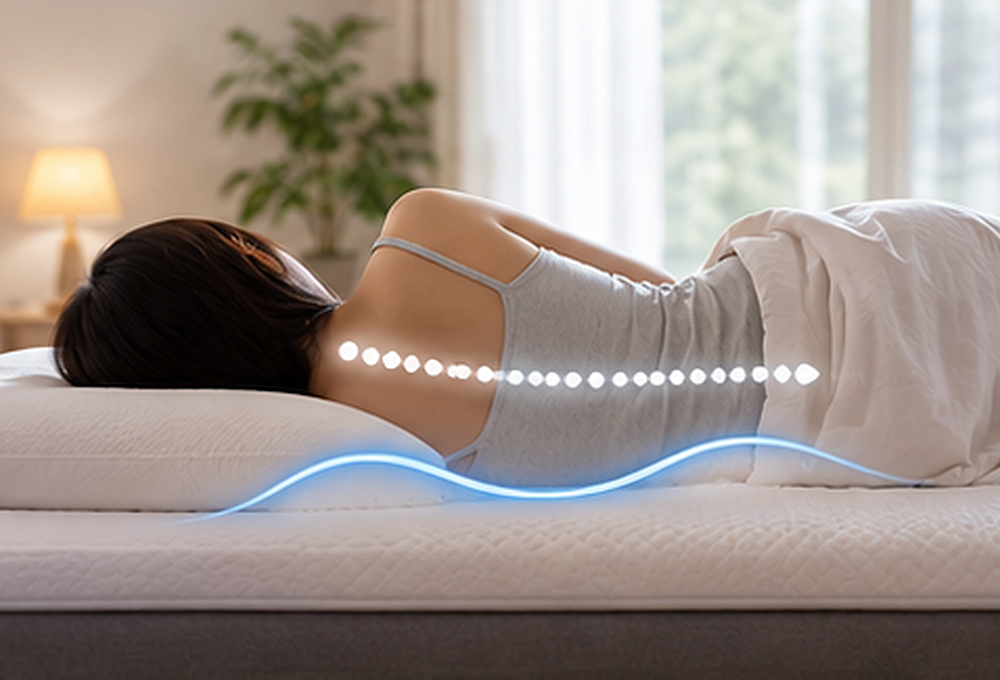
An orthopaedic mattress, often called a 護脊床褥 in Hong Kong, is a mattress marketed for back or joint support. A suitable mattress can support a comfortable sleeping position, but the label alone does not prove medical approval, pain relief or a particular level of firmness. The useful question is not “Is it orthopaedic?” but “Does this mattress support me comfortably in the position I actually sleep in?”
Harder is not automatically healthier. Clinical research has found benefits from medium-firm rather than firm mattresses in some adults with chronic nonspecific low-back pain. That does not mean every person needs the same firmness, or that a mattress can treat the cause of persistent pain.
Treat the term as a starting point for questions, not as a complete specification. It does not tell you whether the mattress contains foam, pocket springs or latex; how the comfort layers are arranged; or whether the retailer's claim was tested on the finished product. Two mattresses carrying similar back-support language may feel very different.
Ask what a claim means in practice. Is “orthopaedic support” describing a firmer feel, a particular construction or a clinical result? A medical endorsement, certification and manufacturer description are different forms of information. Request the named evidence and its scope rather than assuming one word establishes all three.
| Term | What It Means | How to Compare |
|---|---|---|
| Firmness | How soft or firm the surface feels | Try your usual position, not just a hand-press |
| Support | How the complete construction holds your body | Assess settled comfort and the bed base |
| Pressure Relief | Cushioning at body-contact areas | Notice concentrated shoulder or hip pressure |
| “Orthopaedic” | Retail positioning, not a complete specification | Ask for the exact design and evidence |
A very firm surface may feel reassuring when you press it with your hand, yet still feel uncomfortable after lying on your side. Conversely, a surface that feels soft at first can have a supportive core underneath. Neither a quick hand-press nor the word “firm” tells you whether your shoulders, hips and lower back will feel comfortable together.
Your body size, usual position and the base under the mattress change the experience. A side sleeper may need space for shoulders and hips to settle; someone who feels their pelvis dropping too far may prefer less sinkage. These are reasons to compare actual products, not rules that assign every side sleeper a soft bed or every back sleeper an extra-firm one.
A 2003 randomised trial followed 313 adults with chronic nonspecific low-back pain for 90 days. Participants assigned medium-firm mattresses had better outcomes for pain in bed and disability than those assigned firm mattresses. The study does not establish that the hardest mattress is the safest choice, and it did not test the Hush products discussed below.
Kovacs et al.: Mattress Firmness Trial
A 2021 review of 39 studies also favoured medium-firm mattresses for comfort, sleep quality and spinal alignment. However, the studies differed in participants, mattress designs and outcome measures. Use the finding as a reason to try a balanced feel—not as a prescription, a cure claim or a guarantee about a brand's numerical firmness score.
Caggiari et al.: Mattress and Back-Pain Review
“Medium-firm” in a research protocol cannot simply be converted into a retailer's 1–10 scale. The trial above used a scale running from firmest to softest, while retail scales may run in the opposite direction. Compare the actual feel and supporting evidence instead of matching numbers that were measured differently.
Start in your usual sleeping position with a pillow similar to the one you use at home. Allow enough time to notice the difference between initial cushioning and settled comfort. Check whether you can relax without bracing your back, whether pressure is concentrated at the shoulders or hips, and whether changing position feels manageable.
Compare at least two feels rather than choosing the firmest by default. A partner or staff member can help you notice obvious sagging or an awkward position, but a showroom observation is not a clinical alignment assessment. A comfortable few minutes is useful information; it is not proof of overnight pain relief.
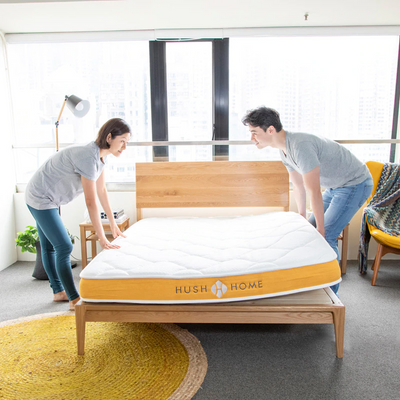
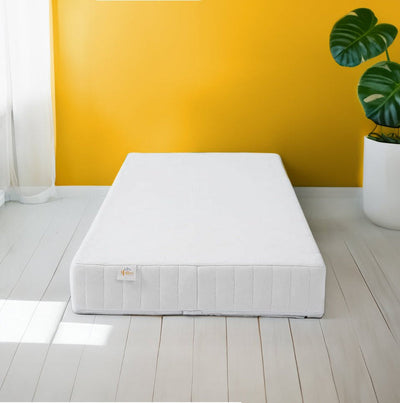
Before replacing the mattress, inspect the support underneath. Follow the mattress maker's requirements for slats, platforms and centre supports. A damaged or incompatible base can change how the mattress behaves; a topper will not repair a broken frame. Confirm the correct mattress dimensions rather than squeezing it into a smaller opening.
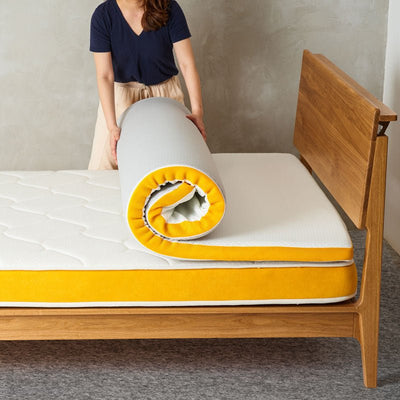
Also review the pillow and any thick topper. These can alter your position or the surface feel you are assessing. Keep the comparison as consistent as possible so that you know which change is helping comfort. Do not repeatedly buy harder products in place of seeking advice about persistent or worsening symptoms.
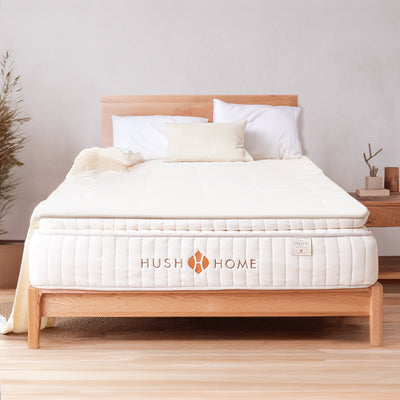
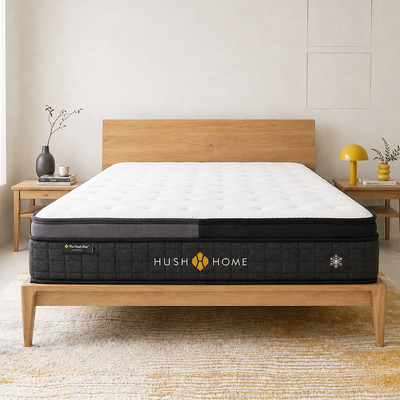
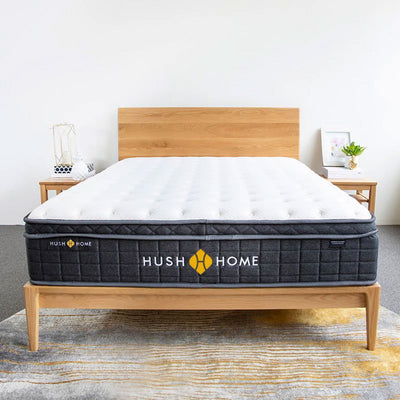
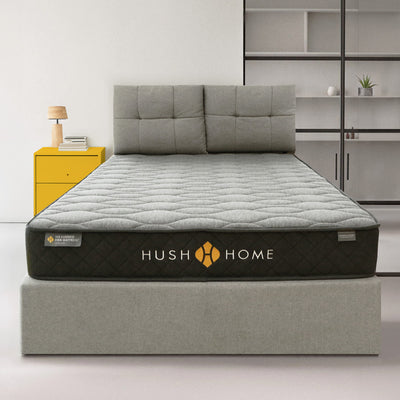
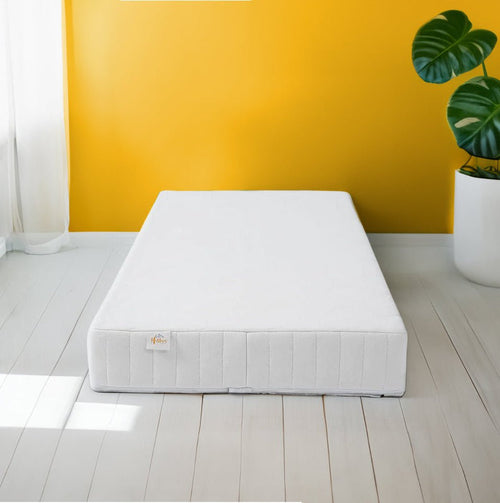
Essence Firm Mattress™ is Hush's extra-firm foam-and-pocket-spring option. Its 護脊床褥 name describes its positioning; it does not make it the medically correct choice for every person with back pain. Hush Mattress™ offers a different foam-and-coil comfort construction, while Organic Mattress™ uses a latex-and-coil design. Compare the feel rather than treating the product names as clinical rankings.
Hush Duo Mattress™ is relevant when two sleepers want different firmness settings or value later adjustment. Independent adjustment solves a comfort-preference problem; it is not evidence of treating a spinal condition. No head-to-head clinical trial of these Hush models is being claimed here.


Eligible Hush, Organic, Essence Firm and Loft mattresses have a 100-night home trial, subject to a minimum 30-night adjustment period and the published exclusions and charges. Hush Duo instead has a 365-night firmness-adjustment guarantee, including up to two additional inserts under its terms; that is not a 365-night refund trial. A limited warranty also covers specified defects, not every change in comfort.
Mattress Trial vs Warranty vs Guarantee
Speak to a healthcare professional if back pain persists for a few weeks, disrupts daily activities or is getting worse. Pain with fever or feeling unwell, unexplained weight loss, or pain that is worse at night also deserves medical assessment. Do not assume the mattress is the only possible cause.
Seek emergency medical care for back pain with new loss of bladder or bowel control, numbness around the genitals or anus, or pain, weakness or numbness affecting both legs. Back pain after a serious accident also needs urgent assessment. These are not issues to manage by trying a different mattress.
NHS: Back Pain and Warning Signs
Not necessarily. The term does not tell you a precise firmness or construction. Read the individual specification and try the mattress; do not assume two “orthopaedic” products will feel alike.
The wording alone does not establish medical approval or a tested treatment effect. Ask who made the claim, what evidence supports it and whether that evidence applies to the exact finished product.
Not automatically. Research in adults with chronic nonspecific low-back pain has favoured medium-firm over firm mattresses in some outcomes. Individual comfort and any diagnosed condition still matter; the hardest option is not a universal prescription.
A mattress should not be presented as a cure for these conditions. It may help you find a more comfortable sleeping setup, but assessment and treatment decisions belong with an appropriate healthcare professional.
Yes, provided the particular mattress feels supportive and comfortable. Check shoulder and hip pressure and how easily you can turn. The label is less important than the actual fit in your usual sleeping position.
No single material establishes that conclusion. Layer design, firmness, the base and your body all affect the experience. Compare complete mattresses rather than choosing solely by an ingredient.
Only consider it because its extra-firm feel suits you—not because pain automatically requires the firmest mattress. Compare another feel, check the trial terms and seek clinical advice when symptoms persist or there are warning signs.
A useful 護脊床褥 supports a comfortable sleep setup; the name itself is not the benefit. Compare firmness, cushioning, the bed base and purchase protection, and keep medical decisions separate from shopping claims. For help narrowing comfort preferences, use Hush Home's Mattress Match Quiz—not as a diagnosis, but as a product-selection tool.