















What Are the Benefits of Going to Bed and Waking Up Early?
14 Aug 2026

Going to bed and waking up earlier can be beneficial when it helps you get enough sleep, keep a consistent schedule, receive morning light, and match the timing of work or school. The advantage is not that sleep before midnight is magically more restorative; it is that a regular, well-timed schedule can reduce circadian misalignment and make it easier to protect adequate sleep.
For many adults, the healthiest goal is therefore not simply “sleep as early as possible.” It is to get enough high-quality sleep at roughly the same time every day, while choosing a schedule that fits both your biological chronotype and real-world commitments.
KEY TAKEAWAY: Earlier can be helpful, but consistency, enough total sleep, morning light and circadian alignment matter more than an arbitrary bedtime.
Not necessarily. A 2020 systematic review of 41 studies found that earlier sleep timing and more regular sleep schedules were generally associated with better health outcomes, but the evidence ranged from very low to moderate quality and did not establish a universal “correct” bedtime.
Chronotype matters. Some people naturally become sleepy and alert earlier, while others have a later biological preference. Problems often arise when your preferred timing and your required schedule are far apart — for example, a natural night owl who goes to bed late but still has to wake at 6:30 AM for work.
That mismatch is often described as circadian misalignment or “social jetlag.” It can reduce sleep opportunity on workdays and force large shifts between weekday and weekend schedules.
If your job, school or family routine requires an early wake-up time, moving bedtime earlier can protect your sleep duration. Staying up until 1:00 AM and waking at 6:30 AM does not become healthy simply because you are a night owl; the immediate problem is that the schedule only leaves about five and a half hours for sleep.
Research on chronotype and social jetlag suggests that late chronotypes are especially vulnerable when conventional work schedules force them to wake earlier than their internal clock prefers. A more realistic goal is therefore to shift the whole routine gradually — not simply set an earlier alarm.
Light is one of the strongest environmental signals for the circadian clock. Exposure to bright light earlier in the biological day can shift the internal clock earlier, while bright light late in the evening can push it later. This is one reason an earlier wake time can be useful — but only if you actually receive meaningful morning light.
CDC sleep guidance recommends getting enough natural light, especially earlier in the day. A morning walk, breakfast near a bright window or simply spending time outdoors after waking can help strengthen the day-night signal your brain receives.
One of the strongest updates in modern sleep research is the growing emphasis on regularity. Consistent bedtimes and wake times help keep sleep, light exposure, meals and daily activity on a more predictable rhythm.
In a large UK Biobank analysis published in Sleep, greater sleep regularity was associated with a substantially lower mortality risk even after accounting for multiple health and lifestyle factors. This does not prove that regularity alone causes longer life, but it reinforces the idea that sleep timing should not swing dramatically from day to day.
So if you sleep from midnight to 8:00 AM consistently and feel well rested, that may be healthier than forcing yourself into a 10:00 PM bedtime that you cannot maintain and then sleeping much later every weekend.
Most healthy adults need at least seven hours of sleep, and many adults function best within roughly seven to nine hours. If your wake-up time is fixed, bedtime is the part of the equation you can usually control.
For example, someone who must wake at 6:30 AM should generally allow enough time to be asleep roughly seven to nine hours beforehand, while also allowing a little extra time to wind down and fall asleep. The goal is not to hit an arbitrary clock time; it is to protect sufficient sleep opportunity.
Deep slow-wave sleep is concentrated toward the beginning of a normal sleep episode, while REM sleep becomes more prominent later. But “the beginning of your sleep episode” is not the same thing as “before midnight” or “before 2:00 AM.”
Laboratory research shows that slow-wave activity is strongly influenced by how long you have been awake before sleep. Growth hormone secretion is also closely linked to sleep onset and the first periods of slow-wave sleep. In experiments where sleep onset was delayed, the growth-hormone pulse shifted later too.
So sleeping from 1:00 AM to 9:00 AM does not automatically mean you “miss” all your deep sleep. The bigger concerns are whether that schedule gives you enough sleep, whether it is regular, and whether it conflicts with your required wake time and daytime light exposure.
Adequate sleep supports attention, memory, decision-making and emotional regulation. But research on chronotype shows a “synchrony effect”: early types often perform better earlier in the day, while late types can perform better later when tested at a time that suits their biological preference.
The practical benefit of an earlier schedule is therefore strongest when your life also starts early. If work begins at 9:00 AM, moving sleep earlier may reduce the mismatch between your biological night and your required morning performance.
A 2021 Mendelian-randomization study found that a genetically proxied one-hour earlier sleep midpoint was associated with a lower risk of major depressive disorder. However, this does not mean that simply forcing every person to go to bed one hour earlier will prevent or treat depression. Chronotype, sleep duration and circadian alignment all matter.
Sleep supports tissue repair, immune function, memory consolidation and multiple endocrine processes. Deep sleep is particularly linked with restorative physiology, but the evidence does not support a universal rule that these processes only happen before midnight.
Similarly, sleeping earlier does not automatically “stabilize hunger hormones,” eliminate sugar cravings or speed up metabolism. Short sleep, circadian misalignment and irregular eating patterns can affect metabolic health, but these relationships are more complex than bedtime alone.
Being a night owl is not automatically unhealthy, and being an early bird is not automatically healthy. The more useful comparison is whether your sleep is sufficient, regular and aligned with the schedule you actually have to live.
|
Factor |
Healthy Earlier Schedule |
Healthy Later Schedule |
Misaligned / Irregular Schedule |
|
Sleep duration |
Enough time for 7–9 hours |
Enough time for 7–9 hours |
Often shortened on workdays |
|
Regularity |
Similar bed/wake times daily |
Similar bed/wake times daily |
Large weekday/weekend swings |
|
Morning light |
Usually easy to obtain |
Still obtainable after waking |
Often limited or inconsistent |
|
Chronotype fit |
Best for earlier types |
Best for later types |
Schedule conflicts with internal clock |
|
Main risk |
Going too early to sleep when not sleepy |
Social obligations forcing early wake-up |
Sleep debt + social jetlag |
If your current bedtime makes it difficult to get enough sleep before work or school, shift gradually rather than trying to jump from 1:00 AM to 10:00 PM overnight.
1. Move bedtime and wake time earlier in small steps — for example, about 15 to 30 minutes at a time.
2. Keep wake time consistent. A stable wake time helps anchor the rest of the schedule.
3. Get outdoor or bright natural light soon after waking, especially when you are trying to shift earlier.
4. Reduce bright light and stimulating screen use late in the evening when possible.
5. Give yourself a predictable wind-down routine instead of waiting until you are exhausted.
6. Do not sacrifice total sleep just to become an “early riser.” If you move wake time earlier, move bedtime too.
If you consistently cannot fall asleep until very late, struggle to wake for daily obligations, or have persistent daytime sleepiness despite adequate time in bed, speak with a healthcare professional. Circadian-rhythm sleep-wake disorders and other sleep conditions may need proper assessment.
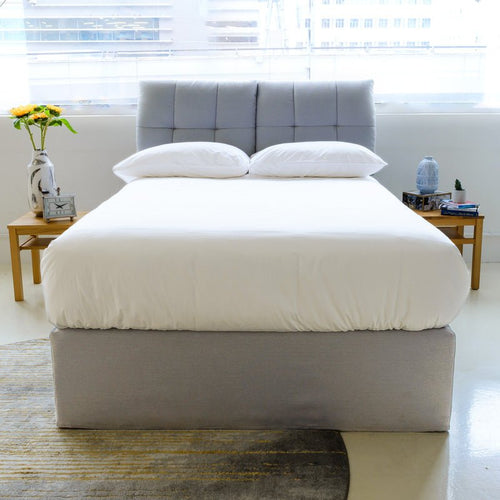
Your mattress, sheets, pillow and blanket cannot reset your circadian clock on their own. Their role is more practical: make the bedroom comfortable enough that your planned sleep schedule is easier to follow consistently.
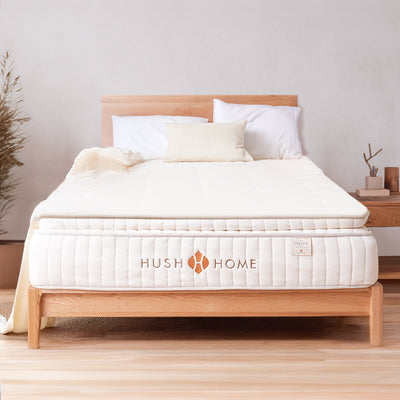
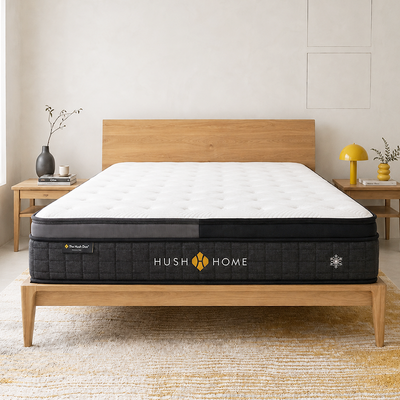
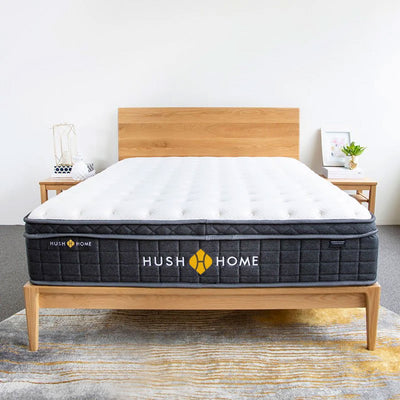
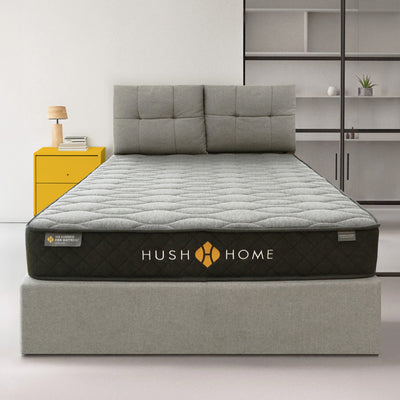
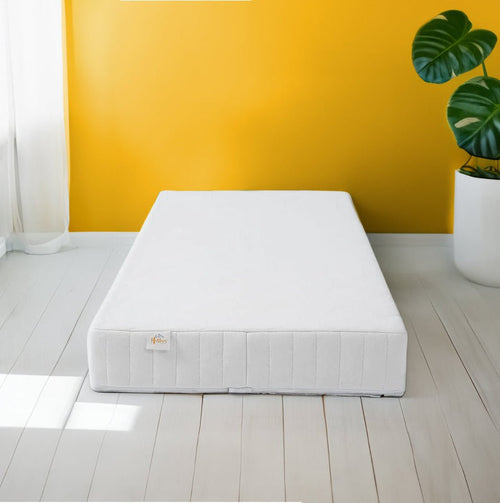
Keep the bed cool and breathable. The Hush Mattress™ uses breathable fabric and open-cell foam to increase ventilation and moisture evaporation. Pairing breathable bedding with a comfortably cool room can reduce one common barrier to settling down at night.
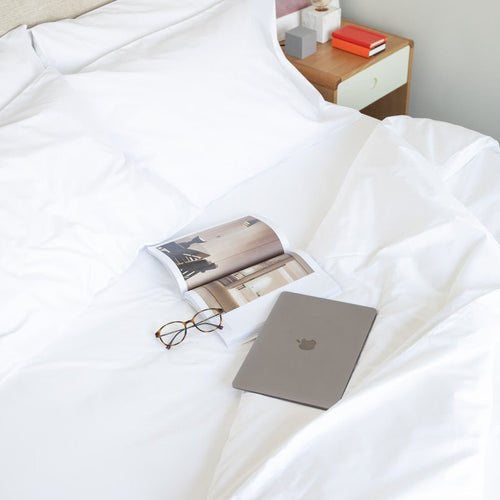
Choose bedding that feels comfortable. The Egyptian Cotton Hotel Sheets™ use 100% Egyptian long-staple cotton in a 400-thread-count sateen weave, giving you a smooth hotel-style sleep surface that can make a consistent bedtime routine feel more inviting.
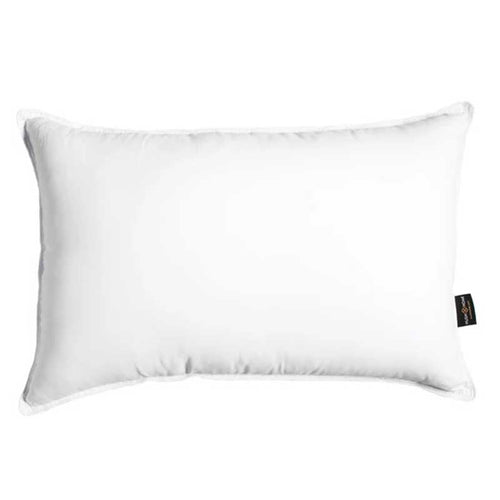
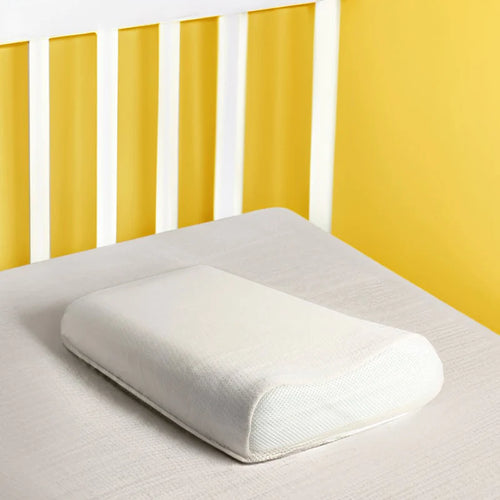
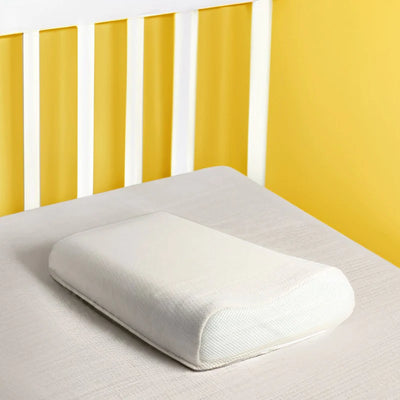
Fine-tune pillow height and feel. The adjustable Miracle Pillow™ offers removable memory-foam layers with 12, 14, 16 and 18 cm height options, plus a two-sided feel. The goal is simply to find a comfortable head-and-neck setup for your usual sleep position.
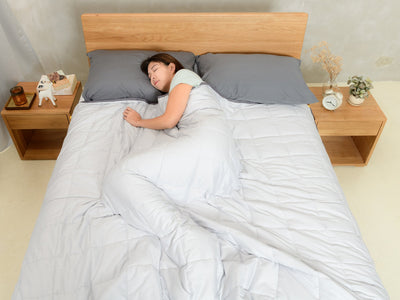
Use a weighted blanket only if you enjoy the sensation. The Weighted Blanket™ can be part of a calming wind-down ritual for people who find evenly distributed pressure comfortable. It is a comfort choice rather than a way to change the timing of your body clock.
There is no universal ideal bedtime. Start with the time you must wake up, allow enough opportunity for roughly seven to nine hours of sleep, and choose a bedtime you can maintain consistently. If you need to wake at 6:30 AM, that usually means planning to be asleep well before midnight.
Not in a simple “one hour before midnight equals two hours after midnight” sense. Deep slow-wave sleep tends to be concentrated early in your sleep episode, but it is linked to sleep pressure and sleep onset rather than a fixed clock deadline.
You can often shift your schedule earlier to some degree by changing wake time, morning light exposure and evening light habits gradually. However, chronotype has biological and genetic influences, so not everyone will feel equally comfortable on the same schedule.
Not automatically. Productivity depends on whether you are well rested and working at a time that suits your chronotype. Waking at 5:00 AM after five hours of sleep is unlikely to outperform waking at 7:00 AM after adequate sleep.
An early bedtime cannot guarantee restorative sleep. You may still be sleeping too little, waking repeatedly, sleeping at a time that conflicts with your circadian rhythm, or experiencing a sleep disorder such as sleep apnea. Persistent daytime sleepiness should be discussed with a healthcare professional.
Gradual changes are easier for most people to maintain. Moving bedtime and wake time earlier by around 15 to 30 minutes at a time, while getting morning light and reducing late-evening bright light, is usually more practical than making a sudden multi-hour change.
A reasonably consistent wake time is one of the most useful anchors for a regular sleep schedule. Some flexibility is normal, but large weekday-to-weekend shifts can increase social jetlag and make Monday mornings harder.
Going to bed and waking up early can be a healthy routine when it matches your life, gives you enough sleep, exposes you to morning light and reduces social jetlag. But there is no magic 10:00 PM bedtime, no universal “deep sleep before 2:00 AM” deadline, and no reason to sacrifice sleep duration simply to wake earlier.
The better goal is simple: choose a schedule you can maintain, get enough high-quality sleep, keep the timing reasonably consistent, and use light and your sleep environment to support the rhythm you actually need.
CDC/NIOSH: Improve Sleep — consistent sleep times, adequate duration and daytime light
CDC: About Sleep and Your Heart Health
Chaput et al. (2020): Sleep timing, sleep consistency, and health in adults — systematic review
Windred et al. (2024): Sleep regularity and mortality — UK Biobank
Daghlas et al. (2021): Genetically proxied sleep timing and major depressive disorder
Taillard et al. (2021): Sleep timing, chronotype and social jetlag
Van Cauter & Plat (1996): Growth hormone secretion during sleep
Circadian System, Sleep and Endocrinology: slow-wave sleep is front-loaded within the sleep episode
Crowley & Eastman (2015): Morning bright light and phase-advancing the human circadian clock
Editorial note: Health information is educational and should not replace diagnosis or treatment from a qualified healthcare professional.