
Bunk Bed Mattress Guide: Size, Thickness & Safety in Hong Kong
11 Sep 2026
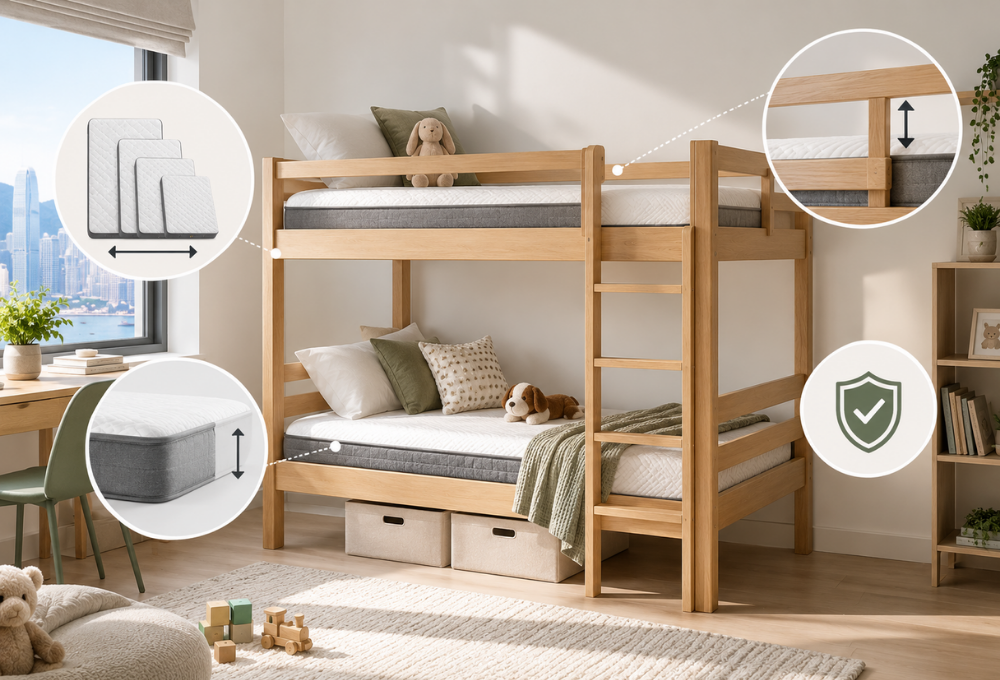
Bunk beds are a practical way to save floor space in Hong Kong, especially in children’s rooms, shared bedrooms, helper rooms and compact flats. But choosing the mattress is not simply a matter of buying a standard Single and placing it on the frame.
For a bunk bed, mattress size and thickness affect both comfort and safety. The mattress should fit the sleeping platform properly, stay within the bed manufacturer’s maximum mattress-height recommendation and leave enough usable guardrail above the mattress on the upper bunk.
KEY TAKEAWAY
The most important rule is simple: always follow the bunk bed manufacturer’s stated mattress dimensions and maximum thickness. A mattress that is too thick can reduce the effective height of the upper guardrail, while one that is too small can leave unnecessary or unsafe gaps around the frame.
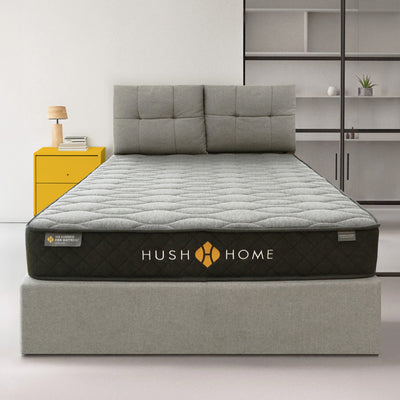
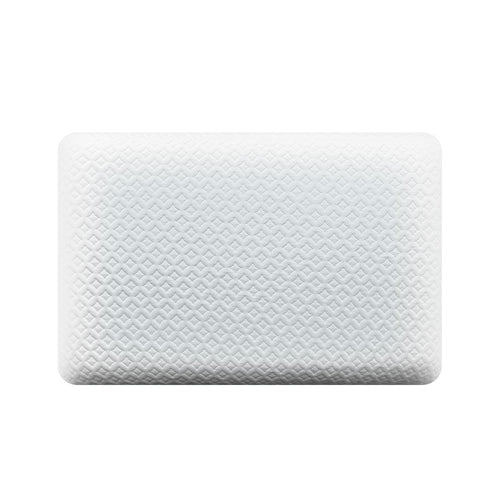
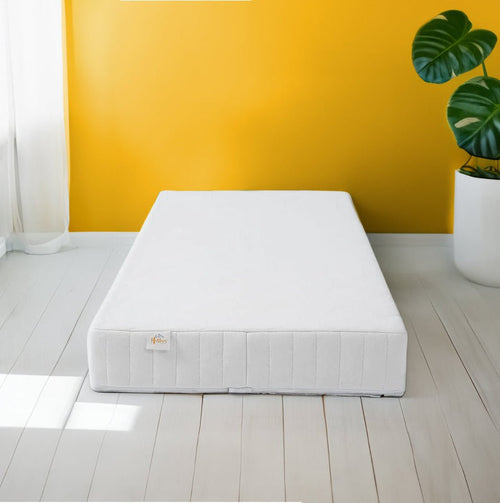
Within Hush Home’s current mattress collection, the Loft Mattress™ is the most naturally suited to many bunk-bed and compact-bed setups. It is only 5 inches thick, uses pocket springs rather than being a simple foam pad, and is specifically positioned for smaller beds such as bunk beds, Murphy beds and daybeds.

There is no single universal bunk-bed mattress size in Hong Kong. Many bunk beds use a standard Single mattress, but narrower or custom-built bunk beds may use a Small Single, Single Long or another size.
Common Hush Home single-mattress dimensions include:
| Size | Imperial Dimensions | Metric Dimensions |
|---|---|---|
| Small Single | 2'6" × 6'0" | 76 × 183 cm |
| Single | 3'0" × 6'0" | 91 × 183 cm |
| Single Long | 3'0" × 6'3" | 91 × 190 cm |
| Large Single | 3'6" × 6'0" | 107 × 183 cm |
A standard Hong Kong Single mattress is usually 3'0" × 6'0" (91 × 183 cm), and this size fits many conventional bunk-bed setups. However, never order based on the words “Single” or “bunk bed” alone. Bed dimensions can vary between brands, markets and custom furniture.
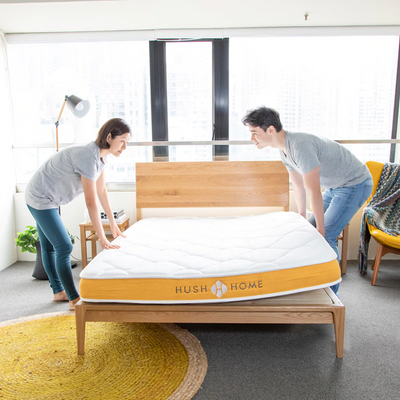
Measure the actual sleeping platform or the internal space where the mattress sits. The mattress should match the dimensions specified by the bunk-bed manufacturer, lie flat and fit securely without large gaps.
For the upper bunk, mattress thickness is a safety consideration—not simply a comfort preference.
The thicker the mattress becomes, the higher the sleeping surface sits. That reduces the amount of guardrail remaining above the mattress. If the mattress exceeds the bed manufacturer’s maximum recommended thickness, the guardrail may no longer provide the level of protection the bunk bed was designed to offer.
Hong Kong’s specified safety standards for bunk beds for domestic use were updated to BS EN 747-1:2024 and BS EN 747-2:2024 from 1 August 2025. These standards reinforce the importance of sufficient safety-barrier height and a clearly controlled mattress level.
For shoppers, however, the practical rule is straightforward: follow the maximum mattress thickness marked or stated by your particular bunk-bed manufacturer.
Do not assume that a mattress is safe for the upper bunk simply because it fits the width and length. Thickness is a separate specification that needs to be checked.
A thinner mattress helps preserve more usable guardrail height. It can also create more headroom between the upper and lower bunks and is usually easier to lift, rotate or change bedding on in a confined space.
That does not mean the thinnest possible mattress is automatically the best. A bunk-bed mattress still needs enough support and comfort for the person sleeping on it and must be compatible with the bed base. The goal is to stay within the frame’s safety limits without compromising support unnecessarily.
A 5-inch mattress can therefore be attractive for compact-bed applications because it is substantially slimmer than a conventional 8-, 10- or 12-inch mattress. Whether 5 inches is suitable still depends on the specifications of the individual bunk bed.
There is no rule that a bunk-bed mattress must be made from foam. Instead, focus on four things:
Foam mattresses are common because they can be made relatively thin and light. A slim pocket-spring mattress can also work well for sleepers who prefer the responsiveness and airflow of springs. The Hush Loft Mattress™ follows this approach, combining a compact 5-inch profile with tempered-steel pocket springs and foam comfort layers.
Whatever material you choose, check the bed manufacturer’s requirements for the base. Some bunk beds specify the type, spacing or construction of the slats or foundation that should support the mattress.
At 5 inches thick, the Loft Mattress™ is the thinnest adult mattress in Hush Home’s current mattress collection. Hush designed it specifically for compact sleeping setups including bunk beds, Murphy beds and daybeds.
Its slim profile is useful where mattress height matters, but it is still a pocket-spring mattress rather than simply a thin foam pad. Premium foam is used on both sides, while its reversible construction lets the sleeper choose between a medium-firm side rated approximately 6.5/10 and a firmer side rated approximately 8.5/10.

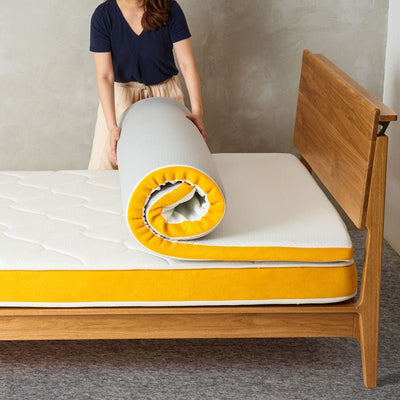
The Loft Mattress™ is also relatively lightweight and compact compared with Hush Home’s thicker mattresses, making it easier to handle in smaller Hong Kong bedrooms and elevated-bed setups.
It is available in compact Hong Kong sizes including Small Single, Single and Single Long, making it particularly relevant for children’s rooms, guest rooms, helper rooms, built-in beds and other space-conscious layouts. Check current size availability before ordering.
Important: a 5-inch mattress is not automatically suitable for every bunk bed. Always compare the Loft Mattress™ dimensions and thickness with the maximum specifications stated by your particular bunk-bed manufacturer before ordering.
Explore the 5-inch Hush Loft Mattress™ and check the available sizes for your setup.
Not necessarily. The upper bunk usually has the stricter mattress-height requirement because its guardrails need to remain sufficiently high above the sleeping surface.
The lower bunk may allow a thicker mattress, but there are still practical limits. A very thick lower mattress can reduce the sitting and headroom between the two bunks, making the lower level feel cramped.
You can therefore use different mattress models or thicknesses on the two bunks if the frame allows it. What matters is that each mattress fits its platform correctly and meets the relevant specifications for that bunk.
Before buying, measure the part of the frame where the mattress actually sits—not the external dimensions of the bunk bed.
A suitable mattress is only one part of bunk-bed safety. The condition, design and installation of the frame matter just as much.
Hong Kong safety guidance has highlighted practical points such as secure guardrails, a stable ladder, correct mattress clearance, a stable assembled frame and avoiding unsafe gaps. Young children also require particular caution when using the upper bunk.
Always follow the age, weight and usage restrictions stated by the manufacturer of your particular bunk bed. If the frame is loose, damaged, unstable or has unsafe gaps, stop using it until the problem has been corrected.
Only if the combined height of the mattress and topper remains within the bunk-bed manufacturer’s maximum permitted mattress height. Adding a topper raises the sleeping surface and reduces the amount of guardrail above it.
For that reason, do not add a topper to an upper bunk automatically, even if the mattress itself is within the stated limit. Recalculate the total thickness first and confirm that the complete setup still complies with the bed frame’s instructions.
Many Hong Kong bunk beds use a 3'0" × 6'0" Single mattress (91 × 183 cm), but there is no universal bunk-bed size. Some frames use 2'6" Small Single, 3'0" × 6'3" Single Long or custom dimensions. Measure the internal mattress platform and check the manufacturer’s stated size before buying.
There is no single thickness that is safe for every bunk bed. Use the maximum mattress thickness specified by the bed manufacturer and make sure sufficient guardrail remains above the mattress. A slimmer mattress is often useful because it preserves more guardrail height.
A 5-inch mattress can be a practical option for many bunk beds because of its slim profile, but compatibility depends on the specific frame. Check the required mattress dimensions, maximum mattress height and bed-base instructions before use.
Possibly, but only if its length, width, thickness and weight are compatible with the bunk-bed manufacturer’s specifications. A conventional mattress that is too thick can reduce the effective height of the upper guardrail even if its width and length fit.
Yes, provided both the bunk-bed frame and mattress are designed for the sleeper’s weight and size. Check the frame’s stated load limit, intended use and dimensions rather than assuming every bunk bed is suitable for adults.
Only if the combined mattress-and-topper height remains within the bunk-bed manufacturer’s maximum permitted mattress height. Because a topper raises the sleeping surface, it can reduce the usable guardrail height and should be included in your total-thickness calculation.
Not necessarily. If the frame allows it, the two bunks can use different mattress models or thicknesses. The upper bunk usually has stricter height and guardrail requirements, while the lower bunk may allow more flexibility but still needs enough headroom.
The Loft Mattress™ was designed with compact beds in mind and Hush Home specifically positions it for smaller bed types including bunk beds, Murphy beds and daybeds. At 5 inches thick, it is the clearest bunk-bed option in Hush Home’s current adult mattress range. You should still confirm the exact dimensions and maximum mattress thickness allowed by your particular bed frame before ordering.
Choosing a bunk-bed mattress is a fit-and-safety decision as much as a comfort decision. Start with the bed frame rather than the mattress feel.
Measure the sleeping platform, check the manufacturer’s maximum permitted mattress thickness and make sure enough guardrail remains above the upper mattress. Once those requirements are satisfied, you can compare firmness, support, materials and price.
For Hong Kong homes where bunk beds, built-in beds and other compact sleeping arrangements are common, the Hush Loft Mattress™ is a particularly relevant option. Its 5-inch pocket-spring design is substantially slimmer than a conventional full-height mattress while still providing a reversible choice between medium-firm and firmer feels.
Always make the final decision against the safety specifications of your own bunk bed.