




What Is Motion Isolation in a Mattress? Motion Transfer Explained
06 Oct 2026
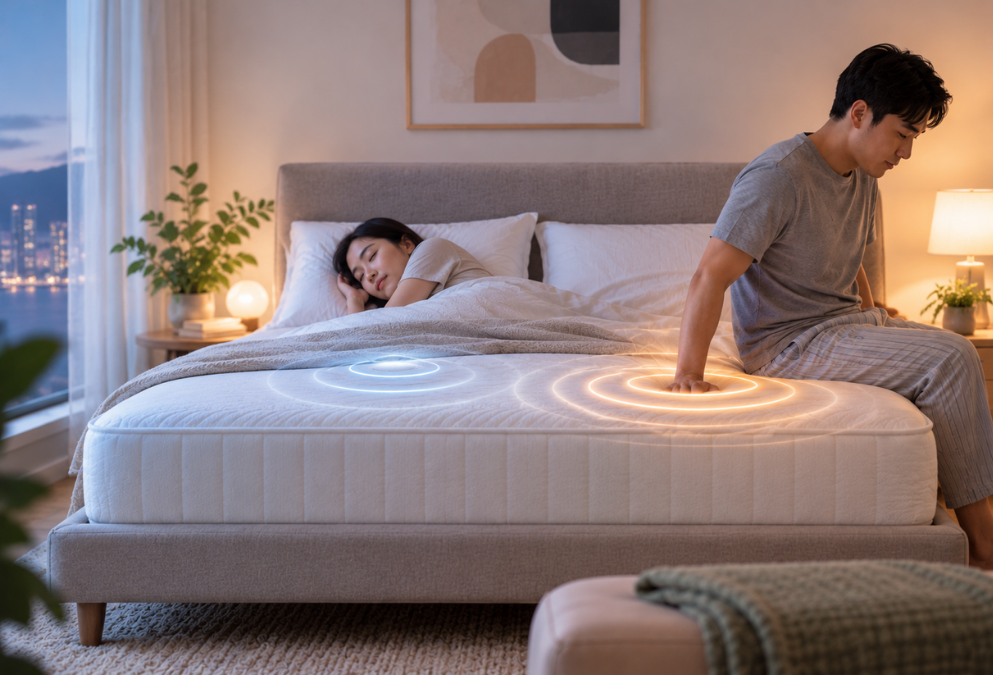
If you share a bed, you have probably felt some version of motion transfer: your partner rolls over, gets out of bed or sits down, and you feel the mattress move underneath you even though you did not move yourself.
Motion isolation is the mattress's ability to keep that movement close to where it started. The better the isolation, the less of your partner's movement reaches your side of the bed.
That sounds simple, but motion isolation is often confused with bounce, firmness, pocket springs and even edge support. They are related parts of mattress performance, but they do not measure the same thing.
Quick Answer: What Is Motion Isolation?
Motion isolation is the ability of a mattress to absorb or localise movement so that vibrations created in one part of the bed are felt less strongly elsewhere.
Motion transfer describes the movement that does travel across the mattress. In everyday language, good motion isolation means low motion transfer.
Independent mattress testers such as Sleep Foundation assess motion isolation using repeated body movements and vibration measurement rather than relying only on whether a mattress contains a particular material. That distinction matters because materials can suggest likely performance, but finished mattress construction determines the real result.
The two terms describe opposite sides of the same event.
Motion transfer asks: when one person moves, how much of that movement travels through the mattress?
Motion isolation asks: how effectively does the mattress prevent that movement from spreading?
A mattress with high motion isolation should therefore have relatively low motion transfer. A mattress with poor motion isolation allows more vibration, tilting or rippling to reach the other sleeper.
There is no universal consumer-facing unit that every mattress brand uses to express motion isolation. Brand phrases such as “zero motion transfer”, “complete motion isolation” or “partner disturbance reduction” should therefore be interpreted as product claims unless the company publishes a comparable test method and result.
When a sleeper rolls over, sits down or gets out of bed, that action puts force into the mattress. The mattress then compresses, rebounds and redistributes some of that energy through its layers.
How far that movement travels depends on several things: whether the support system is mechanically connected, how independently individual components can compress, how much the comfort layers absorb movement, how responsive the materials are and how stable the base underneath the mattress is.
This is why a mattress cannot be judged by one component alone. Pocket coils can reduce mechanical transfer compared with interconnected springs, but thick responsive latex above them may create a livelier overall surface than slow-moving memory foam. The whole system matters.
Two people create more opportunities for movement than one. One person may roll over frequently, get into bed later, wake earlier, visit the bathroom during the night or simply weigh considerably more than the other.
If the mattress transfers those movements strongly, the passive sleeper can feel each event even while trying to remain still. Stronger motion isolation reduces the amount of that mechanical disturbance reaching the other side.
This is especially useful when one partner is a lighter sleeper or when the couple follows different work or sleep schedules. It does not guarantee that both people will sleep through every disturbance—sound, light, temperature, snoring and direct contact are separate issues—but it removes one common source of disruption.
Motion isolation is also useful for people who share the bed with children or pets, people who are easily awakened by small movements and sleepers whose partners regularly get in or out of bed during the night.
It can matter less for a solo sleeper who rarely feels movement from another person. In that case, pressure relief, firmness, cooling or ease of movement may deserve higher priority.
Bounce describes how quickly and strongly a mattress pushes back after compression. Motion isolation describes how far movement spreads away from the point where it started.
A mattress can therefore have some bounce while still isolating movement reasonably well. Pocket-coil hybrids are a good example: each spring can rebound under the sleeper while remaining more mechanically independent than a traditional interconnected coil unit.
Conversely, an extremely bouncy interconnected spring system may allow more motion to ripple across the surface. The useful question is not simply “does it bounce?” but “does that bounce stay local?”
Pocket springs are individually wrapped coils that can compress more independently than traditional coils that are mechanically linked together.
That independent action reduces the tendency for one compressed spring to pull neighbouring springs down with it. As a result, movement can remain more localised around the person who caused it.
But “pocket springs” is not a guaranteed motion-isolation score. Coil diameter, gauge, pre-compression, zoning, number of comfort layers, mattress tension and the way the fabric pockets are joined can all affect the finished result.
In many traditional innerspring systems, multiple coils are physically linked. When one section compresses, part of that mechanical force can pull or flex neighbouring parts of the spring network.
That interconnected response can create a broader ripple across the mattress. It is one reason individually wrapped coils are commonly used when brands want to combine spring support with lower partner disturbance.
However, a well-built innerspring can still moderate transfer through its comfort layers, while a poorly designed pocket-coil mattress can still feel lively. Construction should always be judged as a whole.
Memory foam is well known for strong motion absorption because it compresses closely around pressure and returns more slowly than highly responsive materials.
This high point elasticity—compressing more directly where force is applied—can help stop small movements from spreading far across the surface. That is why all-foam mattresses and hybrids with substantial memory-foam comfort layers often perform well in independent motion-isolation testing.
The trade-off is that very conforming foam can feel less lively or make movement feel slower to some sleepers. Better motion isolation is not automatically better for every preference.
Latex is more buoyant and quick to rebound than memory foam. It can still absorb a meaningful amount of movement, but its responsiveness can allow more surface motion to be felt than slow-recovery memory foam in some constructions.
That does not mean latex is poor for couples. A latex hybrid with individually wrapped coils can balance responsiveness with respectable motion isolation. Again, the whole design matters more than the material name.
Yes. Hybrids combine a spring support core with foam, latex, fibre or microcoil comfort layers. Their motion isolation depends heavily on how independently the coils move and how much the upper layers absorb before the movement spreads.
A pocket-coil hybrid can therefore feel more responsive than a slow all-foam mattress while still preventing a large proportion of everyday partner movement from reaching the opposite side.
This balance is one reason motion isolation should be tested together with ease of movement rather than maximised blindly.
Yes. Heavier movement usually puts more energy into the mattress. A heavier sleeper sitting down quickly or getting out of bed can create a larger disturbance than a lighter sleeper making a small position change.
The weight difference between partners can also affect perception. One sleeper may barely notice the other's movement, while the lighter sleeper may feel more of the heavier partner's motion.
This is another reason there is no single real-world “zero motion” result that applies equally to everyone.
It can. Distance matters because movement usually weakens as it travels through a well-isolating mattress. Two sleepers on a wider bed can often lie farther apart than two sleepers sharing a compact mattress.
That does not mean a King mattress automatically has better motion isolation than a Double. Motion isolation is still a construction characteristic. A wider mattress simply gives the movement more distance to dissipate before reaching the other sleeper.
For Hong Kong couples who cannot simply move to a larger bed because of bedroom size, mattress construction becomes even more important.
These two features are especially relevant to couples, but they solve different problems.
Motion isolation reduces movement travelling from one sleeper to the other. Edge support stabilises the perimeter so sleepers can sit or lie nearer the side without excessive collapse.
A mattress can perform strongly in one category and only moderately in the other. Couples should test both rather than treating either feature as a substitute.
Yes. A mattress is not tested in a vacuum. A loose, flexible or poorly assembled bed frame can shake when one person moves, creating motion that did not originate inside the mattress itself.
Slats that flex independently, loose hardware, an unstable centre support or uneven floor contact can all change what the other sleeper feels.
If a mattress that used to feel stable suddenly begins transferring more movement, inspect the frame and foundation as well as the mattress.
Firmness and motion isolation are separate characteristics, but they can interact.
A very plush mattress may allow deeper body movement, while a very firm responsive surface may transmit a sharper rebound. Yet either mattress can still isolate movement well if the underlying materials localise compression effectively.
Do not assume “softer means better motion isolation” or “firmer means more transfer”. Test the actual model.
If you share the mattress, test with both people whenever possible. One person should remain still while the other recreates normal movements.
A mattress that looks lively at the source can still isolate movement well if little vibration reaches the other sleeper. Visual bounce alone is not enough.
The glass-of-water test is a useful visual demonstration, but it is not a complete mattress test.
If a cup on one side stays relatively stable while a person changes position on the other side, that suggests limited surface motion at the cup's location. Independent testers sometimes use a controlled liquid test alongside body testing and vibration sensors.
But the result changes with cup placement, distance, mattress size, movement intensity and the bed base. Pressing directly beside the cup can spill it even on a mattress with excellent overall motion isolation.
Treat it as an illustration, not a universal pass-or-fail standard.
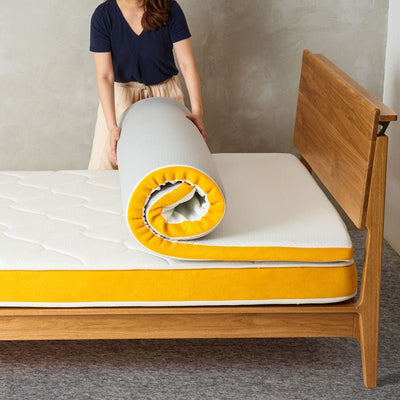
Sometimes, but only to a point. A thick topper made from movement-absorbing foam can reduce some surface-level vibration and soften small movements before they reach the sleeper.
However, a topper cannot fully redesign the support core underneath it. If strong motion is being transmitted mechanically through interconnected springs or an unstable frame, the topper may only muffle rather than eliminate the problem.
This is why a topper is more useful for fine-tuning an otherwise suitable mattress than rescuing a bed with fundamentally poor motion control.
No. Motion isolation only addresses mechanical movement through the mattress.
A partner can still disturb sleep through snoring, alarms, light, temperature changes, pulling the duvet, direct physical contact or movement transmitted through the bed frame or floor.
Even within the mattress, no realistic design prevents every vibration under every possible load. “Zero motion transfer” is best treated as shorthand for very strong partner-disturbance control rather than a literal statement that no measurable movement can ever occur.
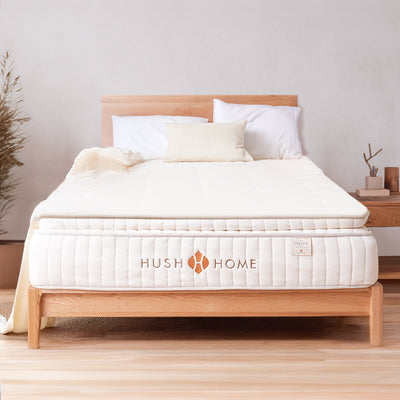
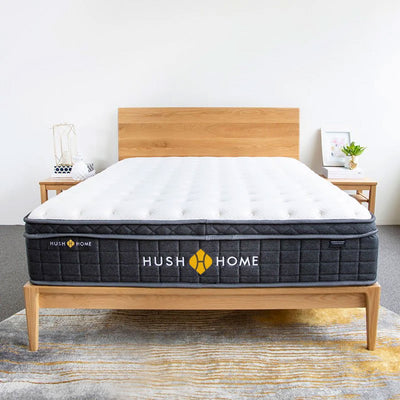
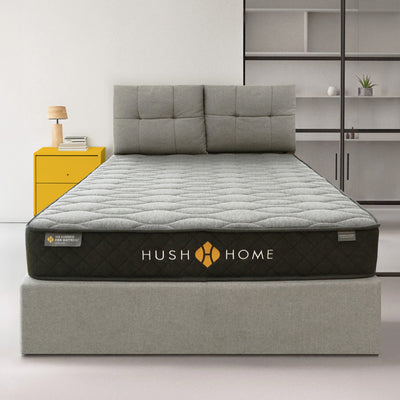
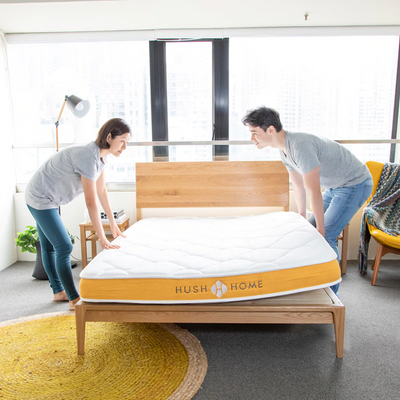
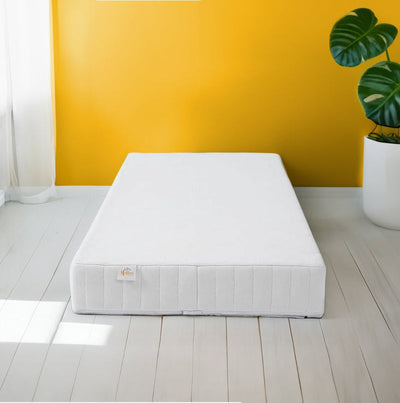
Hush Home currently lists motion isolation as a core comparison dimension across its mattress range, but the construction behind that performance differs by model.

The current Hush Mattress™ uses individually wrapped pocket coils beneath multiple foam layers. Hush states that each spring responds independently, which is intended to reduce partner disturbance while preserving the responsive feel of a hybrid mattress.
Hush's product page uses the phrase “complete motion isolation”. Because the public page does not provide a standardised vibration score that can be directly compared with every competitor, that wording should remain clearly attributed to Hush rather than presented as a universal laboratory result.

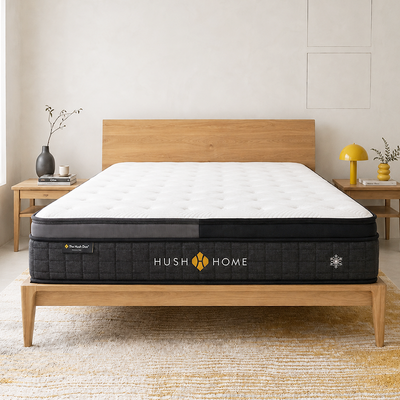
Hush Duo Mattress™ is especially relevant to this topic because its two comfort zones are configured independently beneath one continuous sleeping surface. Its 5-zone pocket-coil base also uses individually responding springs.
The current EN page describes this as “zero motion transfer”, while the Hong Kong Chinese page describes the independent pocket coils as greatly reducing partner movement disturbance. The Chinese wording is the more precise consumer explanation: the design aims to keep one sleeper's movement from significantly disturbing the other.

The Organic Mattress™ uses a dual-layer coil system. Hush states that its felt-wrapped mini-coils adapt to subtle movement while reducing motion transfer, and that the 7-zone felt-wrapped pocket-coil base provides motion isolation and deep adaptive support.
This is a useful example of a responsive latex hybrid that can still target partner disturbance through individually responding coil layers.

The Essence Firm Mattress™ uses heavy-duty high-gauge pocket coils beneath firm support foams. Hush positions those individually responding coils as providing deep support while reducing partner disturbance.
Because this model is deliberately very firm, it is also a useful reminder that strong motion isolation is not limited to soft mattresses.

The Loft Mattress™ uses tempered-steel pocket springs inside its slim two-sided construction. Hush states that these independently responding springs provide motion isolation despite the mattress's compact 5-inch profile.
The current product page again uses “complete motion isolation”, so the same attribution caution applies: it is Hush product language, not a standardised cross-brand numerical score.
Prioritise it highly if you share the bed, wake easily, have different sleep schedules, share with pets or children, or have a large difference in body weight between sleepers.
It may matter less if you sleep alone and value responsiveness, ease of movement or another performance characteristic more strongly.
Do not choose based on motion isolation alone. Comfort, pressure relief, spinal support, temperature regulation, edge support, size, foundation compatibility and trial terms still need to work together.
Use this checklist when comparing mattresses:
False. Pocket springs reduce mechanical coupling, but comfort layers, coil design, sleeper weight and the bed base still affect the finished result.
False. A responsive pocket-coil hybrid can have local bounce while still limiting how far that movement travels.
False. Memory foam often performs strongly, but pocket-coil hybrids, latex hybrids and other constructions can also isolate motion well.
False. Firmness and motion isolation are different performance characteristics.
False. It reduces mechanical movement through the mattress but cannot prevent noise, light, duvet pulling or every possible vibration.
False. It is a useful visual demonstration, but placement, distance, movement and mattress size affect the result.
False. A topper can absorb some surface movement but cannot completely change a mechanically connected support core or unstable bed frame.
It means the mattress keeps movement relatively local instead of allowing vibrations to spread strongly across the sleep surface.
Motion transfer is the movement that travels from one part of the mattress to another when someone rolls, sits, gets in or gets out of bed.
Usually yes, especially if one person is a light sleeper, the couple has different schedules or one partner moves frequently at night.
There is no universal winner. All-foam mattresses often isolate movement very well, while pocket-coil hybrids can also perform strongly and preserve more responsiveness. Test the finished mattress rather than choosing only by category.
Generally they can, because each coil compresses more independently than an interconnected spring network. But the complete mattress construction still determines performance.
Yes. Firmness and motion isolation are separate. A firm mattress with independently responding coils or movement-absorbing layers can still isolate motion very well.
It can reduce some surface movement, especially if made from memory foam or another conforming foam, but it cannot completely overcome a highly bouncy support core or unstable frame.
More distance can help because movement has farther to travel, but size does not change the mattress's underlying isolation quality. A poorly isolating King can still transfer more movement than a well-designed Double.
Have one person remain still while the other rolls, changes position and gets in and out of bed normally. Repeat over several nights and make sure the bed frame is stable.
No universal consumer standard is used across all brands for that phrase. Unless a comparable test method is published, treat it as brand-specific performance language rather than a literal guarantee of zero measurable vibration.
Motion isolation describes how effectively a mattress keeps movement from spreading across the bed. Motion transfer describes the movement that does spread. Good motion isolation therefore means less partner movement reaches your side.
For couples, this can make a meaningful practical difference—especially when one person moves frequently, wakes earlier, weighs more or sleeps more lightly than the other. But it is not the only mattress feature that matters, and it does not eliminate sound, light or every possible disturbance.
The strongest general rule is to look beyond labels. Pocket springs, memory foam, latex and hybrid designs all behave differently depending on how they are engineered. Test normal movements with your actual partner where possible, and judge how much movement reaches the passive sleeper rather than how dramatic the mattress looks at the source.