



Pocket Spring Mattress Guide: How They Work, Pros & Cons in Hong Kong
17 Sep 2026
Pocket spring mattresses are popular because they combine the familiar support and responsiveness of springs with a more individualised response than older interconnected spring systems. But “pocket spring” does not describe one specific mattress feel. A thin, firm mattress and a deep latex hybrid can both use pocket springs while feeling completely different.
That distinction is especially useful when comparing Hush Home’s current mattress range. The Hush Mattress™, Essence Firm Mattress™, Loft Mattress™, Organic Mattress™ and Hush Duo Mattress™ all use pocket-coil technology in some form, yet each is designed around a different combination of thickness, comfort materials, firmness and sleeping needs.
KEY TAKEAWAY
Do not shop for a mattress by asking only, “Does it have pocket springs?” Look at how the coils are built, what sits above them, whether the mattress is zoned, how firm the finished mattress feels and whether the complete design suits your body, sleeping position and bedroom.
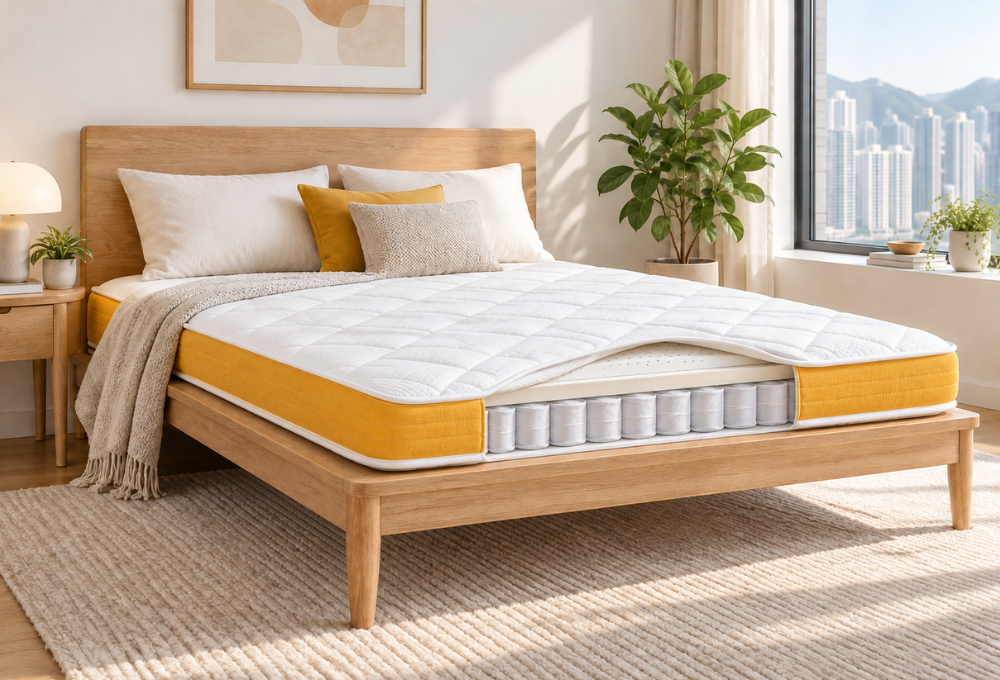
A pocket spring mattress uses many individual steel springs that are each enclosed in their own fabric sleeve. The fabric pockets are joined together, while the springs themselves are able to compress more independently than springs that are directly connected by wire.
Because pressure on one spring does not automatically force a whole connected network of springs to move in the same way, pocket coils can follow changes in weight and body position more locally. This is why they are commonly used in modern hybrid mattresses and are often associated with better contouring and lower motion transfer than traditional interconnected coils.
Pocketed coils are also sometimes called individually wrapped coils, fabric-encased coils or Marshall coils. These terms generally refer to the same basic concept: each spring is separated inside an individual fabric pocket rather than being mechanically linked to all of its neighbours.
For a broader overview of spring, foam, latex and hybrid mattress construction, see our Hong Kong Mattress Buying Guide.
Traditional innerspring mattresses may use Bonnell, continuous-wire or other connected coil systems. In these designs, the springs are linked together more directly, so pressure placed on one area can cause neighbouring areas to move as well.
| Feature | Pocket Spring | Traditional Connected Spring |
|---|---|---|
| Spring movement | Individual coils compress more independently. | Springs are linked more directly and influence neighbouring coils. |
| Contouring | Can respond more locally to body shape and pressure. | Movement is spread more broadly through the connected unit. |
| Motion transfer | Generally lower than connected coils. | Movement can travel more easily through the spring network. |
| Zoning | Can support more sophisticated zoned layouts. | Depends on the design, but usually less individually tunable. |
This does not mean every pocket spring mattress is automatically better than every traditional spring mattress. Steel quality, coil construction, comfort layers, edge support and overall workmanship still matter. “Pocket spring” describes one important part of the mattress, not the entire mattress.
When you lie down, the coils directly beneath heavier parts of the body compress more than coils carrying less weight. Because pocket springs can move independently, the support system can react more closely to your body shape than a fully interconnected spring unit.
If one sleeper turns over, gets out of bed or changes position, the movement does not need to travel through a single connected spring network. That can reduce partner disturbance, although the final amount of motion isolation also depends on the foams, latex, quilting and other layers above the coils.
Pocket springs compress and rebound quickly. In a hybrid mattress, this can create a more responsive surface that is easier to move across than a mattress built entirely from slow-response foam. Some sleepers prefer this more lifted, buoyant feeling rather than a deeper sinking sensation.
A coil support core contains more open internal space than a solid block of support foam. This can help air move through the lower part of a mattress, which is one reason pocket-coil hybrids are often attractive in warm climates.
Cooling still depends on the entire mattress, however. Thick foam layers, covers, sheets, duvets and room temperature all affect how warm you feel.
Pocket-coil systems can be arranged so different sections of the mattress respond differently. A zoned system may use different coil tensions, constructions or layouts under areas such as the shoulders, waist and hips.
The aim is not simply to make one area “hard” and another “soft,” but to tune how the support core responds to different parts of the body.
The main advantages are usually a balance of support, responsiveness, airflow and reduced motion transfer. Unlike a traditional connected spring unit, pocket coils can respond more locally to pressure. Unlike a solid foam support core, they also preserve more open space inside the mattress and usually provide more bounce.
For couples, the independent movement of the coils can be particularly useful because one side of the mattress is less mechanically tied to the other. For sleepers who change positions frequently, the responsiveness of springs can also make turning over feel easier than on some deeply contouring foam mattresses.
Pocket springs are also highly versatile. Manufacturers can combine them with memory foam, polyfoam, latex, natural fibres, microcoils and reinforced perimeter systems. This is why two pocket spring mattresses can sit at completely different ends of the market in terms of firmness, thickness, price and overall feel.
Pocket spring mattresses are not automatically the best choice for everyone.
A pocket-coil mattress will usually isolate movement better than a connected innerspring, but an all-foam mattress can still absorb more movement in some designs. The comfort layers and total construction matter as much as the spring type.
Do not assume pocket springs determine firmness. A pocket spring mattress can be soft, medium, firm or extra-firm. The foam, latex, quilting and other comfort materials above the coils contribute heavily to the finished feel.
If firmness is your main question, see our Mattress Firmness Guide.
Neither is universally better. Pocket springs and memory foam solve different problems and are frequently used together in hybrid mattresses.
Memory foam is known for close contouring and strong motion absorption. Pocket springs generally provide more bounce, easier movement and more airflow through the support core.
A hybrid mattress can combine a foam comfort system with pocket coils underneath, aiming to provide cushioning at the surface with more responsive support below.
If you like a deeply enveloping feel with as little bounce as possible, an all-foam mattress may appeal more. If you prefer a mattress that feels more responsive and lifted, or you are concerned about airflow in Hong Kong’s warm climate, a pocket-coil hybrid may be worth comparing.
Not exactly.
“Pocket spring” describes the spring support system, while “hybrid” describes a broader mattress construction that combines a coil support core with a substantial comfort system such as foam or latex.
Many modern hybrids use pocket coils because their independent movement works well beneath contouring comfort layers. But a relatively thin mattress can also use pocket springs without having the deep comfort system people usually picture when they hear “hybrid.”
The 5-inch Hush Loft Mattress™ is a good example of a slim pocket-spring design.
Coil count is worth understanding, but it should not be treated as a simple quality score. A mattress with more springs is not automatically more supportive, more durable or more comfortable than one with fewer springs.
The number of coils changes with mattress size, coil diameter and the way the spring unit is engineered. Coil thickness, steel quality, spring height, zoning, pre-tensioning, the number of coil layers and the materials above the coils can all affect performance.
Coil gauge can be useful technical information as well: in conventional gauge measurements, a lower gauge number means thicker wire and a higher number means thinner wire.
A zoned pocket spring mattress divides the support core into different areas so that the mattress can respond differently beneath different parts of the body. The exact number and design of the zones vary between mattresses.
For example, Hush Home’s Organic Mattress™ uses a seven-zone pocket-coil base beneath its natural-latex comfort system, while Hush Duo uses a five-zone pocket-coil support base beneath its adjustable inserts.
These are both zoned pocket-spring designs, but they serve different mattress concepts.
One reason pocket springs are useful is their flexibility. Hush Home currently uses pocket-coil technology across all five of its adult mattress concepts, but the spring system is combined with different comfort materials and engineering depending on what each mattress is designed to do.
The Hush Mattress™ is the most conventional all-round hybrid in the range. Its 10-inch construction combines three premium foam layers with thousands of pocket coils, creating a mattress that aims to balance cushioning with responsive support. Hush currently rates the finished feel at approximately 7.0 to 8.5 out of 10.
It is a useful example of a classic hybrid formula: the pocket coils provide the underlying spring response, while the foam layers shape much of the surface comfort. Someone looking for a versatile primary mattress rather than a highly specialised design would naturally start here.
The Essence Firm Mattress™ shows that pocket springs do not automatically mean a soft or bouncy mattress. Its 8-inch construction combines heavy-duty pocket coils with extra-firm orthopedic foam, and Hush rates it at approximately 9.0 to 9.5 out of 10—the firmest feel in the current Hush Home range.
Here, the pocket springs are part of a reinforced support system rather than a plush comfort story. It is designed for shoppers who clearly prefer a very firm sleep surface and want substantially less sink-in than a softer hybrid.
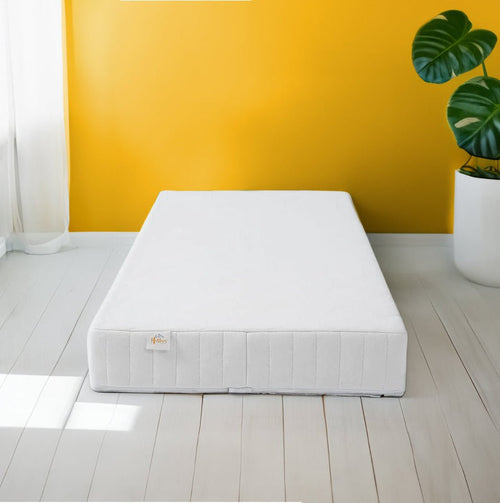
The Loft Mattress™ demonstrates that a pocket-spring mattress does not need to be thick. At only 5 inches, it uses tempered-steel pocket springs with foam on both sides and a reversible design. One side is approximately 6.5/10 medium-firm and the other approximately 8.5/10 firm.
Its compact profile makes it particularly relevant for bunk beds, Murphy beds, daybeds, helper rooms, guest rooms and other Hong Kong setups where mattress height and ease of handling matter.
If mattress height is a key constraint, our Bunk Bed Mattress Guide explains why thickness can be as important as size in compact-bed setups.
The 12-inch Organic Mattress™ takes pocket-coil construction in a more premium, natural-material direction. Hush combines GOLS-certified organic latex with a dual-layer coil system: a layer of smaller felt-wrapped mini-coils and a seven-zone felt-wrapped pocket-coil support base.
The smaller coils add another responsive transition between the latex and deep support core, while the seven-zone base handles the main structural support. Natural coconut fibre is also used around the coil system to reinforce the structure while preserving airflow.
This is a good illustration of why “pocket spring mattress” is such a broad category. The Organic Mattress™ shares the same basic independent-coil principle as the Loft, but the additional latex, mini-coils, zoning and natural materials produce a completely different construction and intended experience.
The 11-inch Hush Duo Mattress™ uses a five-zone pocket-coil support base beneath its interchangeable comfort and support inserts.
The key distinction is that the coils themselves are not what create four firmness choices. The adjustable feel comes from rearranging the internal inserts, while the pocket-coil base continues to provide the underlying support structure.
Each side can be configured independently, so two sleepers can use different firmness profiles on one seamless mattress. The zoned pocket-coil base supports both sides and also helps limit partner disturbance beneath the adjustable comfort system.
| Mattress | Useful Starting Point |
|---|---|
| Hush Mattress™ | A balanced, versatile 10-inch hybrid with foam comfort layers and pocket-coil support. |
| Essence Firm Mattress™ | A distinctly extra-firm mattress with minimal sink-in and reinforced support. |
| Loft Mattress™ | A thinner mattress for bunk beds, Murphy beds, daybeds, helper rooms and compact setups. |
| Organic Mattress™ | Natural materials, organic latex and a more sophisticated dual-layer coil system. |
| Hush Duo Mattress™ | Different firmness preferences for two sleepers, or the ability to adjust the feel after purchase. |
Start with the finished mattress rather than one isolated spring specification.
For couples, look at both motion isolation and firmness compatibility. A pocket-spring core can help reduce movement transfer compared with connected coils, but if two sleepers fundamentally want different firmness levels, a mattress with independently adjustable comfort—such as Hush Duo—addresses a different problem.
A high-quality spring system cannot compensate for choosing the wrong mattress size, an incompatible bed frame or a firmness level that you simply do not enjoy.
Pocket-coil support cores can be useful in Hong Kong because their open structure allows more air space than a solid foam support block. This can support ventilation through the lower part of the mattress.
However, a spring core alone does not make a mattress “cooling” or mould-proof. The materials above the springs, the mattress cover, bedding, room humidity, air-conditioning, ventilation and how the mattress is maintained all matter.
In Hong Kong’s humid environment, keep the bedroom ventilated, avoid trapping moisture around the mattress and use suitable protection without assuming any single material prevents humidity problems by itself.
Pocket springs generally offer more independent movement, contouring and motion isolation than traditional connected spring systems such as Bonnell coils. However, overall mattress quality also depends on steel quality, comfort layers, edge support and construction, so the spring type should not be judged in isolation.
They can be. Because each coil can compress more independently, movement on one side is less likely to travel through a connected spring network to the other side. Comfort layers also affect motion isolation, and couples with different firmness preferences may need an independently adjustable design rather than pocket springs alone.
They can be, but the comfort layers and firmness are crucial. Side sleepers usually need enough cushioning around the shoulders and hips, so a very firm pocket spring mattress may feel quite different from a pocket-coil hybrid with thicker foam or latex above the springs. Compare the complete mattress rather than the spring unit alone.
A pocket-coil core creates more open air space than a solid foam support core, which can improve airflow through the mattress. But temperature depends on the entire construction, so a pocket spring mattress with thick heat-retaining comfort layers may still feel warmer than a well-designed breathable alternative.
No. Coil count is only one specification. Coil diameter, steel quality, wire thickness, spring height, zoning, the number of coil layers and the materials above the springs all influence the final mattress. More coils do not automatically mean more comfort or support.
Any mattress can develop wear or body impressions over time. Durability depends on the spring construction as well as the comfort layers, edge support, foundation, sleeper load and maintenance. In many mattresses, softer comfort layers may show wear before the spring core itself.
A well-built pocket-coil system is designed so the springs are individually contained rather than rubbing as one connected metal network, which can help reduce noise. Squeaking can still come from the mattress, bed frame, slats or hardware as components age, so the source of a sound should be checked rather than assuming the springs are always responsible.
Yes. Pocket springs are not limited to thick mattresses. The Hush Loft Mattress™, for example, fits a pocket-spring support system into a 5-inch reversible mattress designed for compact beds and smaller spaces.
Hush Home’s current adult mattress range uses pocket-coil technology across the Hush Mattress™, Essence Firm Mattress™, Loft Mattress™, Organic Mattress™ and Hush Duo Mattress™. The way those coils are used varies considerably—from a thin reversible spring mattress to dual-layer coils beneath organic latex and a zoned support base beneath adjustable firmness inserts.
A pocket spring mattress is best understood as a mattress built around independently wrapped coils—not as one fixed level of firmness, thickness or comfort.
The independent springs can improve contouring, responsiveness, airflow and motion isolation compared with older connected spring designs, but the layers around those springs determine much of the final sleeping experience.
That is why comparing pocket spring mattresses by coil count alone is not enough. Look at the complete design: the comfort layers, zoning, firmness, height, edge construction, trial protection and intended use.
The right pocket spring mattress is therefore the one whose complete construction suits how you actually sleep—not simply the one with the biggest spring number in its specification list.