











Can You Put a Mattress Directly on the Floor in Hong Kong? Pros, Cons & Mould Risk
12 Oct 2026
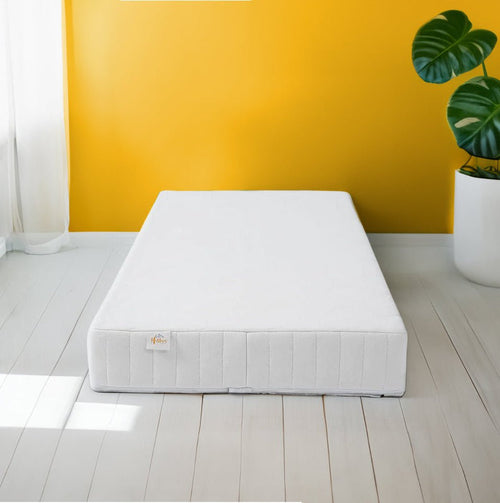
Technically, yes. A clean, flat and level floor can support the weight of a mattress evenly. The more important question is whether floor placement is a good long-term setup for the mattress and the room.
In Hong Kong, the answer needs extra caution because the climate is humid for much of the year. The floor itself may support the mattress perfectly well while the lack of ventilation underneath creates a separate moisture problem.
Quick Answer
Short-term floor use: often workable if the room and floor are dry, the mattress manufacturer allows it, and you regularly lift the mattress for airflow and inspection.
Long-term floor use in Hong Kong: possible, but not ideal. Reduced underside airflow makes moisture management more difficult, especially during humid months.
Best long-term compromise: use a low-profile but ventilated base, such as a compatible slatted foundation or raised platform that meets the mattress manufacturer’s requirements.
Hong Kong is objectively humid. Hong Kong Observatory 1991–2020 climate normals show an annual mean relative humidity of 78%. The monthly mean reaches 82% in March and 83% in April and May.
Outdoor climate data does not mean your bedroom is always at the same humidity. Air-conditioning, ventilation, dehumidifiers, building design, cooking and showering all affect indoor conditions. But the climate explains why moisture control deserves more attention in Hong Kong than in a consistently dry environment.
The U.S. Environmental Protection Agency recommends keeping indoor relative humidity below 60% where possible, ideally around 30–50%, as part of mould prevention. In Hong Kong, a simple hygrometer can tell you whether your actual bedroom is staying persistently humid.
Mould needs moisture. When a mattress sits on a ventilated slatted base, air can move around the underside and help moisture evaporate. When the same mattress sits flush against a solid floor, that underside ventilation is greatly reduced.
Moisture can come from the room itself, perspiration, damp bedding, wet cleaning, spills, condensation or a floor that has not fully dried after mopping. None of those automatically creates mould, but trapped dampness plus poor airflow increases the risk.
This is why the underside can develop a problem before the top looks unusual. The bottom of a floor mattress is exactly the area you see least often.
Floor placement removes the immediate cost of a frame or foundation. That can be useful when moving home, waiting for furniture delivery, furnishing a temporary rental or prioritising other expenses.
In a small bedroom, removing a tall frame can make the room feel visually more open. Some people also simply prefer a minimalist floor-bed aesthetic.
A solid level floor does not flex under the mattress, so from a purely mechanical support perspective it can provide a firm, even surface.
However, support and ventilation are separate issues. A floor can support a mattress well while still being poor for moisture management.
A mattress on the floor for a short transition period is very different from leaving the same mattress flat on the floor for years. Short-term use reduces the period during which moisture and cleanliness problems can build up—provided you still keep the mattress dry and inspect it.
This is the main concern in Hong Kong. A solid floor blocks the underside from the room’s circulating air, so moisture takes longer to escape.
Independent mattress guidance specifically warns that floor placement may increase mould or mildew risk in warm, humid environments because airflow is restricted.
A floor mattress sits in the same zone where dust, hair and debris accumulate. It is also easier for insects to reach than an elevated sleep surface.
A raised bed allows vacuuming or mopping underneath without moving the mattress. A floor mattress must be lifted first, and the floor must be completely dry before the mattress goes back down.
A mattress close to floor level requires a deeper sit-to-stand movement. That may be inconvenient for older adults, people with mobility limitations, people recovering from injury or anyone who simply prefers a higher seat height.
Some mattress manufacturers require a specific type of foundation or slat spacing. A floor does not automatically satisfy every warranty requirement, even if it feels solid.
If the floor is flat, rigid and level, it can provide strong physical support. The problem is that a suitable mattress foundation has more than one job: it must support the mattress, but it may also provide ventilation, keep the bed at a practical height and meet warranty requirements.
So “the floor is hard enough” is not the same as “the floor is the best base.”
Tile and stone are flat and easy to clean, but they are solid surfaces with no underside airflow. They can also remain cool relative to warm room air, so moisture and condensation control deserves attention.
Wood or laminate can also provide a flat base, but trapped moisture is undesirable for both the mattress and the floor finish. Make sure the surface is fully dry after cleaning before replacing the mattress.
Carpet makes routine cleaning and moisture inspection more difficult because dust and dampness can be hidden below the mattress. If long-term floor sleeping is unavoidable, a washable hard floor is easier to monitor than carpet.
Construction can affect airflow and moisture behaviour, but no common mattress material should be treated as mould-proof. Foam, latex, fabric, natural fibres and hybrid constructions all contain surfaces or components that can be affected if they remain damp long enough.
A hybrid mattress may have more internal air space than a dense foam block, but placing either one flush against the floor still removes airflow from the underside. Good construction does not eliminate the need for a dry, ventilated environment.
Hush Home’s current guidance recommends a stable, sturdy foundation and describes its platform and slatted bed designs as providing stable support, with slats also helping mattress airflow and breathability.
Hush’s current Hong Kong mattress-protection guide states that a floor can be flat and stable but offers less underside airflow than a raised ventilated base. It therefore describes a stable platform or properly spaced slatted base as the more practical long-term setup in a humid room.
For Hush mattresses, the same guide says slats should be no more than 7 cm apart. HushCare also excludes mould, discolouration, smell or bed-bug damage arising from poor care or external environmental conditions, as well as damage from storage in damp or otherwise improper locations.
That does not mean simply touching the floor automatically voids every Hush warranty claim. It means moisture damage is especially important to prevent, and the current recommended long-term setup is a stable supportive base with ventilation.
A protector is useful for blocking sweat, spills and staining from the top, but it does not restore airflow underneath the mattress. It should be treated as one part of moisture management—not a substitute for ventilation.
If the room is persistently humid and the mattress remains pressed against a solid floor, a waterproof top surface alone does not remove the underside mould risk.
A plastic sheet can separate the mattress from dirt or a damp floor surface, but it is not a ventilation system. An impermeable barrier can also prevent moisture from escaping through that contact surface.
For long-term use, a breathable air gap beneath the mattress is generally a more practical solution than simply sealing the underside against the floor.
First, stop treating it as only a cosmetic stain. Move the mattress to a dry, ventilated area and identify the moisture source: high room humidity, a wet floor, condensation, a spill, a leak or inadequate ventilation.
Small surface contamination and widespread internal mould are not the same problem. Mattress materials are porous, so if mould is extensive, keeps returning, smells strongly musty or appears to have penetrated deep inside, professional assessment or replacement may be more appropriate than repeated DIY cleaning.
Do not soak the mattress while trying to remove mould. Adding excessive liquid can make the underlying moisture problem worse.
There is no universal rule that putting a mattress on the floor is healthier or medically better for your back. A firmer foundation can change how a mattress feels, but comfort and support depend on the mattress, body type, sleeping position and individual needs.
Persistent or severe pain should not be diagnosed as a bed-frame problem from an online guide. Seek appropriate healthcare advice if symptoms continue.
People with limited mobility may find a floor-level bed difficult to get in and out of. Households with recurring condensation, leaks or persistent high indoor humidity should also be especially cautious because those conditions make moisture control harder.
If your mattress warranty requires a particular foundation, that alone may be enough reason not to use the floor as a permanent base.
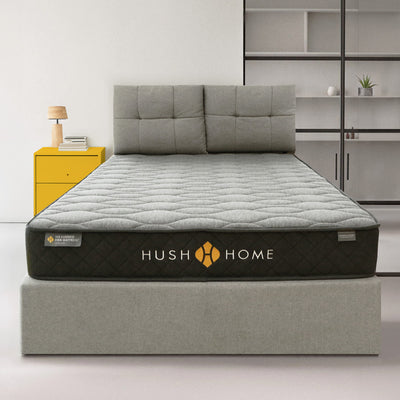
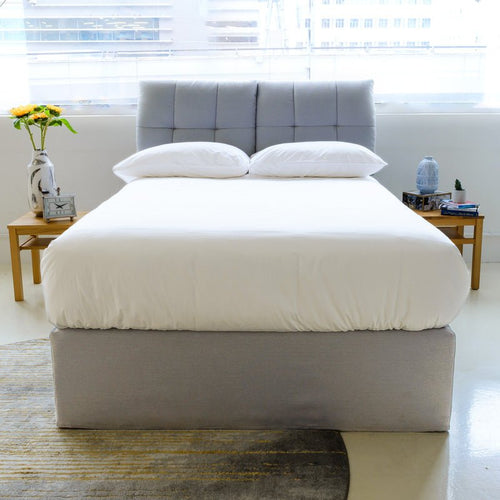
If your goal is to save visual space rather than literally remove the bed base, consider a low platform or low slatted foundation. You retain the minimalist look while giving the mattress an air gap beneath it.
For very small rooms, a bed frame can also provide storage value that a floor mattress cannot. A hydraulic storage bed uses the footprint under the mattress rather than giving it up entirely.
False. The underside can have a very different moisture environment from the top, especially when it is pressed against a solid floor.
False. A protector helps with liquids and sweat from above, but it does not create underside airflow.
Too simplistic. Mechanical firmness is only one job of a foundation. Ventilation, height, cleanliness and warranty compatibility also matter.
False. Moisture and poor airflow can affect many mattress constructions. Internal airflow differs by material, but no common mattress should be treated as immune to persistent dampness.
Not when outdoor air is more humid than indoor air. In humid Hong Kong weather, air-conditioning or a dehumidifier may be more effective than bringing very humid outdoor air into the room.
Physically yes, if the floor is flat and the manufacturer permits it. But dense foam does not remove the main floor-placement concern: reduced airflow beneath the mattress. In humid conditions, lift and inspect the mattress regularly and consider a ventilated base for long-term use.
A flat floor can support it, but coils inside the mattress do not create an air gap beneath the outer cover. Moisture and warranty considerations still apply.
There is no universal manufacturer-independent schedule. Independent guidance recommends periodically propping the mattress up to air the underside. In Hong Kong’s humid periods, more frequent airing and inspection is the cautious approach; follow the mattress brand’s specific care instructions if provided.
A dehumidifier can reduce one major risk factor by lowering room humidity, but it does not guarantee mould prevention and does not restore physical airflow underneath the mattress. Use it together with ventilation, regular lifting, dry cleaning practices and moisture inspection.
Tile is easier to clean and inspect, but it still provides no underside ventilation. Carpet can hide dust and moisture more easily. Neither solves the main issue as well as a ventilated base.
It depends on the manufacturer. Some warranties require a specific foundation, slat spacing or centre support. Read the exact warranty rather than assuming the floor is acceptable because it is flat.
No. A protector helps manage spills, sweat and staining; a frame or foundation manages support, elevation and often ventilation. They solve different problems.
Usually, short-term use is much less concerning than permanent floor placement if the floor and mattress stay dry, the room is clean, and the manufacturer does not prohibit it. Still inspect and air the mattress if the room is humid.
You can put a mattress directly on the floor in Hong Kong, but “can” and “should” are different questions.
A flat floor can provide strong support and may work for short-term use. The long-term weakness is ventilation. In a climate where annual mean outdoor relative humidity is around 78%, removing the air gap under the mattress makes moisture control more demanding.
If you want the minimalist low-bed look, a low ventilated foundation is usually the stronger long-term compromise: you keep the visual simplicity while giving the mattress room to breathe.