




Will My Mattress Fit My Bed Frame? Mattress & Frame Compatibility Guide
14 Oct 2026
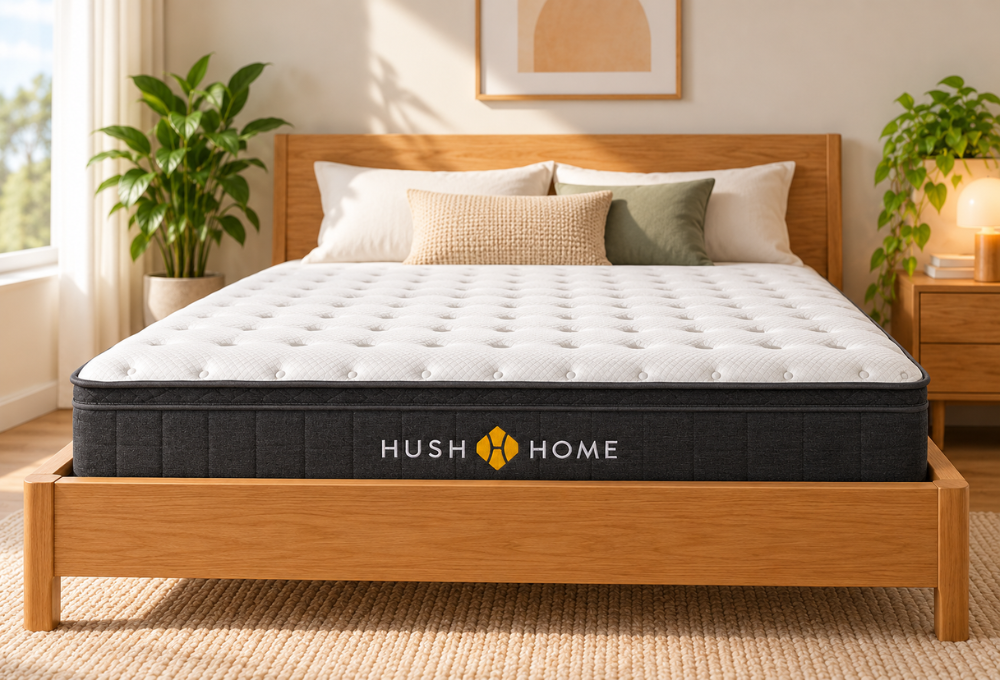
A mattress fits a bed frame only when its actual width and length suit the usable sleeping platform, and the frame provides suitable support for that mattress. Matching labels such as “Queen” or “Double” is not enough: Hong Kong, European and IKEA dimensions can differ, and a frame that is the right size may still have unsuitable slats, inadequate centre support or a lifting mechanism with the wrong load rating.
Measure the mattress across its widest points, then from head to foot. Record the actual dimensions, not only the retail size name. Allow for piping or a slightly rounded edge when taking a tape measurement, and check the manufacturer’s specification for the nominal product size.
For a recessed frame, measure the clear internal opening between the side rails and between the head and foot ends, including any inward-facing brackets. For a platform bed, measure the supported platform surface rather than the decorative outer frame. Recheck both the narrowest and widest points if the frame is irregular or upholstered.
A small difference is not automatically acceptable. A mattress that is wider or longer than the supported area can overhang, deform or move; a mattress that is much smaller than a recessed opening can slide and leave a troublesome edge gap. Ask the frame and mattress manufacturers about an acceptable tolerance rather than assuming a universal 2 cm or 4 cm allowance.
Hong Kong mattress sizes often use dimensions based on local feet-and-inches conventions. Other brands may follow 190 cm, 198 cm or 200 cm lengths and different widths. “Single”, “Double”, “Queen” and “King” are retail names, not an international guarantee of identical dimensions.
For example, Hush Home lists a standard Queen mattress at about 152 × 190 cm, while IKEA Hong Kong offers Queen-sized systems built around approximately 150 × 200 cm mattresses. Those products are not automatically interchangeable: a Hush Queen may leave a length gap in a 200 cm recessed frame, while a 200 cm mattress may not fit a 190 cm frame.
Hong Kong shoppers should pay particular attention to Single versus Single Long, Full versus Full Long, European 90 × 200 / 150 × 200 / 180 × 200 cm formats, and made-to-order older bed frames. Even if two labels sound equivalent, check the exact centimetre specification for both items.
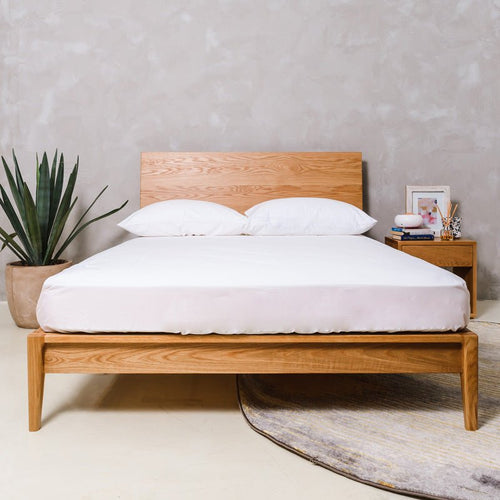
The surface under a mattress affects stability, airflow and long-term performance. A platform can be solid or slatted; neither format is automatically compatible with every mattress. Check the mattress brand’s permitted slat gap, slat condition, rigidity, centre beam and support-leg requirements.
Hush Home’s published guidance recommends slat gaps no wider than 7 cm for its mattresses. A frame with wider gaps, cracked or bowed slats, a missing centre rail or weak legs should be assessed or repaired before fitting a new mattress. Do not improvise by laying loose boards over a damaged structure without checking stability and ventilation.
For wider mattresses, inspect whether the frame has the correct centre beam and floor-contact support legs for that exact model. Also make sure every part of the mattress, including the perimeter, is properly supported. A visible dip may come from the bed frame rather than the mattress itself.
Check the gap between slats, whether the slats are secure, and whether centre supports are sufficient. A ventilated slatted design can be useful in humid Hong Kong homes, provided it meets the mattress maker’s support requirements.
Verify that the platform is even, rigid and full-size. Solid boards reduce underside airflow, so consider the manufacturer’s ventilation guidance and keep moisture under control.
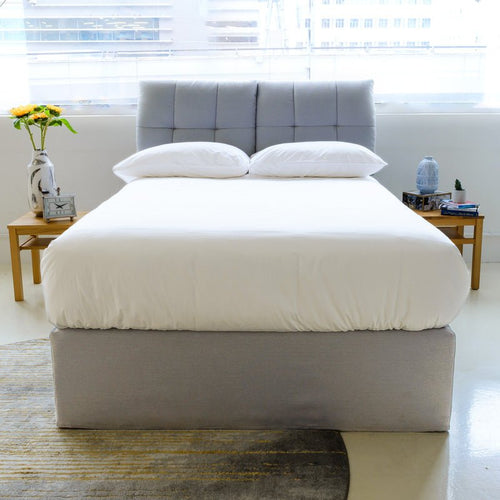
Measure the usable opening carefully, including padding, brackets and any depth below the side rails. Check whether a thick mattress will sit too high or whether a thinner mattress will sit too low.
Pay special attention to the maximum allowed mattress thickness, safety-rail height and the frame manufacturer’s instructions. A mattress can match the length and width but still be unsafe if it rises above the intended guardrail clearance.
Not every pocket-spring, latex or hybrid mattress is designed to bend repeatedly. Confirm the mattress manufacturer explicitly approves that adjustable base and the intended bend range.
A hydraulic storage bed introduces another compatibility test: the lift mechanism has to raise and hold the combined load it was designed for. The mattress may fit perfectly but be too light for the selected struts, too heavy to lift safely, or incompatible with the lid’s fixing arrangement.
Ask for the frame maker’s permitted mattress weight range, any thickness/height limit, and whether accessories such as a topper are included in the lift specification. Do not treat a quoted maximum bed-frame load as the same thing as the hydraulic struts’ usable lifting range. Never modify struts or springs without professional advice.
Measure from the floor to the mattress support surface, then add the mattress thickness. Consider how easily you can sit down and stand up, how much the mattress will protrude above a footboard, and whether fitted sheets and protectors suit the finished height.
Before ordering, also check the route from the delivery entrance to the bedroom: building lifts, stair corners, doorways, corridors, narrow turns and whether the bed frame can be assembled in the room. A frame may fit the bedroom floor plan but its headboard may not fit through the lift.
A manufacturer’s limited warranty may require an appropriate supporting foundation and exclude damage related to unsuitable bases, handling or moisture. Do not assume a visibly flat platform automatically meets every mattress warranty. Keep frame specifications and photographs in case you later need to make a claim.
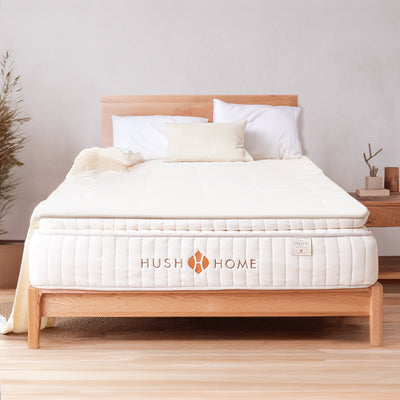
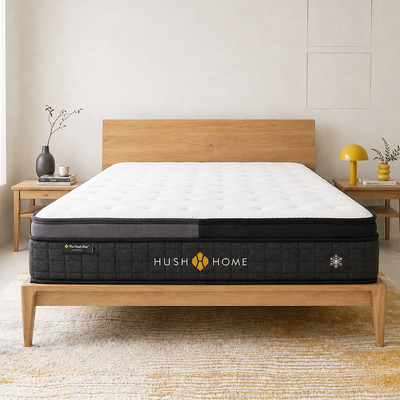
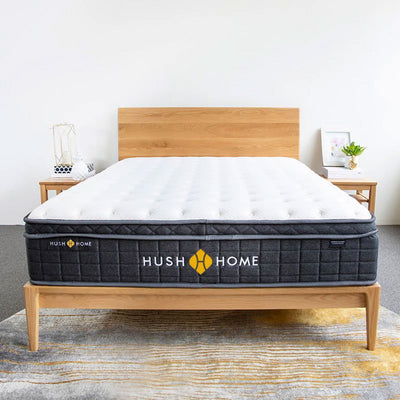
The Organic Mattress™, Hush Mattress™, Hush Duo Mattress™, Essence Firm Mattress™ and Loft Mattress™ are different constructions and should each be matched by their exact chosen size, support needs and thickness—not by assuming that one successful Hush model-to-frame pairing proves every other Hush model will fit.
For a new Hush mattress on a non-Hush frame, confirm the size in centimetres, the 7 cm maximum slat-gap guidance, adequate middle and edge support, and any product-specific restrictions with Hush Home. For a Hush Solid Wood Bed or Hydraulic Storage Bed, also confirm the exact variant and mattress dimensions; shared brand names alone are not a substitute for a compatibility check.
Record these figures: mattress width × length × thickness; usable frame width × length; internal clearance at the head/foot; slat width and maximum gap; central beam/leg arrangement; safe load and lifting range where applicable; finished bed height; and the tightest point on the delivery route. Take photos of the tape measure against the frame opening and underside supports.
No. The usable dimensions, support surface, slat gaps, centre support, weight requirements and special frame mechanisms all have to be suitable.
No. Queen is not a universal centimetre specification. Compare the exact width and length of both products.
Sometimes, but measure carefully. Some IKEA frames use 200 cm-long mattresses while many Hong Kong standard sizes are shorter. The precise frame opening and support arrangement determine suitability.
There is no safe universal allowance for all products. Small tolerances may be normal; large gaps can affect stability or safety. Ask both manufacturers about the exact combination.
Do not assume so. Unsupported overhang can damage the mattress and create instability. Follow the mattress maker’s approved support footprint.
Hush Home recommends gaps of no more than 7 cm between supporting slats. Verify any model-specific frame requirements before purchase.
Many wider frames rely on a centre beam or legs. Check the exact manufacturer specification rather than assuming a particular size always requires the same hardware.
Possibly, if the platform gives the required support and meets the mattress maker’s ventilation and warranty rules. In humid homes, monitor underside moisture carefully.
No. In addition to size, confirm the lift hardware’s intended mattress-weight range, permitted thickness and fixing instructions.
Only if its thickness is within the bunk manufacturer’s stated safety limit and preserves the intended guardrail height.
It can. Warranty coverage may depend on proper foundation support. Check the precise written conditions and keep photos of the frame.
Measure the usable opening and support footprint yourself, then send the figures and photos to the mattress supplier before ordering. Do not rely on the old size nickname.
A matching size label is the beginning of a compatibility check, not the end. For a secure fit, verify the exact dimensions, complete mattress support, slat gaps, weight limits and the frame’s intended use. If you are keeping an existing frame, a few careful measurements before ordering can prevent a costly mismatch.