




















Sleepwalking / 夢遊: Why It Happens, Safety Tips & When to Seek Help
14 Oct 2026
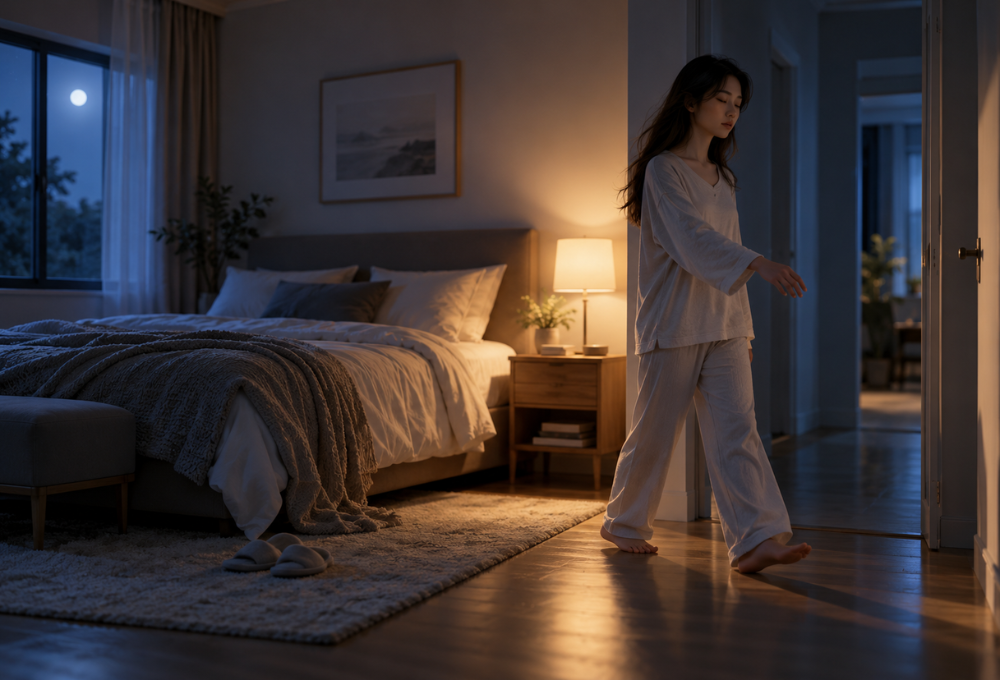
Sleepwalking, also called somnambulism, is a sleep-related behaviour in which someone partially wakes from deep non-rapid eye movement (NREM) sleep but is not fully conscious. They may sit up, walk, talk or carry out familiar actions while still mostly asleep. Episodes usually occur in the first part of the night, and the person often remembers little or nothing the next morning.
Sleepwalking is more common in children, and many outgrow it. Occasional, uncomplicated episodes may not need specific treatment, but protecting the person from injury is essential. If sleepwalking begins in adulthood, becomes frequent, causes injuries or comes with breathing problems or daytime sleepiness, speak with a healthcare professional.
If you see someone sleepwalking, stay calm, clear nearby hazards and gently guide them back to bed. You do not have to wake them, but waking them gently is appropriate if they are in immediate danger. Avoid shouting, shaking or startling them.
Not every episode involves walking across a room. Some people simply sit upright in bed, look around or speak in a way that does not fully make sense. Others may get dressed, move furniture, eat or head towards a door. Rarely, a person may leave home or perform dangerous activities, which is why a safety plan matters even if most previous episodes were mild.
Typical signs include open eyes with a blank or glassy expression, limited response when spoken to, difficulty being fully awakened, confusion when awakened and little recollection afterwards. A person who looks awake may still be unaware of where they are or what they are doing.
An episode often lasts only a few minutes, although it can last longer and may recur. If someone regularly shows highly unusual movements or repeatedly has brief, identical-looking episodes, do not automatically assume they are sleepwalking; a doctor may need to distinguish these events from other sleep or neurological conditions.
During normal sleep, different brain systems do not all switch between sleep and wakefulness at precisely the same time. Sleepwalking is classified as a disorder of arousal: movement and familiar behaviours can occur while awareness and judgment remain impaired. Episodes are commonly linked to N3, the deepest NREM sleep stage, and therefore tend to appear earlier in the night.
Scientists do not have one complete explanation for why some people sleepwalk and others do not. Family history and factors that increase arousals from deep sleep can make episodes more likely; a trigger is not proof that it caused an individual event.
Lack of sleep, emotional stress, illness with fever, overnight interruptions and changing sleep schedules may make sleepwalking more likely in susceptible people. Long workdays, examination periods, rotating shifts or travel can disrupt sleep, but not everyone under stress or sleep deprivation will sleepwalk.
Alcohol near bedtime and certain medicines—including some sleeping pills, sedatives or medicines prescribed for other conditions—have been associated with sleepwalking or other complex sleep behaviours. Never stop, reduce or replace prescribed medicine on your own; ask the prescribing clinician to review it if an episode follows a medication change.
Obstructive sleep apnoea, restless legs syndrome and other conditions that disturb sleep can also contribute. If someone snores loudly, gasps, appears to stop breathing at night or has strong daytime sleepiness, assessing those symptoms may be more important than focusing on sleepwalking alone.
Sleepwalking is more common in childhood and tends to decrease as children grow older. It also runs in families, although having a parent who sleepwalked does not mean a child definitely will. New-onset sleepwalking in an adult deserves more attention because other medicines or sleep conditions may be involved.
Look for stairs, open windows, balconies, glass, sharp items, cooking equipment and doors leading outside. If possible, remove hazards without startling the person. Avoid crowding them or standing in a way that might make them feel threatened if they suddenly awaken.
Speak softly and use short, simple directions such as “Let's go back to bed.” If the person responds to a light, non-forceful touch, you can gently steer them away from hazards. Do not force them, grab aggressively or try to reason with them as though they are fully awake.
It is a myth that waking a sleepwalker is inherently harmful. A sudden awakening can cause brief confusion, fear or agitation, so guiding them back to bed is usually preferable. But if someone is approaching a balcony, stove, staircase or road, it is reasonable to wake them gently rather than allowing a dangerous situation to continue.
If they wake confused, speak calmly, help them orient themselves and remain nearby until they are alert. A person who is frightened or resisting may react unpredictably, so prioritise everyone's safety rather than attempting forceful restraint.
If there is a serious fall, head injury, loss of consciousness, breathing difficulty or another immediate threat to life, treat it as an emergency rather than an ordinary sleepwalking episode. In Hong Kong, call 999 for emergency assistance and follow the operator's instructions.
A safety plan matters more than trying to predict the exact night of an episode. In Hong Kong's compact flats and high-rise buildings, pay particular attention to open windows, balconies, tightly packed furniture and shared household routes.
Keep windows and balcony access appropriately secured at night, especially in high-rise homes. Check that existing window safeguards are in good condition and suitable for the household. Door or window alarms can alert another adult if someone wanders, without requiring you to physically restrain the sleeper.
Do not lock a person into a room or install a door device that prevents occupants from escaping quickly in a fire. Hong Kong fire-safety guidance emphasises that escape routes must remain unobstructed and that locks on means of escape must not make emergency evacuation difficult. If you are considering additional safety hardware, check fire requirements and ask a qualified professional about suitable options.
Move loose rugs, extension cords, clutter, sharp-edged furniture and breakable decorations away from the likely walking route. Keep the path between the bed, bedroom door and bathroom clear. Appropriate low-glare night lighting or a motion-activated light may also help household members respond safely.
Where relevant, use appropriate stair gates or barriers that a sleepwalking child cannot easily wander past, while keeping emergency escape routes safe. Do not let a child who sleepwalks sleep on the upper level of a bunk bed. Consider the bed's height and nearby furniture if falls are a concern.
Keep knives, tools, fragile glassware, household chemicals and car keys out of easy reach or securely stored. Be especially cautious if previous episodes involved the kitchen, an external door or attempts to operate appliances. Unusual or dangerous behaviours should prompt timely medical assessment.
Explain to partners, carers and other adults what an episode looks like and how to respond calmly. Decide who will check the doors and windows, guide the person away from hazards and make a record afterwards. Avoid teasing or shaming the person, particularly a child who may have no memory of the event.
A hotel, serviced apartment or relative's home may have unfamiliar layouts, balcony doors or bunk beds. If episodes are recurrent, assess the sleeping area when you arrive and tell an accompanying trusted adult about any important safety precautions. Do not rely on the home layout you are used to.
Many children have occasional sleepwalking episodes and eventually outgrow them. The immediate priority is injury prevention and sufficient, regular sleep—not making the child feel embarrassed. Explain that they did not deliberately misbehave, and discuss persistent or risky episodes with a doctor.
Parents should pay extra attention to bunk beds, stairs, balcony access and doors leading outside. Avoid shaking a child awake or using the episode as a disciplinary issue. If a child also has loud snoring, breathing pauses, disruptive daytime tiredness or prolonged episodes, seek assessment.
Adults can sleepwalk too, including people who did so as children. However, sleepwalking that starts for the first time in adulthood, changes suddenly or involves injuries deserves a clinical discussion. A clinician may review current medicines, alcohol use, sleep deprivation and symptoms of other sleep disorders.
Sleep deprivation is a commonly reported trigger. Aim for a consistent sleep and waking routine and enough sleep for your age and needs. For shift work or travel, plan rest where possible and avoid repeatedly accumulating large sleep deficits. This may reduce triggers but cannot guarantee prevention.
Use a calm wind-down routine, manage stress as best you can and avoid alcohol close to bedtime, especially if an episode seems to follow drinking. Evening caffeine or disruptive sleep habits may also be worth reviewing because they can interfere with restful sleep. Do not add sedatives or sleep supplements as a self-treatment for sleepwalking.
Record the estimated bedtime, episode time, what was observed, possible sleep loss, fever or stress, alcohol intake and any recent medicine changes. A family member may need to describe the episode because the person who sleepwalked may not remember it. A short series of observations can help a doctor see patterns without encouraging constant nighttime surveillance.
If episodes are frequent or unsafe, a healthcare professional may look for sleep apnoea, restless legs syndrome, medication effects or other medical causes. For predictable recurring episodes, a sleep professional may sometimes discuss scheduled or anticipatory awakenings. This is a targeted approach, not a reason to repeatedly wake every child each night without advice.
Both sleepwalking and sleep terrors are disorders of arousal linked to NREM sleep, especially earlier in the night. Sleep terrors are more associated with sudden screams, intense fear and visible distress, while sleepwalking more often involves getting up or performing actions. Some people experience both.
A nightmare is a frightening dream, often associated with REM sleep, from which a person may awaken and recall dream details. Sleepwalking more typically involves incomplete awakening from deep NREM sleep and limited memory of the event. Timing and recall can offer clues but are not a reliable diagnosis on their own.
REM sleep behaviour disorder can involve acting out dreams, sometimes with kicking or punching, and may have a different pattern from NREM sleepwalking. Some nighttime seizures can also resemble unusual sleep behaviours, particularly if episodes are very brief, repetitive or highly stereotyped. New, violent or unclear nighttime behaviours deserve medical assessment rather than self-diagnosis.
Speak with a healthcare professional if sleepwalking occurs often—for example, more than once or twice a week—or happens several times in one night; if it becomes more severe or disturbs household sleep; or if the person is injured, tries to leave home or behaves dangerously. There is no need to wait for a specific frequency if safety is already a concern.
Also seek advice when sleepwalking begins for the first time in adulthood, continues into the teenage years with concern, or comes with strong daytime sleepiness, loud snoring, witnessed breathing pauses, unusual repetitive movements or other worrying symptoms. These features may suggest a related condition that needs evaluating.
Seek urgent or emergency care immediately after a serious injury or a life-threatening event. In Hong Kong, 999 is the emergency number. This article is general information and does not replace a healthcare professional's assessment.
A doctor often starts by asking the person and family members about what happened, when in the night episodes occur, sleep duration, medicines, alcohol, snoring and other symptoms. A sleep diary and a partner's description can be useful. If episodes are atypical or a different sleep condition is suspected, a clinician may recommend a sleep study, sometimes with video; not everyone needs one.
Treatment focuses first on preventing injury and addressing triggers or underlying conditions. Many children need only reassurance, adequate sleep and household precautions. When episodes are more troublesome, specialists may use targeted behavioural approaches or consider medicines after discussing benefits and risks. Do not self-prescribe sleeping tablets or try to treat the problem by buying a particular mattress.
A suitable bedroom setup can lower injury risks and support ordinary sleep comfort. Choose a stable bed that is practical to get in and out of, keep surrounding routes clear and avoid an upper bunk if a child sleepwalks. For someone who repeatedly wanders, motion-sensing lights or suitable alarms may be more relevant than changing mattress firmness.
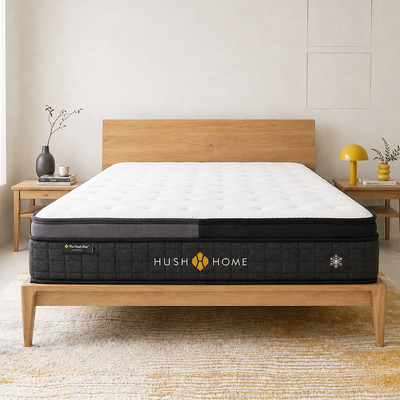
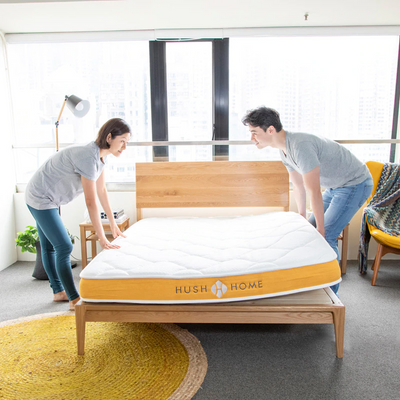
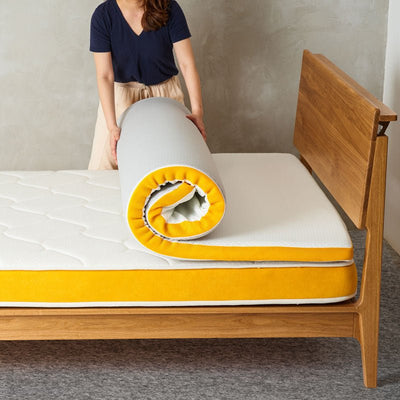
Hush Home mattresses, bed frames and pillows are designed for everyday sleep comfort and support, not for diagnosing, preventing or curing sleepwalking. If symptoms are recurrent or dangerous, consult a doctor. You can also read Hush Home's Bedroom & Sleep Safety for the Elderly guide for broader ideas about reducing trip hazards in compact Hong Kong rooms, while recognising that older-adult fall prevention is not identical to sleepwalking management.
Many episodes are harmless, but sleepwalking can create a risk of falls, injuries or wandering outdoors. Make the environment safe even if episodes are usually brief.
You usually do not need to. Calmly guide them back to bed, but wake them gently if they face an immediate hazard. Sudden or rough waking may cause confusion, not an inherent physical danger from awakening itself.
Sleepwalking involves incomplete arousal from deep NREM sleep. Genetic susceptibility, insufficient sleep, stress, fever, alcohol, some medicines and underlying sleep conditions may contribute.
Often, yes. The eyes may be open with a blank expression, but the person may not recognise people or respond as if fully awake.
Often they remember little or nothing. Memory varies, so lack of recall is common but not a stand-alone diagnostic test.
Usually not. Classic sleepwalking occurs during deep NREM sleep; dream enactment during REM sleep can be associated with a different condition. The distinction sometimes needs specialist assessment.
Stress may be a trigger in susceptible people, but it is not the only possible factor. Consider sleep duration, illness, medicines, alcohol and other symptoms as well.
Alcohol can disturb sleep and may contribute to episodes in some people. Avoid alcohol near bedtime if sleepwalking is an issue, and discuss recurrent events with a clinician.
Many do, often by their teenage years. Nevertheless, injuries, frequent episodes, disrupted sleep or breathing symptoms need attention regardless of age.
Yes, but new adult-onset episodes warrant a medical discussion because medicines, other sleep disorders or medical factors may be involved.
No. Sleepwalking is classified as a sleep-related arousal disorder, and an episode alone does not indicate mental illness. Stress can be a trigger, but assessment should consider the full clinical picture.
Do not trap someone inside or block fire escape. Consider appropriate window safeguards and door alarms that preserve safe emergency exit, and seek professional advice about any special locks.
Yes. If a person has recurrent episodes, check for balcony access, stairs, unfamiliar furniture and upper bunks before bedtime, and tell a trusted travel companion about important precautions.
No mattress is an established treatment for sleepwalking. A comfortable, safer bedroom may be helpful, but recurrent or dangerous episodes require proper medical evaluation.
Seek advice for frequent episodes, injury, dangerous wandering, adult onset, significant sleep disruption, daytime sleepiness, breathing pauses or unusual repeated movements. Call 999 in Hong Kong for a serious injury or immediate life-threatening emergency.
Sleepwalking is a partial awakening from deep sleep, not simply a person choosing to wander while awake. Many childhood episodes ease over time, but immediate injury prevention matters for everyone. Stay calm during an episode, guide the person gently, make windows, floors, stairs and doors safer without blocking fire escape, and seek medical help if episodes are frequent, new in adulthood, harmful or accompanied by other concerning symptoms.